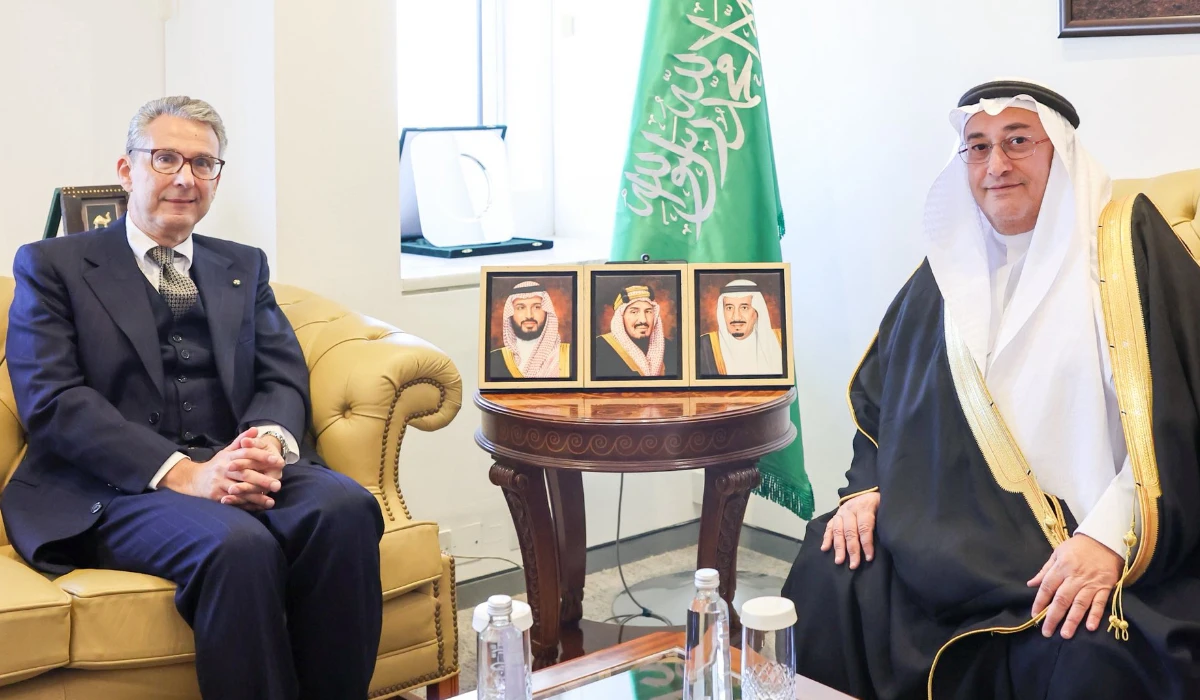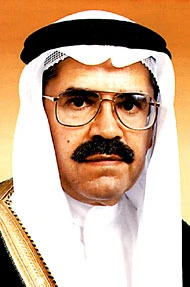
NICOSIA, 11 May 2003 — Petroleum and Mineral Resources Minister Ali Al-Naimi has been given full authority to swiftly conclude the multibillion-dollar Natural Gas Initiative with foreign oil majors, the Middle East Economic Survey (MEES) reports in its Monday edition.
The minister on May 6 requested senior-level meetings with the lead companies, ExxonMobil and Royal Dutch Shell, to wrap up talks within the next two weeks, the industry specialist said.
In a letter sent to the chief executive officers, Al-Naimi said: “The government has reiterated its commitment to execute the Core Ventures (CVs) very soon,” and invited them for a meeting in Riyadh within a few days.
“The Kingdom remains committed to the successful and timely implementation of the Natural Gas Initiative projects and we remain hopeful that the projects can be implemented based on the framework of the government’s final offer of Sept. 5, 2002,” MEES quoted Al-Naimi as saying in the letter.
“I will spare no effort to ensure that we succeed in these efforts and look forward to working with you in a spirit of partnership and cooperation,” the minister added.
Foreign Minister Prince Saud Al-Faisal announced on Tuesday that agreements with foreign firms have been reached on power, water and petrochemical plants associated with the projects.
“What remains now is technical issues which have been referred to the petroleum minister to conclude the negotiations,” said the prince who heads a ministerial committee conducting negotiations with the foreign firms.
The agreements open the way to signing a final accord with six foreign oil majors for CV1 and CV3 which require investments of about $20 billion.
ExxonMobil has the lead role in CV1, while Dutch Royal Shell has the lead in CV3. The second project, CV2, was shelved to “reassess its economic situation,” according to Prince Saud.
MEES said the consortia will be required to accept the existing terms or reject them. “The Kingdom was expected to proceed swiftly with plans to relaunch the initiative if the lead companies ... fail again to respond positively,” MEES said.
The Kingdom signed preliminary agreements in June 2001 with eight international oil companies for the development of the mega gas projects, but the final deal has proved elusive as deadlines have come and gone.
Al-Naimi is scheduled to open a meeting of the newly-formed executive council of the International Energy Forum (IEF) in Riyadh today. The council comprises oil producing and consuming countries. The meeting will elect IEF’s secretary-general.
According to the Ministry of Petroleum and Mineral Resources, it will also discuss future IEF programs.
The meeting will be attended by the Organization of Petroleum Exporting Countries (OPEC), and the International Energy Agency. The ministry said that the one-day event would also discuss the IEF budget. Executive council members include Saudi Arabia, the Netherlands, France, India, Iran, Italy, Japan, Mexico, Norway, the UAE, Venezuela, Russia and South Africa.
The IEF with its permanent secretariat in Riyadh was set up in response to a suggestion by Crown Prince Abdullah, deputy premier and commander of the National Guard.
The IEF seeks to provide a forum to oil producers and consumers where international, regional, technological and environmental issues can be discussed. These issues are becoming more complex due to the anticipated rise in demand for oil over the next 10 to 20 years.
The World Energy Outlook (WEO) views the oil-resource base as adequate to meet demands until 2020. The cost of producing oil in Saudi Arabia is one of the lowest in the world.
Al-Naimi commented: “Today in the Kingdom, all-inclusive cost of production is less than $1.50 per barrel while the global average is about $5 per barrel and in some areas more than $10 per barrel. We also have a great advantage when it comes to adding new reserves or increasing production capacity.”