
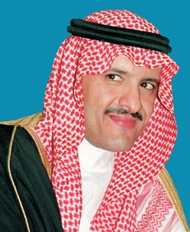
Saudi Arabia, which established a state-owned tourism body called Supreme Commission for Tourism (SCT) four years ago, has intensified efforts to develop sustainable tourism for the socio-cultural, environmental and economic benefits under the supervision of Prince Sultan ibn Salman, SCT’s secretary-general. SCT was set up to harness the country’s unique endowments to develop tourism and to contribute to economic diversification, employment creation and heritage preservation in the process.
SCT is currently managed by a 12-member board of directors chaired by Prince Sultan, second deputy premier and minister of defense and aviation. Saudi Arabia preferred a higher authority rather than a separate ministry of tourism as the high-powered body was put under the third highest Saudi official to promote this sector. It is important to note that SCT’s board of directors is composed of some 10 ministers including Minister of Interior Prince Naif and Foreign Minister Prince Saud Al-Faisal.
Moreover, the setting up of the tourism commission was in line with the Kingdom’s strategy of diversifying its sources of revenue. The economic potential of tourism in the Islamic world may be another reason to create this body. This can be gauged from the fact that the total number of Muslims the world over exceeds the 1.3 billion mark. Aside from being the cradle of Islam and its special geographic, economic and cultural attributes the Kingdom has a lot to offer to tourists. It is rich with diverse natural resources and tourist attractions in addition to a well-developed infrastructure.
According to the much-publicized 20-year SCT plan or general strategy, more than 10,000 natural, historical and cultural sites have been identified and electronically documented so far in Saudi Arabia. These sites were evaluated on the basis of their tourism value and their current state. Many of these sites have tourism potential, making the Kingdom an important destination for cultural tourism. Therefore, one of SCT’s general strategy recommendations seeks the development of these sites into tourism attractions on a priority basis.
According to SCT, there are more than 1,679 archaeological sites, 184 sites related to the Prophets’ biographies, 143 Saudi historical sites, 58 literature heritage sites, 1,249 sites related to customs and traditions besides 369 sites for handicrafts and cottage industries. These are in addition to 534 literary and story-telling events, 61 folklore festivals including the famous Janadariya festival staged every year, which need to be further promoted and propagated for tourism purposes.
SCT’s general strategy also sets priorities for the domestic market and religious tourism related to Umrah and Haj. SCT has predicted that the number of tourists will skyrocket from 20.8 million in 2000 to 45.3 million at the end of the commission’s plan period in 2020. This number includes 34.4 million domestic tourists and 10.9 million international tourists mainly from the GCC and other Arab countries. In order to accommodate this number, the Kingdom will be required to provide additional 50,000 hotel rooms and 74,000 furnished units by the year 2020.
Hence, efforts must be exerted for attracting investment from the private sector for building hotels and resorts. The domestic tourism market is untapped and there is great potential in this sector. This potential is evident from the fact that Saudis spent SR54 billion ($14.4 billion) on foreign travel annually, according to a SCT report. But, the Kingdom also earns revenues worth SR6.75 billion ($1.8 billion) from tourism including religious tourism annually, said another report of the World Council for Travel and Tourism.
Prince Sultan revealed some interesting data while presenting a paper at a seminar on the “Economic Impact of Tourism in Saudi Arabia” held in the southern tourist resort of Abha. “Saudi tourists spent over 100 million nights abroad in 4.4 million trips during year 2000 alone. On average, each night cost them $135, bringing the total spending to about $14.4 billion,” he explained. He said that the number of tourists coming to the Kingdom soared remarkably in the last decade. It jumped from 2.582 million in 1992 to 4.8 million in 1999, registering an annual growth of between four and 23.3 percent.
The Kingdom’s revenues from tourism increased from SR3.8 billion in 1992 to SR6.1 billion in 1999 and SR6.75 billion in 2002. Saudi Arabia has taken effective steps to boost domestic tourism and reduce the deficit in the tourism balance of payment which is now estimated at SR47.25 billion ($12.6 billion). In addition to the establishment of an independent body to encourage domestic tourism, the Saudi government also started issuing tourist visas since 2001 allowing foreigners to visit historical places, museums and antiquities.
According to Prince Sultan, SCT has prepared the 20-year comprehensive tourism plan to ensure continuous development of the industry without compromising on the country’s culture, traditions and environment. The tourism sector will be developed by providing conducive investment opportunities for the private sector, revising regulations, training Saudis to take up related jobs and making use of the media to encourage domestic travel.
The SCT plan, Prince Sultan said, aims at diversifying the country’s revenue sources, increasing the gross domestic product and creating job opportunities. Promoting small-scale and alternative ventures and development of heritage and traditional industries are among other goals of the plan. Prince Sultan underscored the government’s plan to make Saudi Arabia a leader in global tourism. This involves many incumbent tasks such as the assessment of the country’s tourism resources as well as the local market requirements, enforcement of new laws to ensure quality, training Saudi manpower and enacting new regulations to facilitate investment.
The prince is of the opinion that the private sector could play an important role in promoting tourism in the country. The private capital in the Kingdom increased from 53.9 percent of the total investment in the Kingdom in 1989 to 64 percent in 1999 with more capital and technology reported to be flowing incessantly into the country after the Sept. 11 terror attacks. The private sector can provide and build state-of-the-art tourist infrastructure facilities such as hotels, restaurants, shopping malls and recreation centers all over the Kingdom.
The tourism commission expects that the Kingdom will be able to reduce Saudi spending on tourism abroad by a minimum of 10 percent and a maximum of 25 percent during the ongoing initial stages of the SCT plan’s execution period. The commission also estimates that the tourism industry’s contribution to the GDP will reach 7.3 percent and will account for 6.5 percent of the total employment opportunities in the country. At present, a little over 12,500 people are employed in the hotel industry alone, and only seven percent of them are Saudis.
The SCT strategy seeks substantial investment in the sector, which will create at least 164,000 jobs for Saudis. Domestic tourism will also generate business for hotels and furnished villas, and will consequently attract more capital into real estate projects. Influx of foreign tourists may also lead to creation of private aviation companies and construction of new rail networks to ease movement within the Kingdom.
“Growth in tourism traffic will raise the income of communications sector by 20 percent, housing sector by 25 percent, trade 12 percent and restaurants 15 percent,” according to SCT’s figures.
Recently released statistics also show that tourism contributes about 10 percent of the gross domestic product globally. Tourism is the largest contributor to the non-oil GDP in many countries. It also helps many governments to maintain their balance of payment position. International turnover from tourism was estimated at $476 billion last year. In fact, tourism is a major source of employment worldwide. Statistics show that the tourist sector accommodates more than 192 million people, of whom 73 million are directly involved in the industry.
The SCT statistics indicate that the employment opportunities in the sector are growing, compared with other sectors where opportunities may be receding. Tourism, the SCT report said, is not a new economic and social phenomenon in the Kingdom. It occupies an important position in the country. The total expenditure of tourists on tourism activities reached SR35 billion in 2000, which represents nearly 5.4 percent of GDP. Despite the seasonality of tourism in the Kingdom, tourism proved that it is capable of accommodating tourism flows.
Presently, there are more than 95,000 hotel rooms (73.3 percent are in Makkah) in 850 hotels, more than 20,000 apartments and 40,000 rooms in 828 furnished apartments, in addition to 1,100 travel agents and tour operators. The Kingdom is also well-equipped with the appropriate infrastructure and utilities for tourism development. On the basis of the SCT plan, nearly 40 tourism development areas (TDA) have been identified all over the Kingdom. These areas include many significant tourism sites that might represent a great opportunity for tourism development in general and individual tourism projects in particular.
These areas will be divided into tourism destinations. Strategic development plans have been made for each group of destinations, without neglecting the strong and important interrelation between these areas. Development of the identified TDA will take place during the next 20 years as part of the four-phase strategy. This strategy encourages the development of potential areas. It also recommends the development of new areas such as coastlines and mountains.
SCT has also signed an agreement with King Abdul Aziz City for Science and Technology (KACST) for making use of its satellite imagery and remote sensing capabilities for producing a tourism map. Besides, the commission has recently mapped out a new strategy to train Saudi nationals in a renewed move to cut reliance on foreign workers in the travel and tourism sector.
Referring to the vision for tourism in the Kingdom, the SCT report said that this tourism body seeks to ensure proper utilization of the available and potential resources to attain economic benefits while giving due regard to the Kingdom’s values. Also, the future tourism vision aims to promote projects in the Kingdom within the framework of the national development objectives, which call for economic diversification, achieving balanced development and creation of job opportunities.
Tourism development will be a private sector-driven industry as is the case in several countries all over the world. It will lessen outbound tourism and the outflow of funds to foreign destinations. Also, this will lead to establishing the support industries in the Kingdom and creation of more job opportunities. In addition tourism development in the Kingdom will also require investment in human resources through provision of tourism education and training.
Moreover, the expansion of tourism industry will help in technology transfer to the Kingdom. Also, tourism development will decrease migration from rural areas to big cities and other urban centers of the country. Implementation of the SCT’s recommendations regarding tourism education and training at the level of secondary, university and postgraduates studies may attract the Saudi work force to take up positions in tourism and other associated sectors.
SCT has appointed Landor Associates, a leading global brand consulting and design agency to develop the brand identity for tourism in the Kingdom.