
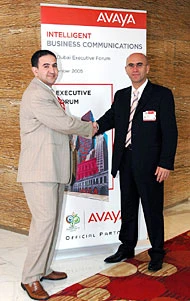
Kingdom Holds Biggest Telecom Market Potential
With just two mobile operators, one fixed line operator and one iDEN-based group communications network, Saudi Arabia remains the country in the region with the largest potential for growth in telecommunication services. The Kingdom has a population of over 23 million. In 2004, prior to the entry of competition, there were only 9.2 million mobile users (US-Saudi Arabian Business Council; June 2005). Liberalization and its effect on the market is one of the key topics that will be discussed at Telecoms World Middle East, taking place from Dec. 4-7 at the Shangri-La Hotel in Dubai.
“Expansion into new markets is one thing, and continuing to grow within an operator’s home market is a different game altogether. Saudi Arabia is the biggest market in the GCC and has a largely untapped potential,” said Edward Haines, conference director for Telecoms World Middle East, Terrapinn. “At the conference, both STC and Mobily will be sharing their experiences. Representing them will be Yousef Abdullah Al-Akeel, director of carrier services, and Khaled Al-Kaf, CEO, respectively.”
In addition to liberalization, the three-day conference will delve into strategies for operator growth in the Middle East, taking advantage of new market opportunities and investment in the region’s telecoms. For more information on the conference click to www.terrapinn.com/2005/twme.
ARAMEX to Boost Operations With Avaya
ARAMEX has begun implementation of an Internet Protocol (IP) based telephony system from Avaya Inc. The Jordan-based company, which offers a wide portfolio of transportation services, chose the Avaya system as senior management sought new ways of enhancing communication between sites and increasing flexibility with third party vendors, customers and partners.
Following implementation at three new sites in Dubai, the Avaya IP-telephony solution, based on open architecture for enhanced interoperability, will be rolled out at other offices in Jordan, New York, India and then in 200 offices spanning five continents and benefiting over 4,000 people. The system comprises the following elements: Avaya Communication Manager, Contact Center, Voice Recording, IP Hardphones and IP Softphones.
“ARAMEX is broadening its Middle East operations and during this expansion process it is essential that a world-class communication infrastructure is in place to meet the growing demands of the market,” explained Sameh Awajan, chief technology architect, ARAMEX. “In order to provide better service for customers, more sophisticated use of technology is vital as this results in associated cost-savings and improved performance. The new, fully integrated Avaya system is being deployed as the backbone of this communications infrastructure, and will comprise a range of IP-based systems including a state-of-the-art contact center.”
As the volume of trade in the Middle East increases and more and more companies look to do business in and around the region, the benefits of IP telephony for organizations involved in logistics and transport are obvious. For example, with an Avaya IP Softphone, a mobile worker can receive calls made to their office at any remote location.
“Avaya offers logistics firms throughout the Middle East world class integrated information and communication technology, which can greatly enhance their varied and complex operations,” said Nidal Abou-Ltaif, MD for Avaya in the Middle East and North Africa. “With a support network that enables companies to really reap the rewards from their communication investments, our aim is to build long-term partnerships.”
ICT Capacity Building Program Held
Last week, the Ministry of Communications and IT (MoCIT) and Cisco Systems jointly sponsored Cisco’s new educational initiative, the Global iExecutive Forum. The program was attended by high-ranking officials from MoCIT, the Communications and Information Technology Commission (CITC), the Ministry of Civil Service, the Ministry of Finance, the General Auditing Bureau, the Saudi Arabian General Investment Authority (SAGIA) and the Food and Drugs Authority.
Commenting on the new program, Dr. Khalid Al-Sabti, General Director of the e-Government Program, MoCIT, said: “Adoption of ICT is the cornerstone of the national development plan, envisioned by the Kingdom of Saudi Arabia. The Kingdom is buffeted by powerful forces of transformation and delivery of advanced public service goods is key to our growth. ICT is the tool that will enable us to remain dynamic, productive and competitive in the globalized world. Cisco’s initiative provides the optimum mix of education and leadership management in ICT capacity building for public and private sector decision makers in Saudi Arabia.”
The program, which is still in its prototypical phase, is targeted at high-level officials and decision-makers. It gave attendees advanced training in business and management, as well as elevated their understanding of strategic ICT usage and planning. The attendees received insights about the impact of the Internet and the latest technological trends in a public administration setting, as well as were able to hone their skills in performing organizational readiness, strategic planning and business case building.
“The program is one of the most tangible evidences of Cisco Systems’ commitment to usher in an era of e-governance all over the world,” said Dr. Badr Al-Badr, GM, Saudi Arabia, Cisco Systems. “Saudi Arabia is a test case for the program as we are making available in the country the very best resources and skill sets for ICT strategy, planning and implementation in order to create lasting social and economic impact for its beneficiaries.”
mySAP ERP Deployed by EMI Music
EMI Music, part of the EMI Group, a global media and entertainment leader company with extensive representation in the Middle East, is deploying mySAP ERP across its worldwide operations. The SAP rollout underpins the company’s efforts to evolve successfully with the changing customer and market demands of the digital age by better analyzing regional and global business performance and responding quicker with new products and business models.
With the aim of harmonizing financial and sales processes, increasing transparency and improving the efficiency of global reporting, SAP’s enterprise resource planning (ERP) solution is replacing various legacy systems for accounting, purchasing, sales order capture and financial reporting. Over the next three to five years, mySAP ERP will be rolled out to cover all EMI’s operations.