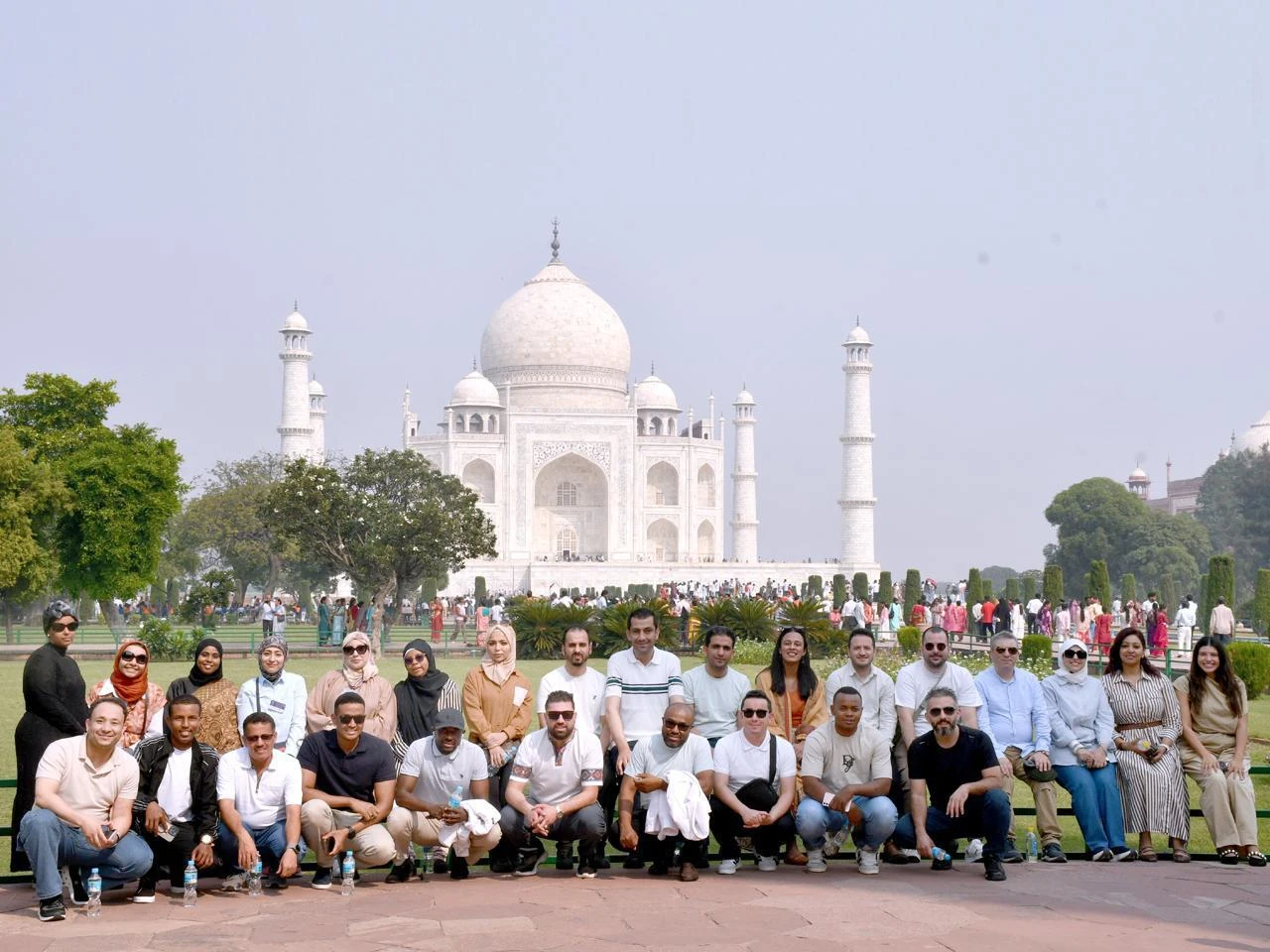
NEW DELHI, 18 December 2005 — The Indian Supreme Court has dismissed a petition by a person claiming his lineage to erstwhile Mogul rulers that he be appointed “mutawalli” (caretaker) of the Taj Mahal.
The bench comprising Justice Ruma Pal and Justice A.R. Lakshmanan, however, gave Yakub Habeebuddin Tucy the liberty to approach the appropriate forum including the Allahabad High Court and the Uttar Pradesh Sunni Central Wakf Board with his claim.
Tucy, claiming himself to be a descendent of the last Mogul ruler Bahadur Shah Zafar, had said that since the Wakf Board had declared the Taj Mahal as its property, he should be appointed its mutawalli.
He submitted that after the board had declared the monument as a Wakf property he had approached it with his claim.
The Supreme Court has stayed a government order declaring the Taj Mahal as Wakf property.
In another interesting case, the Supreme Court asked the director of the All India Institute of Medical Sciences(AIIMS) to consider the plea of controversial Rashtriya Janata Dal MP Rajesh Ranjan, alias Pappu Yadav, seeking treatment for obesity.
“We request the director of AIIMS to give Yadav treatment of all disease and if necessary on morbid obesity,” a bench comprising Justice S.B. Sinha and Justice P.K. Balasubramayan said.
Yadav’s counsel Rakesh Kumar Singh had submitted that treatment for morbid obesity was not taken on a routine basis in AIIMs and the doctors had suggested the MP consult experts from two private hospitals here.
The parliamentarian from Madhepura in Bihar is in Delhi’s Tihar Jail awaiting trail for his alleged involvement in the murder of CPI (M) leader Ajit Sarkar.
Yadav was shifted from Beur Jail in Patna after the Supreme Court canceled his bail on Jan. 18 taking strong objection to the “five star” treatment being provided to him in jail.
The court had also expressed annoyance over his conduct, both inside and outside the prison.
Sarkar, a CPM leader, was murdered in 1998 and Yadav’s involvement has been alleged in the case. The court while canceling his bail had said witnesses in the case were yet to be examined and the conduct of the accused clearly indicated that freeing him on bail would impede the progress of the trial.