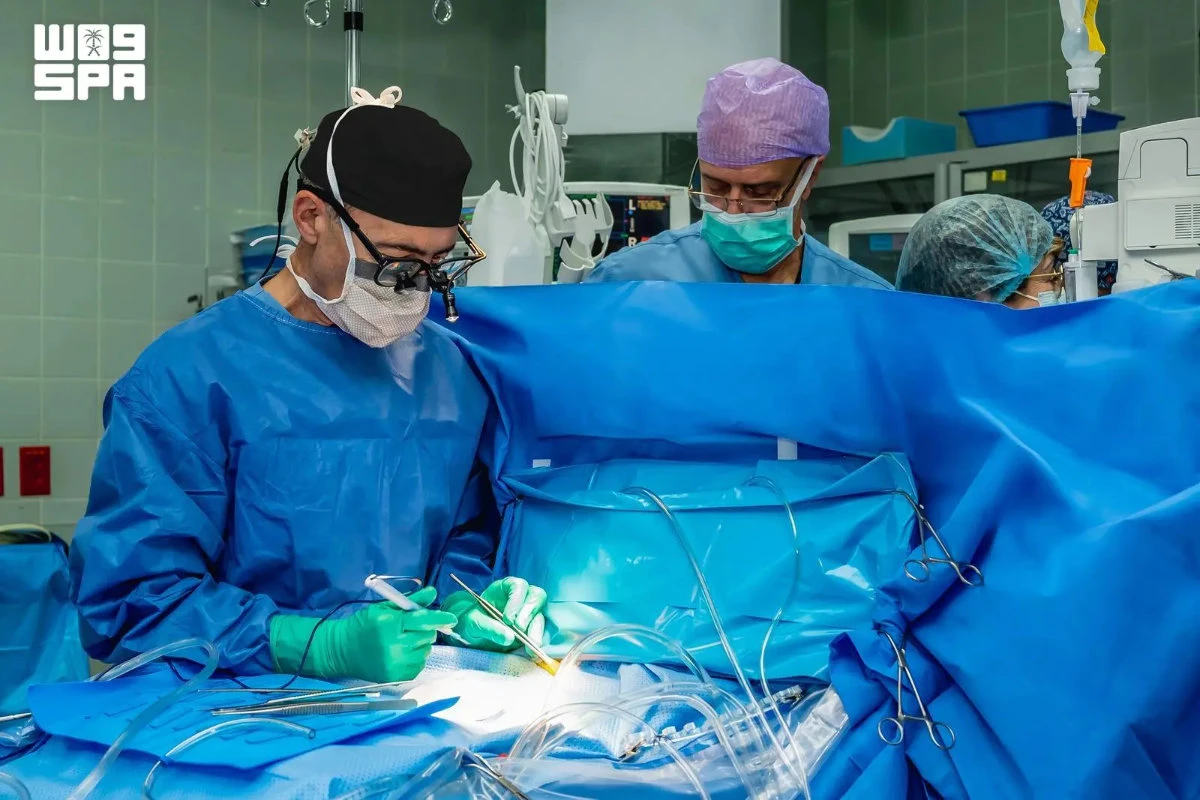
JEDDAH, 2 April 2006 — Almost everyday our newspapers relay the painful and angry stories of people who have suffered due to a medical error or negligence by a doctor. Some are clear cases of negligence or malpractice but many are one-sided accusations lacking an objective understanding of the circumstances and risks of the treatment involved. The readers sympathize with the patient and are ready to hang the doctor. The doctors, while also sympathizing with the patient, are dismayed by the biased sensational reporting that they think only inflames people’s passions making their job even more stressful.
When a patient endures some sort of problem they think is a result of medical malpractice, they have the right to file a complaint at the health administration of their region. The medical malpractice committee at the administration, which determines if there was a mistake or shortfall or negligence by the doctor, studies the complaint. It then submits its report to the medical legal committee and if it decides that a mistake was made, it can administer a punitive measure against the doctor, often involving blood-money (diya) compensation.
“We have to differentiate between medical mistakes and complications. People have to know that there are side-effects for everything,” said Dr. Entessar Taylouni, an obstetrics and gynecology consultant and a member of the medical legal committee in Jeddah. “Unfortunately, I can say that the main problem is lack of communication between the doctor and the patient. The doctor must thoroughly explain every aspect of the treatment, whether medicine or surgery is required, explain the surgery, including possible complications and side-effects. This alone will reduce the number of complaints because the patient would understand that the problem was a side-effect and not a mistake.”
According to Dr. Entessar, about half of the complaints the committee receives are not cases of medical malpractice but rather complications and side-effects from the treatment.
“In the committee, we try to study the case from all perspectives and send it to several neutral sides in other locations for their opinion and then issue a sentence depending on the type of mistake, whether it involves death, loss of function or loss of a body part.”
The committee consists of a Level-A judge from the Ministry of Justice, who is the chairman of the committee, a medical member from the Ministry of Higher Education, three members from the Ministry of Health (two doctors and one legal consultant). There are two medical legal committees in Jeddah, one is the principal medical legal committee, which looks into cases against private hospitals, and the supplementary medical legal committee, of which Dr. Entessar is a member, that looks into cases concerning all the public hospitals.
After thoroughly investigating and discussing the case, the judge issues a sentence based on the committee’s opinion. If there is a difference in opinion, the case is sent to several other committees in the country to arrive at a consensus and agreement on the mistake and the doctor’s responsibility.
“Some of the reports in the media are biased, making the reader think that the mistake was enormous and no reprimand on the doctor or compensation for the patient would be enough, but when we look at the case we find that the mistake is simple, if there is a mistake in the first place,” said Dr. Entessar.
The compensations are legal matters that are standard. For example, the diya (blood money) for a wrongful death is established as well as the amount for the loss of body parts. The committee also determines what percentage of the mistake is the doctor’s fault; he might not be 100 percent responsible, maybe only 20 percent. The doctor is charged with that percentage of the compensation. Sometimes the nurses are found to be completely or partially at fault, for example giving the wrong medication or dose.
Dr. Entessar explains that there are two types of rights for the victim: A public and a private right. If it is proven that a mistake happened, the patient is compensated and this falls under private right. At the same time, the committee transfers the case to the public prosecutor who is a doctor and he files a case against the accused doctor.
“For the public right, there are regulations and laws; if violated there are punishments set by the Ministry of Health, among them is suspending the doctor, firing him, revoking his medical license or it could be simpler administrative punishments such as a warning or a monetary punishment depending on the mistake.”
As for foreign doctors, the ministry can terminate their contract and prevent them from working here again.
There are 14 medical legal committees and other specialized committees at the ministry including one that looks into violations by the health institutions. Most of the complaints made are against obstetricians and gynecologists. If a plaintiff is dissatisfied with the committee’s sentencing, he/she can appeal to the court of grievances but the court only looks at the process and decision made and not at the medical side of the case, according to lawyer and university professor Omar Al-Khouli.
At a presentation given by Al-Khouli on Wednesday on medical mistakes, he revealed that in 2004 Jeddah courts had around 350 cases of medical mistakes, 170 of them ended with clearing the doctor of any responsibility. Nevertheless, the current medical legal system favors compensating the patient or his family monetarily for emotional suffering even if the doctor was found innocent of committing a mistake. Of course doctors find this to be unjust not to mention stressful and harmful to their reputation.
Al-Khouli asked for establishing an association for protecting doctors because most often the media portrays them negatively. “The problem is that plaintiffs can represent themselves in the court and they rarely seek legal counsel,” said Al-Khouli.
Al-Khouli also spoke at his presentation about private hospitals with a high number of legitimate cases against them including wrongful deaths but they seem to be off-limit.
The new medical profession system, approved recently by the Council of Ministers, provides support to the patients and at the same time protects medical practitioners by such measures as an obligatory insurance against medical mistakes, but it has not been implemented yet. Part of the new system is a medical legal commission that codifies the medical mistakes and the appropriate reprimands, which Al-Khouli considers still to be full of legal loopholes.