
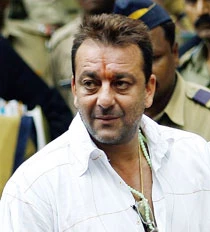
NEW DELHI/PUNE, 21 August 2007 — Bollywood star Sanjay Dutt and five others sentenced in the 1993 Mumbai blasts case got a breather yesterday when the Supreme Court gave them interim bail till the special anti-terror court provides them its detailed judgment convicting them.
While Dutt, who is undergoing a six-year sentence in Pune’s Yerawada jail, is expected to be freed today morning, the others were also ordered to be released by a bench headed by Chief Justice K.G. Balakrishnan.
As jubilant fans celebrated outside the jail, Dutt’s sister and Congress MP Priya Dutt said in New Delhi: “I am relieved and happy and it’s only because of the help and support of the people around us. This is my Raksha Bandhan gift!”
The bench, which also included Justices C.K. Thakral and R.V. Raveendran, paved the way for Dutt’s temporary freedom when it restored “status quo ante-sentencing” for all the convicts in the case — implying that that all other convicts who were on bail during the trial could approach the Supreme Court for temporary freedom.
The five other convicts, whose applications were heard along with Dutt’s and were ordered to be released on interim bail, are Aziz Ahmed Mohammed Ahmed Sheikh, Zaibunnisa Anwar Kazi, Ibrahim Musa Chauhan, Yusuf Mohammed Nulwalla and Samir Hingora.
Ordering the star’s release, the bench stated: “Petitioner Sanjay Dutt will be released on bail on same conditions (on which he had been earlier granted bail by the apex court on Oct. 16, 1995).
“As soon as the judgment of the designated (Mumbai’s anti-terror) court is ready, the court shall fix a date for providing the copy of the judgment and furnish its copy to the petitioner, who shall surrender after receiving the same,” the bench ruled.
The bench stipulated that they would report to the Special Task Force of the Central Bureau of Investigation (CBI) in Mumbai every Sunday between 10 a.m. and 1 p.m. till they surrender after copies of the orders were supplied to them.
The bench also asked them to surrender their passports. The court deferred the actual hearing on their bail pleas and petitions challenging their conviction, telling the government’s law officers that in absence of the trial court’s order “they cannot argue the case and you too cannot argue the other way round.”

