
ABU DHABI, 6 December 2007 — OPEC, the producer of more than 40 percent of the world’s oil, decided to maintain the group’s current output of 27.25 million barrels per day, sending crude futures soaring above $91 a barrel. OPEC ministers will meet again in February to discuss latest developments in the oil market.
The decision was taken at a close-door meeting held at Abu Dhabi’s Emirates Palace Hotel yesterday. The Organization of Petroleum Exporting Countries decided against an output hike in Abu Dhabi as the market was “well supplied.”
“Having reviewed the oil market outlook, including the overall demand supply projections for the year 2008 ...the conference observed that market fundamentals have essentially remained unchanged, with the market continuing to be well supplied,” said an OPEC statement released after the meeting.
The organization said it was concerned about the role of “nonfundamental factors” in the price of oil, “including the heavy influx of financial funds into commodities and speculative activity in the markets,” as well as “geopolitical developments.”
OPEC also announced an extraordinary meeting on Feb. 1 in Vienna, “given the need for extreme vigilance in assessing the market during the coming months.”
World oil prices leapt above $91 a barrel in London on news of the production freeze, a decision reached after oil producers put aside differences apparent in the run-up to yesterday’s meeting.
On Tuesday, Saudi Arabia had refused to spell out its intentions but said all options were on the table. Nigeria, Africa’s biggest crude producer, had expressed the same sentiment but on entering yesterday’s meeting said it saw no need for a hike.
OPEC was concerned that an increase in production would oversupply the market during the second quarter, when demand for crude tends to fall as winter passes in the northern hemisphere, analysts said.
The oil-producing states were also worried that global economic weakness caused by the US housing crisis and credit crunch would dampen demand for energy.
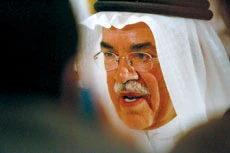
OPEC decided to maintain output after considering a hike of half a million barrels, and amid forecasts that oil demand would fall because of current global economic weakness. Minister of Petroleum and Mineral Resources Ali Al-Naimi told reporters at the start of yesterday’s meeting that OPEC had no need to change crude production. “There is nothing that justifies an increase or a decrease,” said Naimi.
Qatar’s Energy Minister Abdullah Al-Attiyah too said the market has enough crude. Oil ministers from Algeria, Iran, Venezuela and Qatar said that there are enough supplies in the market and there’s no need to boost output.
Al-Attiyah said the oil market is very stable. “I don’t believe there is panic for more crude oil. My own belief is that inventory is very comfortable”, he added.
Venezuela said a hike in production would risk igniting further heavy losses for oil prices. Yesterday’s meeting in the UAE capital also decided to hand production quotas to new members Angola and Ecuador.
Angola, which joined the group on Jan. 1, was handed a quota of 1.9 million barrels of oil per day at the latest meeting. Ecuador, which rejoined OPEC last month, was given a daily quota totaling 520,000 barrels. It was not immediately clear when the pair would begin operating their quotas, or if their output would be in addition to OPEC’s official daily output ceiling of 27.25 million barrels.
— Additional input from agencies