
RIYADH, 10 January 2008 — The Saudi agricultural industry, already used to working in a competitive environment, is geared up to meet the challenge posed by the formation of the Gulf common market on Jan. 1 this year.
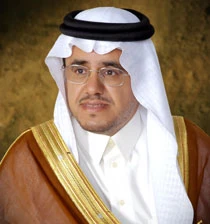
Abdulaziz Al-Babtain, CEO of the National Agricultural Development Co. (NADEC), one of the biggest joint stock companies in the agricultural sector, told Arab News that the dairy industry was reeling under the impact of the escalating prices of feedstock used in dairy production.
He, however, would not comment on the outcome of the meeting held by Minister of Industry and Electricity Hashim Yamani with the representatives of the dairy industry. “We have already explained the situation to the minister, “ Al-Babtain said.
He pointed out that fresh milk, which used to cost SR 5 per liter from 1985 to 1995, came down to SR4.50 per liter subsequently and stayed at that level till 2001, when it was further reduced to SR 3 per liter. During the same period the price of powder milk shot up from $500 a ton to over $5,000 a ton.
Al-Babtain said the situation facing the local dairy industry was also compounded by the fact that there has been an increase in the price of feedstock supplied by SABIC in addition to a 40 percent hike in the cost of transportation.
The corn price has also gone up from $ 166 to $330 per ton. “ No subsidy has been received from the Saudi government for the dairy industry, although it is helping to offset the rise in price of some feeds.”
He pointed out, “We are closely monitoring the price situation and will not hesitate to bring down the price level at the right time. We are trying to protect our consumers without compromising on the quality of our products,” Al-Babtain added.
Despite such constraints, the Nadec CEO said they continue to invest in fresh produce. Besides wheat production of 160,000 tons a year, other products include forages (220,000 tons), maize (70,000 tons), onions (30,000 tons), fruits (1,300 tons), honey (7,500 kg), dates (1,550 tons) and olive oil (74,000 liters). They have more than 160 different products, all of which are ISO-certified.
Referring to the challenge arising out of the formation of the Gulf common market, the CEO said the Saudi dairy industry was sophisticated enough to meet the challenge.
“There is no problem among GCC states, as we have good relations among them. The impact will be positive. Right now our focus is on the Kingdom, although we also export to other GCC states. So while the competition is already there, it will now become more professional.”
In this context, the CEO said Nadec has 34,000 head of cattle from top class American Holstein Friesians, with the average yield per cow standing at 12,000 liters, accounting for 200 million liters a year. This is distributed through 18,000 outlets a day.