
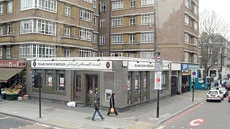
The UK banking regulator, the Financial Services Authority (FSA), published its long-awaited policy statement on “strengthening liquidity standards” for authorized financial institutions in the UK on Oct. 4.
The provisions stress that the FSA takes a “no obstacles, no special favors” approach to regulating Islamic banks in the UK.
“By ensuring a level playing field, we are aligned with the (UK) Treasury’s stated objective of developing London as a European and global center for Islamic finance,” said the FSA in a statement.
The UK currently has five dedicated Islamic banks authorized by the FSA. These include Islamic Bank of Britain, European Islamic Investment Bank, Bank of London & Middle East, European Finance House and Gatehouse Bank.
In addition, some 21 other authorized financial institutions offer Islamic banking products through specialized departments or windows, of which the major provider is HSBC Amanah, the Islamic finance division of the HSBC Group established in 1998.
Despite tough market conditions, these banks have managed to survive and in some cases are growing steadily. For instance, the Islamic mortgage book business of these banks total over £2 billion.
Banks were wary
The Islamic banks were wary that the FSA liquidity requirements would unduly put an extra burden on their capital requirements and structures.
They have been pleading with regulators all over the world to consider the special characteristics of Islamic banks, especially the nature of their deposits, which are fiduciary funds as opposed to a liability on the balance sheet.
However, under the UK Banking Act this is not the case and remains a major issue for authorizing Islamic banks in conventional jurisdictions, where deposits are seen as effectively a loan on the balance sheet of the bank and which euphemistically are guaranteed at a predetermined rate of return.
However, the FSA in its general liquidity statement for authorized financial institutions, of which only a few paragraphs related to Islamic banks, and published on Oct. 4, warns that it is unwilling to relax any prudential standards for the sake of competitiveness.
But the UK regulator acknowledges that feedback to its consultation document, CP08/22, raised a number of unique practical difficulties for Islamic banks.
“Over the last six months,” the FSA stresses, “we have engaged closely with other members of the Tripartite Authorities (HM Treasury, HMRC) and with Islamic banks operating within the UK to understand the issues our proposals raised and how to address them. We have amended the scope of application for our simplified liquidity approach, such that many Islamic banks would now be eligible for the simplified liquidity approach if desired. This will reduce the compliance burden for these banks, without reducing resilience.”
Perhaps more importantly, perhaps as a consolation, the FSA has also widened its definition of liquid assets to allow bonds (Sukuk and MTN) issued by the Islamic Development Bank (IDB) to count toward the liquidity buffers of Islamic banks. The IDB is currently the only Multilateral Development Bank globally to issue Shariah-compliant securities. It recently issued an $850 million dollar-denominated sukuk (out of a total program size of $1.5 billion) which is listed on the London Stock Exchange. The IDB has also announced its intent to issue a sterling-denominated Sukuk to support the development of a liquid Islamic banking system in the UK.
Islamic banks in most markets save Malaysia and Bahrain have a perennial problem in placing liquidity and their reserves with central banks, because most of them do not have Islamic papers or structures to accommodate or absorb this liquidity or reserves.
The UK has thus far issued no sovereign Islamic bonds or any other Shariah-compliant monetary policy management products. As such, UK-based Islamic banks cannot currently invest in UK government papers for their liquidity management requirements. They have to use private sector schemes such as those operated by DDCAP Limited, based on commodity Murabaha trading with the underlying contracts being those traded on the London Metal Exchange, or the Bursa Suq Al-Sila commodity trading platform recently introduced by Bursa Malaysia, the national stock exchange. The first international trade using this platform was executed by Gatehouse Bank and CIMB Islamic Bank in London in September 2009.
Meanwhile, Britain’s second largest city, Birmingham, is boosting the provision of professional services to support Shariah finance to compete with London. Organizations such as Birmingham Forward, the voice of the city’s professional services firms, and Locate in Birmingham have gone on the offensive in forging alliances and cooperation in the Islamic finance space. They are even marketing their locations in the GCC countries through attending various Islamic finance conferences and events. Perhaps it is no secret that the Islamic bank of Britain preferred to locate its headquarters in Birmingham because of its strategic position in the UK and the generous rental offer on the premises from the Birmingham City Council.
“Shariah finance has well and truly arrived. Several law firms have won work from the Middle East. Islamic mortgages are now available from not just the Islamic Bank of Britain but also Barclays, HSBC, Lloyds TSB and West Bromwich Building Society. Deutsche Bank decided to locate its Islamic finance unit in Birmingham last year,” stressed Mohammed Nazir, partner at Nazir Associates.
Birmingham
Birmingham’s reputation as a low cost center for Shariah finance is growing. The local Aston University is even considering running an MSC program and an academic chair in Islamic Business at its Business School. But the challenge added Nazir, is to bring it all together — a central steering group — to build a skills and investment base.
Graham Nicoll, deputy chair of Birmingham Forward and regional head at Barclays Wealth, explained that although “Shariah finance may initially sound complex, it’s based on good old-fashioned principles which I’d judge that a wide range of investors would put on their tick list when considering how best to build and protect their wealth. It’s all about making sound investments regulated by a formal contract (an Islamic integrity agreement) and where the profits are shared.
No interest-bearing loans are allowed in any Shariah-financed venture. I think it’s interesting that Shariah finance has been relatively unscathed by the global crisis as investors seek the rigorous screening and stringent corporate practices inherent in Shariah finance.”