
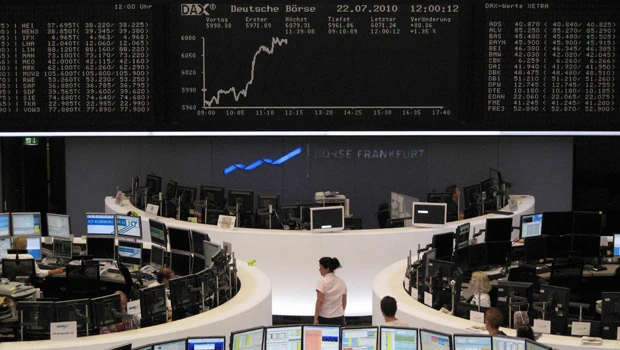
- LONDON: World stocks bounced on Thursday while the euro gained broadly as investors grew more optimistic the looming results of stress tests on European banks were unlikely to send shockwaves through markets.
Better-than-expected euro zone data on manufacturing and services activity also helped improve sentiment a day after Federal Reserve chairman Ben Bernanke painted a gloomy outlook for the US economy, which had weighed on risky assets.
Banks were one of the best performing sectors in Europe ahead of the publication of stress tests expected by Friday. Major listed lenders are expected to pass, while the tests may show the biggest problems lie with smaller, mainly unlisted players like Germany’s Landesbanks and Spain’s cajas.
Strong second-quarter earnings results from Morgan Stanley on Wednesday also underscored the positive sentiment.
“There’s just generally a bit more optimism, particularly considering Morgan Stanley’s results yesterday were absolutely amazing,” said Joshua Raymond, market strategist at City Index.
“Also there’s been some betting from clients that the stress test results aren’t going to be as bad as the market had feared some weeks ago.” The MSCI world equity index rose 0.4 percent while the Thomson Reuters global stock index gained two thirds of a percent. The FTSEurofirst 300 index rose 1.4 percent.
Emerging stocks erased early losses to stand steady on the day. US stock futures rose around 1.2 percent, pointing to a firmer open on Wall Street.
US crude oil rose half a percent to $76.92 a barrel, supported by forecasts for a fourth consecutive weekly drop in US crude inventories.
The dollar and US yields came under pressure on the prospect of further US monetary tightening. Bernanke said the Fed stood ready to ease monetary policy further if the budding US economy recovery withers, describing the outlook as “unusually uncertain.”
Two-year US Treasury yields briefly matched a record low of 0.556 percent hit the previous day, while the benchmark 10-year yield held near a 15-month low of 2.855 percent.
The dollar was down 0.7 percent against a basket of major currencies while it fell 0.2 percent to 86.77 yen, edging closer to last week’s seven-month low of 86.25.
The euro rose 0.8 percent to $1.2855 after a survey showed the euro zone’s private sector surged in July.
European purchasing managers’ indexes showed private sector business activity accelerated in July, surprising economists who had expected a slowdown and indicating third quarter euro zone growth of around 0.6-0.7 percent, analysts said.
Bund futures were steady.