
- If you want to see the old fashioned way of operating a consumer retail business, just walk into any corner grocery in Saudi Arabia.
- But for regional companies intent on thriving in a highly competitive marketplace, the days of managing accounts with a calculator and notepad are long gone.
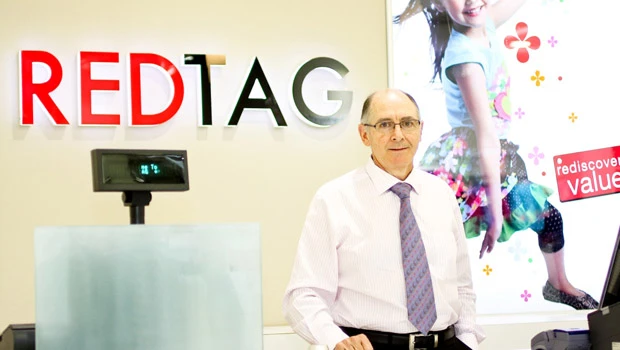
Ernest Hosking, CEO of the REDTAG Group, part of BMA International, told Arab News how the regional retailer has gradually been integrating various IT solutions into its operations. The company’s decision to invest significantly in technology began six years ago when REDTAG chose to bring in a comprehensive ERP solution to automate its back-end office processes. In particular, at that time the data from its point of sale system at all its stores throughout the region became available on a daily basis and detailed information on sales, stock and other operational details were revealed each evening. This was a major step forward for REDTAG because having up-to-date information on what is selling or not selling is essential in the retail trade.
REDTAG is a regional chain of value fashion and home stores targeting middle income Arab families. The company currently has 61 stores throughout the GCC. It’s a homegrown business rather than an international franchise transplanted to the region. REDTAG has decided to take the brand to the next level of growth, in part through the use of more high tech solutions which will enable them to compete effectively with any international brand. They believe that their local market knowledge combined with technology will give them the edge they need to allow the brand to flourish throughout the Arab world.
“The most recent technology effort on our part, and we’re busy with this as we speak, is the introduction of an Oracle planning system,” Hosking said. “Basically it will help us to pre-plan sales by location, department and category down to a fairly low level. This will enable us to place our orders in good time with our manufacturers. We’re not like some of the international branded stores who buy only whatever the franchise can offer them. We actually design and have our goods manufactured. So we need to be fairly predictive in assessing what the future trends are going to be. We need to consider the fashion point of view, category point of view, price point of view and location point of view. This Oracle solution is a very powerful tool that will help us get all that information together and make some kind of sense out of it in order to build our future purchasing plan.”
REDTAG imports about 75-80 percent of its goods from China. The company depends on manufacturers working with consolidators there to pool all the ordered goods and ship them to the Middle East. REDTAG has its own buyers and designers in-house. This small group of professionals works out of the REDTAG fashion office. They collect information on the latest fashion trends and travel to the US and Europe to see what’s happening in those markets. The designers get a feel for the entire global fashion scene and then interpret it, creating products that they believe will be attractive to their customers.
“It will be two more fashion seasons before we’ll get real use out of the new planning system, but we are looking forward to that time and investing to make it happen,” Hosking remarked. “For us, technology is a significant enabler. While technology doesn’t necessarily drive your business it certainly enables your business in all its facets. Whether you’re discussing business planning, movement of goods or understanding what’s happening on the sales front — information technology can provide the information necessary to make essential business decisions. For REDTAG, the rollout of technology is ongoing. We’re also embarking on an improvement in business efficiency in our logistics and warehousing setup. Again, technology will play a role in supporting that effort. Technology is crucial to help our company be more efficient and to give our customers what they want at the right time and in the right location.”
How can you tell when a retail brand is making the most of technology? Hosking advised that the single biggest challenge REDTAG or any retailer faces, is to sell as much merchandise as possible at full price. The need to mark down large quantities of goods for mega sales is not ideal for a retailer’s bottom line.
“If one day I can run the business and get to the end of the season and don’t have to mark down any goods to sell on sale, I think I’ll retire,” Hosking said with a laugh. “It’s not an easy thing to do and it’s what we ultimately want to achieve with the help of information technology. By the same token you can also starve your stores by being very tight on your inventory and have a whole lot of missed sales opportunities. There’s a very delicate balance to maintain. For us, being a value business, we feel our pricing is competitive 365 days of the year. It actually irks us to have to have sales to clear stock because it means we’ve done something that’s not quite as good as it should be.”
With the new planning system, REDTAG’s buyers will have a lot more detail about the products that are sold, including size, color, material and style. It will give the company a clearer indication of where its size curve should be positioned. Basically, they will be better able to understand what Arab consumers find most attractive in products and for the future should be able to increase customer satisfaction and higher profits will follow.
In terms of using technology to communicate with customers, Hosking commented that while REDTAG reaches out to customers through SMS and e-mail, that will change in the future. He feels that consumers are bombarded these days with so many text and e-mail messages that most just get discarded as SPAM. REDTAG does have a customer database created using details provided by customers at the stores. In the future they want to setup an in-house REDTAG Loyalty Club, which Hosking believes will allow the company to have a stronger relationship with customers. People tend to be interested in communications from loyalty clubs, perceiving them to offer an added value, so Hosking feels that a REDTAG Loyalty Club is a smarter move than simply sending out less targeted communications.
What exactly does the future hold for the brand?
“In 2010, we opened 19 stores. The pace of growth for us has picked up in the last two to three years,” said Hosking. “The business itself has actually been operating in the GCC since 1988 but it was in historic old store formats. We felt that they were in need of a rebrand and repositioning. We launched the REDTAG brand in a pilot store in 2006. As of today we’ve now opened 46 REDTAG stores and the remaining 15 stores out of the 61 in our portfolio will be rebranded and upgraded over the next 18 months to two years. In terms of growth, we have another four stores opening in Saudi Arabia before the end of April. Within the next two years we feel conceivably that we could be at 100 stores in the GCC. In addition to that, we are spreading out to the broader Middle East North Africa region beyond the GCC on a franchise basis. We have two stores opening in Jordan before the end of August and we have been in negotiation for franchises in Yemen and Egypt — but would need this current situation to settle before the business can expand there.”
It is certain that for REDTAG, IT systems will be underpinning all that growth.