
- MILAN: The UN Food and Agriculture Organization said its April global food index was steady as falls in sugar and rice prices offset gains in other foods, but long term stability depended on boosting supplies.
Rising food prices have become hugely sensitive around the world after fueling protests that toppled the rulers of Tunisia and Egypt earlier this year, with unrest spreading across North Africa and the Middle East.
The FAO index, which measures monthly price changes for a basket of cereals, oilseeds, dairy, meat and sugar, averaged 232.1 points in April, up from 231.0 in March when it fell from record highs following eight months of successive rises.
April’s index was 2 percent below a record high of 237.2 points hit in February, according to FAO’s updated data.
“A sliding dollar and increased oil prices are contributing to high food commodity prices, particularly grains,” David Hallam, Director of FAO’s Trade and Market Division, said in a statement.
“With demand continuing strong, prospects for a return to more normal prices hinge largely on how much production will increase in 2011 and how much grain reserves are replenished in the new season,” he said.
The FAO said it expected a recovery in world cereals output in 2011 after farmers increased plantings encouraged by high prices, but weather conditions remain crucial, especially in the main producing countries.
Russia and Ukraine, which saw their harvests slashed back by severe drought in 2010, will play a part in the recovery as they experience a huge recovery in grain crops this year, a senior FAO economist and grain analyst said.
“We are going to see quite a big recovery in production in Russia, although it may not be as good as one would have hoped for, but it is still a huge recovery compared to last year’s disastrous output,” Abdolreza Abbassian said.
“We are going to get extra crop in Ukraine... we are going to see hopefully a record crop in India, very good crop in Pakistan in general, on the wheat front we feel far more comfortable than we are with the corn.”
Russia last August banned grain exports after its 2010 harvest plunged to 61 million tons from 97 million in 2009. It has raised its official crop forecast to 85-90 million tons for this year.
Ukraine imposed export quotas last year after its drought and analysts say the 2011 grain crop could total 44.7 million tons after 39.2 million in 2010. Exports could jump to 22-23 million in 2011/12. That compares with exports of 21.5 million tons of grain in 2009/10 and more than 25 million in 2008/09 but only an estimated 11 million for 2010/11.
The FAO expects world wheat output to rise 3.5 percent this year.
“Among all the cereals, maize is the most worrisome,” Abbassian said in the statement.
This year we would need above-average, if not record, yields in the United States for the maize situation to improve but maize plantings so far have been delayed considerably due to cool and wet conditions on the ground.”
FAO Director General Jacques Diouf told Reuters Insider on Tuesday a weak trend in the world food prices had already begun to reverse and prices were set to rise again as concerns persist over Chinese and US winter crops.
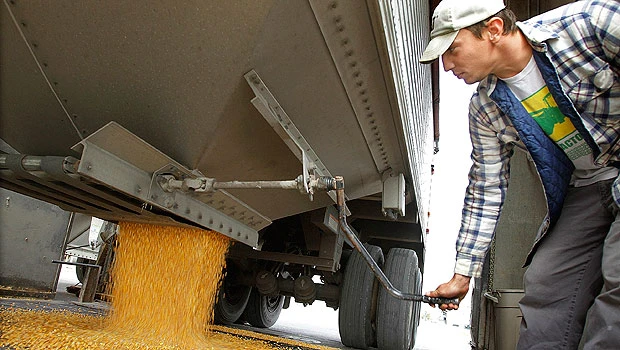
Corn prices on the Chicago Board of Trade last month pushed above wheat prices for the first time in 15 years as US stocks dwindled to their tightest since the 1930s.
The FAO’s Cereals Price Index, which includes prices of main food staples such as wheat, rice and corn, rose 5.5 percent to an average of 265.1 points in April.
The FAO Sugar Price Index averaged 348 points in April, 7 percent down from March. The FAO Oils/Fats Price Index fell to 259.1 points in April from 259.9 in March.