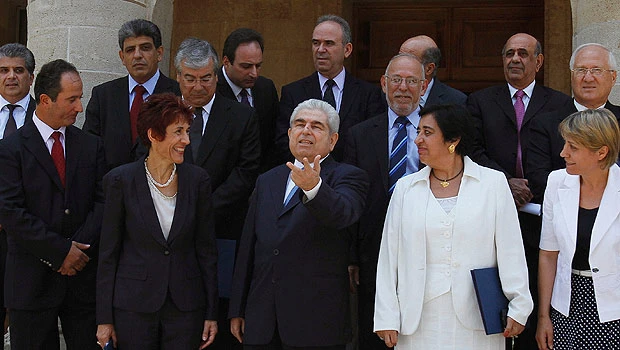
- NICOSIA: Cyprus’ embattled president reshuffled his 11-member Cabinet on Friday in an attempt to combat a political and economic crisis spawned by last month’s deadly blast that wrecked the island’s main power station and sapped confidence in the government.
President Dimitris Christofias is trying to combat public criticism of his government and calls for him to resign over the island’s worst peacetime military disaster, which has fanned speculation the EU member country may be forced to seek a bailout.
“Now is not the time to serve petty party politics, personal agendas and ambitions,” the communist-rooted Christofias said after the new ministers took the oath of office. Christofias has ruled out resigning, offering instead an olive branch to detractors.
“As president duly elected by the people, I will continue to fulfill my duties responsibly, extending a hand of friendship and cooperation to all,” he said.
The island’s 17.4 billion euros ($24.76 billion) economy has already been shaken by a string of credit rating agency downgrades mainly because of the banking sector’s large exposure to Greece’s embattled economy.
But the July 11 detonation of dozens of seized containers packed with Iranian munitions at a naval base — which killed 13 people and cut the island’s power supply by half — is pushing the economy to the brink.
So far, EU officials say there are no plans for any Cyprus bailout. But a University of Cyprus study released this week said the economy will contract by 2.4 percent of gross domestic product this year and push unemployment up by a percentage point. The EU had projected growth of 1.5 percent of GDP for Cyprus this year.
Christofias appointed longtime ally and former minister Kikis Kazamias to the key finance ministry post. Kazamias must shore up public finances as business leaders press for urgent cost cuts to reassure markets and prevent a financial meltdown.
Kazamias denied on Friday that the island would seek a bailout anytime soon.
“I’m naturally optimistic that everyone will contribute in a positive way for the ship to proceed along a proper and stable course,” he said.
After much wrangling, the island’s powerful trade unions may be about to accept calls for more cuts to the bloated public sector that takes up more than a quarter of the government’s annual spending of 8 billion euros ($11.38 billion). Negotiations on a package of spending cuts and tax hikes are expected to finish next week.
In the Cabinet reshuffle, career diplomat Erato Kozakou-Marcoullis moves from the communications ministry to foreign affairs, a post she held briefly in the previous administration. She takes over from Markos Kyprianou who resigned in the wake of the explosion which many Cypriots saw as a result of official negligence and demanded Christofias be held accountable. The defense minister also quit after the blast.
Christofias’ woes were compounded this week when Kyprianou’s center-right DIKO party walked out of the governing coalition, citing strong disagreements over the president’s handling of talks with breakaway Turkish Cypriots to reunify the divided island.
The move left Christofias with only the backing of his communist-rooted party AKEL which holds 19 of the 56 parliamentary seats, hobbling his ability to pass legislation for the remaining 18 months of his five-year tenure. However, opposition parties have indicated they will support legislation aimed at saving the economy from ruin.