
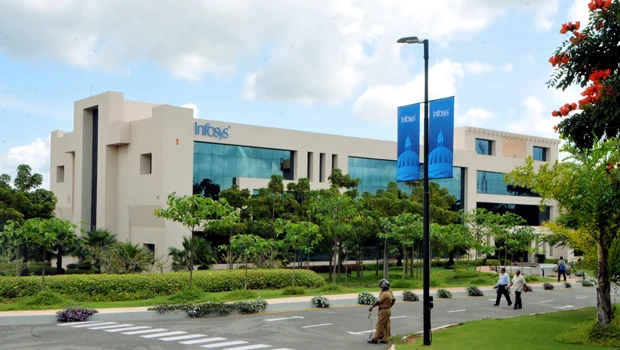
- Poised to become a $225 billion industry by 2020, the Indian information technology (IT) industry has played a key role in putting India on the global map.
The IT-BPO sector has become one of the most significant growth catalysts for the Indian economy. In addition to fueling India’s economy, this industry is also positively influencing the lives of its people through an active direct and indirect contribution to various socio-economic parameters such as employment, standard of living and diversity. The industry has played a significant role in transforming India’s image from a slow moving bureaucratic economy to a land of innovative entrepreneurs and a global player in providing world-class technology solutions and business services, according to National Association of Software and Service Companies (NASSCOM).
The sector is estimated to have grown by 19 percent in the Fiscal Year (FY) 2011, clocking revenue of almost $76 billion. India’s outsourcing industry has witnessed a rebound and registered better than expected growth according to NASSCOM. The export revenues are estimated to have aggregated to $59 billion in FY2011 and contributed 26 percent as its share in total Indian exports (merchandise plus services), according to a research report IT-BPO Sector in India: Strategic Review 2011, published by NASSCOM. The work force in Indian IT industry will touch 30 million by 2020 and this sunrise industry is expected to continue its mammoth growth, expect various industry experts.
Furthermore, NASSCOM said that the domestic IT-BPO revenues excluding hardware are expected to have grown at almost 16 percent to reach $17.35 billion in FY2011. Strong economic growth, rapid advancement in technology infrastructure, increasingly competitive Indian organizations, enhanced focus by the government and emergence of business models that help provide IT to new customer segments are the key drivers for increased technology adoption in India.
The data center services market in the country is forecast to grow at a compound annual growth rate (CAGR) of 22.7 percent between 2009 and 2011, to touch close to $2.2 billion by the end of 2011, according to research firm IDC India’s report. The IDC India report stated that the overall India data center services market in 2009 was estimated at $1.39 billion.
India will see its number of Internet users triple to 237 million by 2015, from 81 million registered in September 2010, according to a report titled Internet’s New bn, by the Boston Consulting Group (BCG). BCG said Internet penetration rate in India is expected to reach 19 percent by 2015, up from the current seven percent.
Telecom Regulatory Authority of India (TRAI) is targeting a 10-fold increase in broadband subscribers to 100 million by 2014. The country has 10.29 million subscribers now. “We will have 100 million broadband subscribers by 2014,” J.S. Sarma, chairman, TRAI, said at the fifth India Digital Summit 2010 organized by the Internet and Mobile Association of India.
The penetration of the Internet in rural areas will see an all time high in 2011. In a survey conducted by IMRB for the Internet and Mobile Association of India (IAMAI), the total number of active Internet users in rural area will rise by 98 percent to touch 24 million by the end of 2011 from 12.1 million in December 2010. The survey said that the claimed Internet user category is also set to grow by 96 percent to reach 29.9 million by December 2011 from 15.2 million in December 2010.
India is a preferred destination for companies looking to offshore their IT and back-office functions. It also retains its low-cost advantage and is a financially attractive location when viewed in combination with the business environment it offers and the availability of skilled people. The country’s domestic market for business process outsourcing (BPO) is projected to grow over 23 percent to touch $1.4 billion in 2011, says global research group Gartner. In 2010, the domestic BPO market was worth $1.1 billion. The firm predicts that the domestic BPO market would reach $1.69 billion in 2012 and increase to $2.47 billion by 2014.
India’s top technology firms like TCS, Infosys, Wipro and HCL are readying plans to gain a bigger share of their largest market, US, by aggressively chasing contracts being served by multinational rivals. Analysts expect the top IT firms to grow between 23-27 percent in the FY 2012 on the back of more number of discretionary projects, improved pricing, and robust business volumes.
Government sector is a key catalyst for increased IT adoption — through sectors reforms that encourage IT acceptance, National e-Governance Programs (NeGP), and the Unique Identification Development Authority of India (UIDAI) program that creates large scale IT infrastructure and promotes corporate participation. Certain crucial steps taken by the Indian government to propel the sector growth are:
Constitution of the Technical Advisory Group for Unique Projects (TAGUP) under the chairmanship of Nandan Nilekani. The group would develop IT infrastructure in five key areas, which includes the New Pension System (NPS) and the Goods and Services Tax (GST). Setting up the National Taskforce on Information Technology and Software Development with the objective of framing a long-term National IT Policy for the country.
Enactment of the Information Technology Act, which provides a legal framework to facilitate electronic commerce and electronic transactions.
Setting up of Software Technology Parks of India (STPIs) in 1991 for the promotion of software exports from the country. There are currently 51 STPI centers where apart from exemption from customs duty available for capital goods, there are also exemptions from service tax, excise duty, and rebate for payment of Central Sales Tax.
Plans to formulate Information Technology Investment Regions (ITIRs). These regions would be endowed with excellent infrastructure and would reap the benefits of co-sitting, networking and greater efficiency through use of common infrastructure and support services.
The Indian IT sector continues to be one of the sunshine sectors of the Indian economy showing rapid growth and promise. According to a report prepared by McKinsey for NASSCOM called Perspective 2020: Transform Business, Transform India, the exports component of the Indian industry is expected to reach $175 billion in revenue by 2020. The domestic component will contribute $50 billion in revenue by 2020. Together, the export and domestic markets are likely to bring in $225 billion in revenue, as new opportunities emerge in areas such as public sector and health care and as geographies including Brazil, Russia, China and Japan opt for greater outsourcing.