- Magdi’s writing has the unguarded honesty of a journal
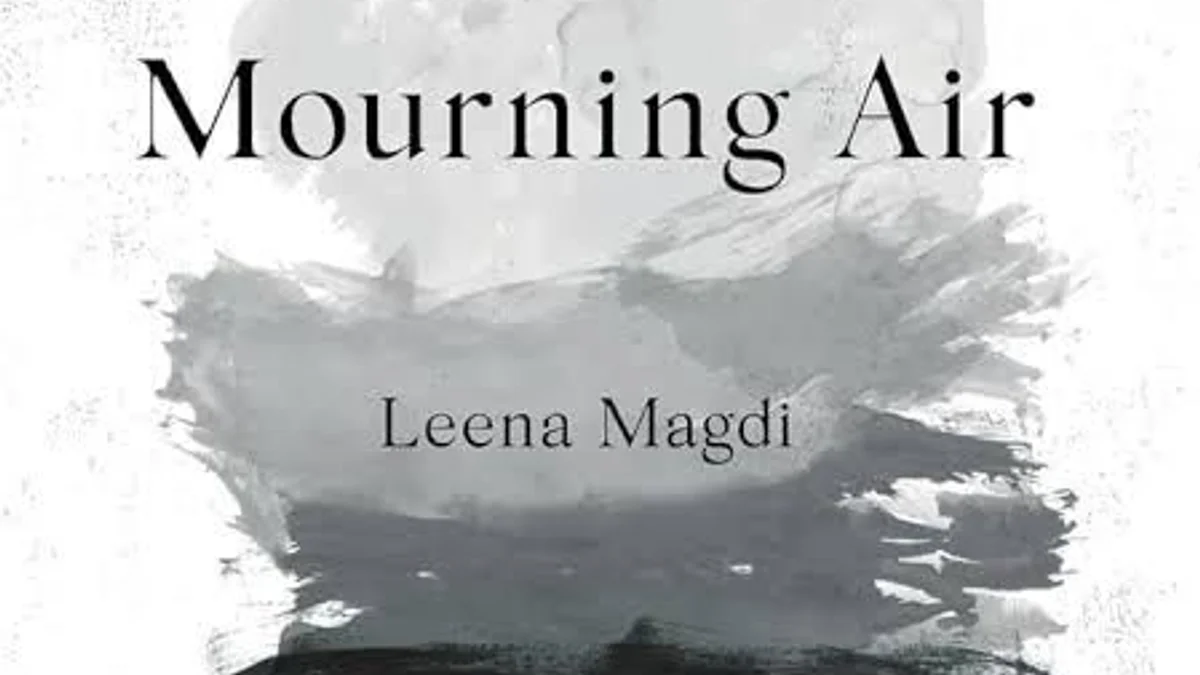
RIYADH: “Mourning Air” by Leena Magdi is an intimate meditation on grief, belonging, faith and the enduring love between siblings.
Published in April 2025 by The Dreamwork Collective, it is a deep breath of a book, though perhaps more accurately, as Magdi suggests in her introduction, “a written exhale”: an attempt to release what has become too heavy to carry alone.
At its center is the sudden death of the writer’s younger brother, Hamoodi, who was killed by an RSF soldier in August 2022.
The author releases her grief onto the page and follows its path through memory, spirituality, poetry and the ordinary rhythms of a world that goes on even when one’s own seems to have stopped.
At the heart of the book is the love between siblings, especially an elder sister and her little brother. Magdi’s prose has the unguarded honesty of a journal, and it is threaded with her own poetry as well as pieces by her late brother. His words appear on the page alongside hers, ensuring that he is not only mourned here but heard.
The question of homeland occupies an important place in her writing. Born in Sudan, she left as a child, arriving in the US at the age of 5. Then, years later, Magdi returned to Sudan and lived there with her family for four years. Having belonged to two places, and fully to neither, she came to Khartoum as both a daughter of it and somewhat of a visitor.
She writes about belonging and home, and about how her brother’s death and burial in Khartoum transformed her relationship with the city. Because he rests there, Khartoum became home to her in a way it hadn’t been before.
By centering one sister’s grief, “Mourning Air” records what is happening in Sudan more intimately than any broad account could, collapsing the distance between the personal and the national. Her brother’s death becomes inseparable from the loss Sudan itself has endured, as the country’s violence and upheaval are felt in the rupture of a family and the altered meaning of home.
Faith and spirituality are among the threads that hold the book together, offering a way to navigate the enormity of loss and the uncertainties of life while giving language to its more difficult and complicated terrain.
“Mourning Air” is brief, luminous and unflinching. In honoring her late brother’s memory and the love between them, Magdi has written a generous companion for anyone struggling through grief.
Readers who have lost someone will feel seen, and those who have not will understand a little more about what it means to love someone that fiercely.
I sometimes find myself returning to Magdi’s words for the clarity they offered, and for their reminder that there is value in acknowledging what we do not yet understand.