
RIYADH: Saudi Arabia’s football investments will ultimately be judged not only by trophies, but by whether they produce self-sustaining clubs, durable commercial revenue and wider economic value for the Kingdom’s sports industry.
That test is becoming more important as the Public Investment Fund shifts from rapid expansion toward sustained value creation, investment efficiency and long-term returns under its 2026-2030 strategy.
English football team Newcastle United, acquired in 2021 by a PIF-led consortium, offers an early case study.
The Premier League club reported record turnover of £335.3 million for the year ended June 2025, including a 44 percent increase in commercial revenue, despite having no European competition during the accounting period.
However, international sports lawyer Francesca Petriccione said the headline numbers must be separated from the underlying economics.
“The starting point is to distinguish revenue growth, accounting profitability and genuine economic value creation. In professional football, these three measures can diverge materially, particularly where an ownership group is simultaneously investing in sporting competitiveness, commercial expansion and infrastructure,” she told Arab News.
Testing the Newcastle numbers
Newcastle reported a £34.7 million profit after tax, but its accounts included a £133.2 million gain from the intra-group transfer of St. James’ Park and adjoining land.
The club said the reorganization was undertaken to support future infrastructure investment and that the gain would be adjusted in the following financial year after a Premier League fair-market-value review.
Petriccione said the transaction could have a legitimate strategic purpose but should not be treated as recurring operating income.
Investors should instead examine normalized earnings, operating cash-flow conversion, underlying profit excluding exceptional transactions and whether recurring commercial revenue is negotiated independently and at arm’s length, she said.
She also cautioned against treating an increase in a club’s estimated valuation as proof of a successful shareholder return.
The calculation must account for the difference between enterprise and equity value, cumulative capital contributions, financing requirements and the investment’s holding period.
“For me, the decisive indicator is whether Newcastle can progressively fund its competitive ambitions through recurring, independently generated cash flows whilst preserving balance-sheet resilience,” Petriccione said. “That is the distinction between shareholder-financed expansion and the creation of a genuinely self-sustaining sporting enterprise.”

The regulatory pressure is no longer theoretical. UEFA said in June that Newcastle had breached both its football earnings rule and its 70 percent squad-cost ceiling for the 2025 calendar year.
The club entered a three-year settlement over the earnings breach and received a €3 million ($3.35 million) fine for exceeding the squad-cost limit.
The Premier League also replaced its Profitability and Sustainability Rules at the start of the 2026/27 season with a Squad Cost Ratio framework and Sustainability and Systemic Resilience rules.
Its domestic ratio limits on-pitch spending to 85 percent of football-related revenue and net profit or loss from player sales, while UEFA applies a separate 70 percent ceiling to clubs in its competitions.
From foreign asset to Saudi ecosystem
For Saudi Arabia, the calculation extends beyond Newcastle’s standalone accounts.
PIF’s football portfolio forms part of a wider effort to develop the domestic league, attract private capital, improve club governance and build the infrastructure and visitor economy needed ahead of the 2034 FIFA World Cup.
PIF acquired 75 percent stakes in Al-Hilal, Al-Nassr, Al-Ittihad and Al-Ahli in 2023 as part of the Kingdom’s sports-club investment and privatization program.
In April, the fund signed an agreement for Kingdom Holding Co. to acquire 70 percent of Al-Hilal Club Co. at an enterprise value of SR1.4 billion ($373 million), providing a visible market valuation for one of the domestic assets developed under the program.
The long-term scorecard could therefore include more than club profits.
It may also cover private-sector participation, sponsorship and media income, and venue utilization, as well as job creation, tourism spending, and governance standards. Another factor could also be whether Saudi clubs can attract capital without continued dependence on state funding.
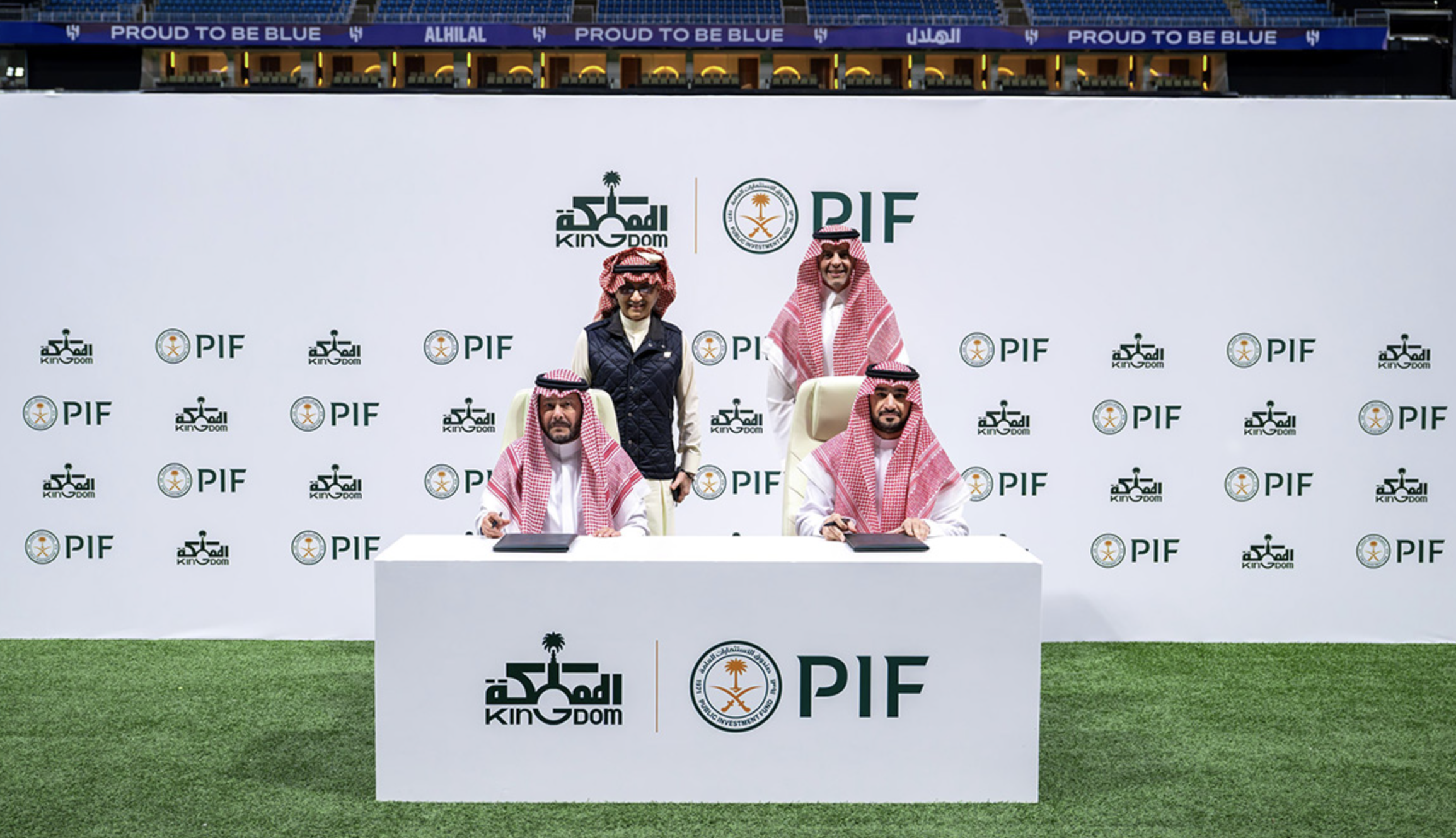
Samantha Murray, an Olympic silver medallist and Riyadh-based broadcast journalist, told Arab News that winning remains commercially useful because it attracts audiences and sponsors, but enduring success requires clubs to become less dependent on results.
“The objective is no longer simply to acquire international followers. It is to turn those followers into an engaged and commercially valuable global community,” she said.
That means converting attention into recurring income through memberships, merchandise, media products, events, academies and year-round use of stadium districts.
For Saudi Arabia, it also means ensuring that international investments provide expertise, relationships and commercial lessons that strengthen the domestic football economy.

A distinct Saudi model
Murray described the Gulf’s major football investments as distinct rather than interchangeable.
Abu Dhabi has built a multi-club network through City Football Group, while Qatar has concentrated much of its strategy in Paris Saint-Germain as a global sports, fashion and entertainment brand.
Saudi Arabia’s model is broader: Newcastle is an international asset within a domestic program spanning club privatization, league development, tourism, entertainment and preparations for the World Cup.
The trophies still matter. Newcastle ended a 70-year domestic trophy drought in 2025 and qualified for the following season’s UEFA Champions League.
Yet the harder measure of success will be whether that sporting momentum produces reliable cash flow — and whether the Kingdom can turn football’s global reach into a commercially resilient sector at home.