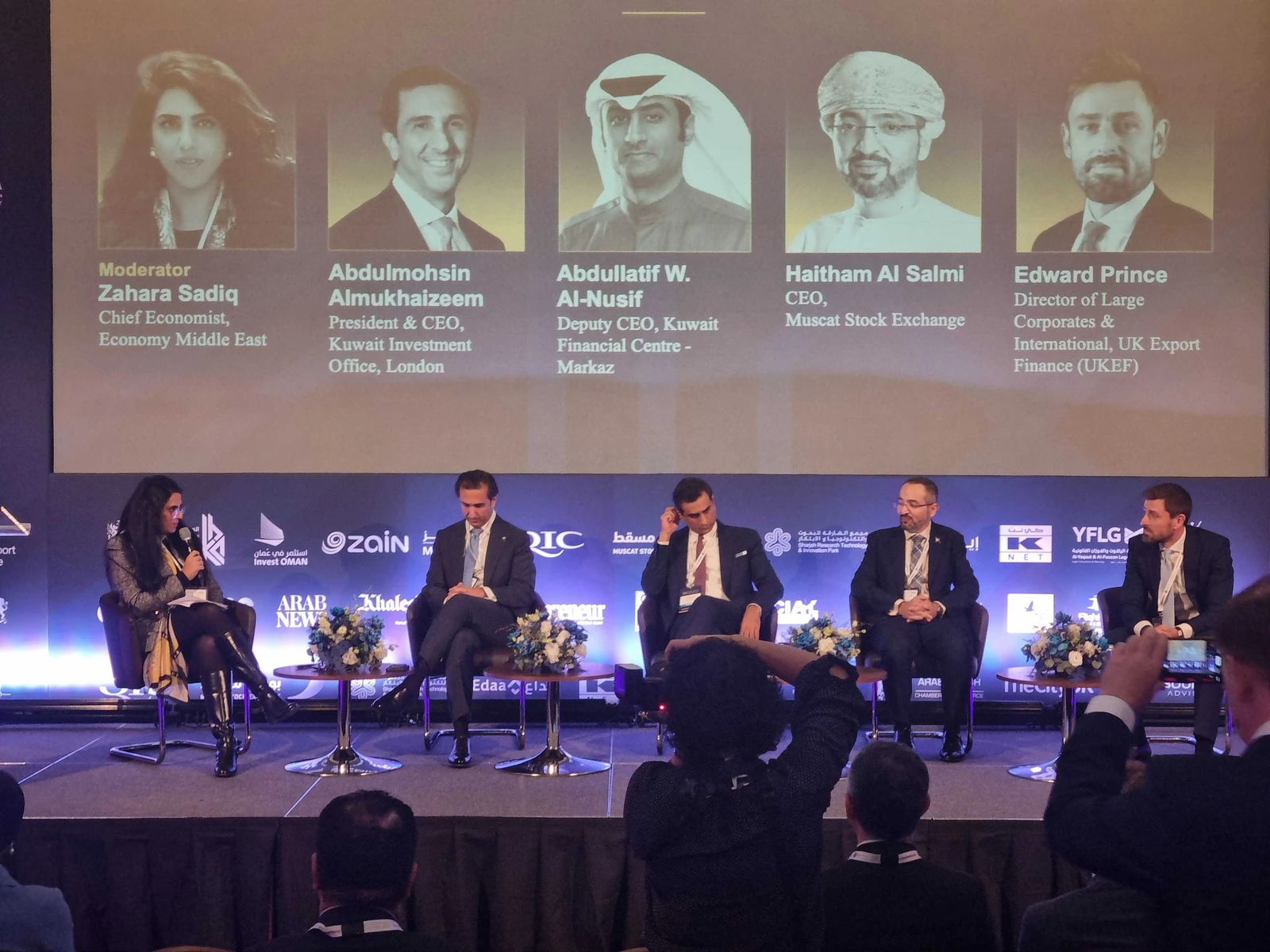
LONDON: Fragmented payment systems and divergent regulations are preventing the UK and GCC from unlocking the full potential of cross-border trade, business leaders said at the UK-GCC Strategic Dialogue.
Calling for closer cooperation between regulators to develop common standards and make payments between Britain and GCC countries faster and easier, KNET CEO Esam Alkheshnam said even straightforward transactions faced obstacles.
He cited differences in the permitted purposes of instant payments between Kuwait, the UK and other markets as an example of how seemingly minor discrepancies could complicate cross-border transactions.
Alkheshnam said that “regulators have to actually come forward and work together,” stressing that greater coordination was essential to ensure the financial systems needed to make the newly concluded UK-GCC free trade agreement work effectively.
Businesses trading between the UK and the six GCC countries — Bahrain, Kuwait, Oman, Qatar, Saudi Arabia and the UAE — as well as individuals sending money internationally, frequently face challenges arising from differing banking requirements.
Alkheshnam urged linking domestic instant-payment infrastructures across borders to reduce reliance on traditional international payment arrangements, which can take several days to settle.
Greater integration would benefit remittances, small and medium-sized enterprises and trade transactions, he said.
He added that the UK and GCC were well placed to learn from each other, with Britain able to share expertise in open banking, competition and regulatory standards, while Gulf countries’ experience in coordinating national payment infrastructure could offer lessons for the UK.
He said “discussion” was needed and “agreements have to be made” to move beyond broad commitments toward the technical standards required to make cross-border systems work together.
Revolut Chair Martin Gilbert separately highlighted the Gulf’s growing importance to international financial services, describing the region as increasingly attractive because of its wealth, young population and international remittance flows.
“When I first started in asset management sort of 40 years ago, and anyone ever asked me where they should go, I would say go to Asia. Now I would say go to the Middle East,” Gilbert told attendees.
Reflecting the region’s growing importance, Gilbert said Revolut was seeking to expand in markets including Saudi Arabia and the wider GCC, citing the Gulf’s role in remittances and its potential for digital financial products.
He said the company’s strategy was shifting away from entering new markets as a money transfer specialist towards launching as a fully fledged bank, allowing it to offer a broader range of services through its app.
Asked what made Gulf countries attractive to businesses and investors, Gilbert said: “They’ve got wealth and learning how to invest it globally, and more importantly, learning how to invest it locally.”