- Kamal Hibri and his father, Issam, founded KHT Sports, now Lebanon’s official distributor for equipment maker Uhlsport, in the belief that Lebanese football lacks resources, not talent
- They play key role in recent signing of national team goalkeeper, Ali Sabeh, as the first Lebanese ambassador for the German sports brand
ALKHOBAR: In 2012, Lebanon looked like a good bet to mount an unlikely run to the 2014 FIFA World Cup, having beaten Asian heavyweights South Korea and Iran in the qualification stages. The campaign ultimately collapsed, however, and was followed by an agonizing near miss in their attempt to earn a place at the 2015 AFC Asian Cup.
Their first-ever Asian Cup qualification on merit (after participating as host nation in 2000) came in 2019. They qualified again in 2023, but a defeat by Yemen on the final day of qualification in June dashed their hopes of a third consecutive Asian Cup appearance in 2027.
To call this a disappointment for Lebanese football fans would be an understatement. After all, with the World Cup having expanded to 48 teams this year — and potentially 64 in 2030 — supporters feel the national team should be getting closer to qualifying for the world’s biggest competition, not backsliding on years of steady growth during which they had built a reputation as Asian Cup regulars.
While the efforts to develop and improve on the pitch continue, off the pitch a Lebanese company aims to help the country close the gap on the world’s top footballing nations, one pair of gloves at a time.
Kamal Hibri has seen the struggles Lebanese football faces up close. As managing director of KHT Sports, official distributor of the Uhlsport brand in Lebanon, and a contributor to the development of the Lebanese game, he believes the problem starts with the available resources.
“We have great players and we have great potential,” he told Arab News. “However, the resources are the main challenge that is stopping us from reaching the potential that we want.”
Resources, in this context, is an umbrella term he uses to cover a long list of problems, including organization, governance, funding and equipment. These are issues that Hibri and his father, Issam, a former youth football coach in Lebanon, decided to chip away at by setting up KHT Sports.
“It all started with me ordering gloves for my brother Omar, who is an 11-year-old goalkeeper — a very young prospect,” he said. “But there was a lack of… I do not want to say good-quality gloves, but compared to other brands, there were goalkeepers that were struggling to find the gloves that they felt comfortable with.”
This search for gloves for his brother grew into KHT becoming the official distributor in Lebanon for Uhlsport, a German sports brand with a particular focus on goalkeeping. And their journey together reached another milestone on Oct. 22, when Uhlsport announced a first for Lebanon.
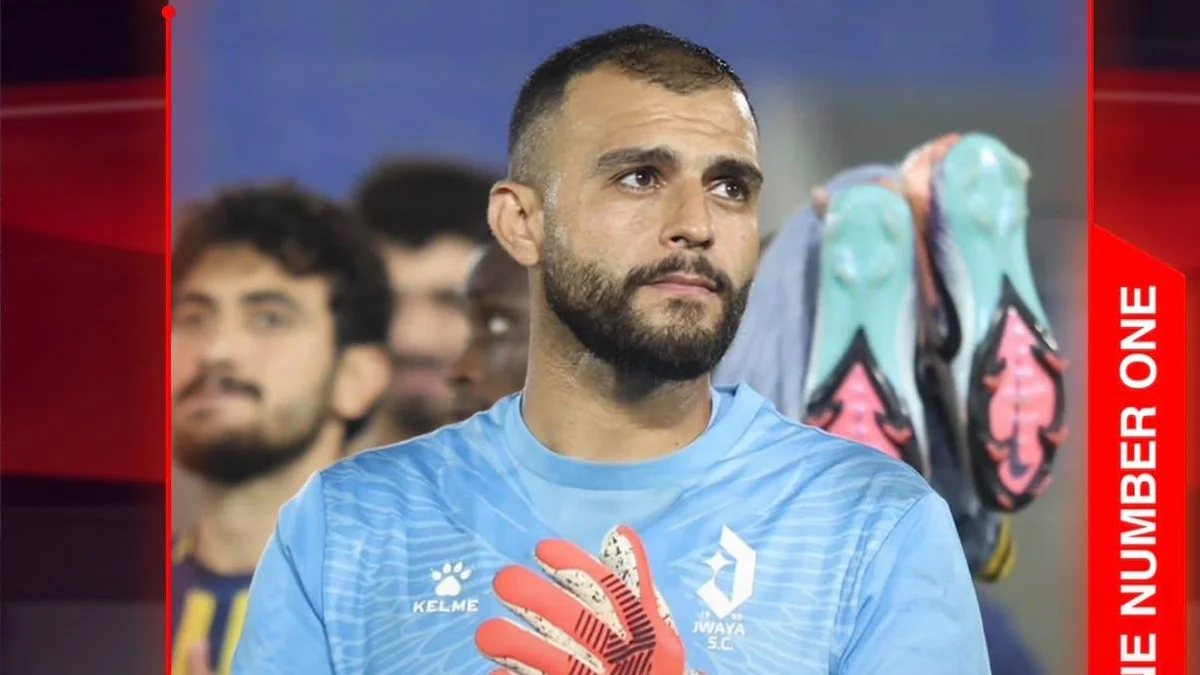
“A new chapter for uhlsport in Lebanon!” the company said on Instagram. “We’re proud to welcome @alisabeh01 as our first Lebanese uhlsport ambassador, joining the family through our official distributor, KHT Sports.”
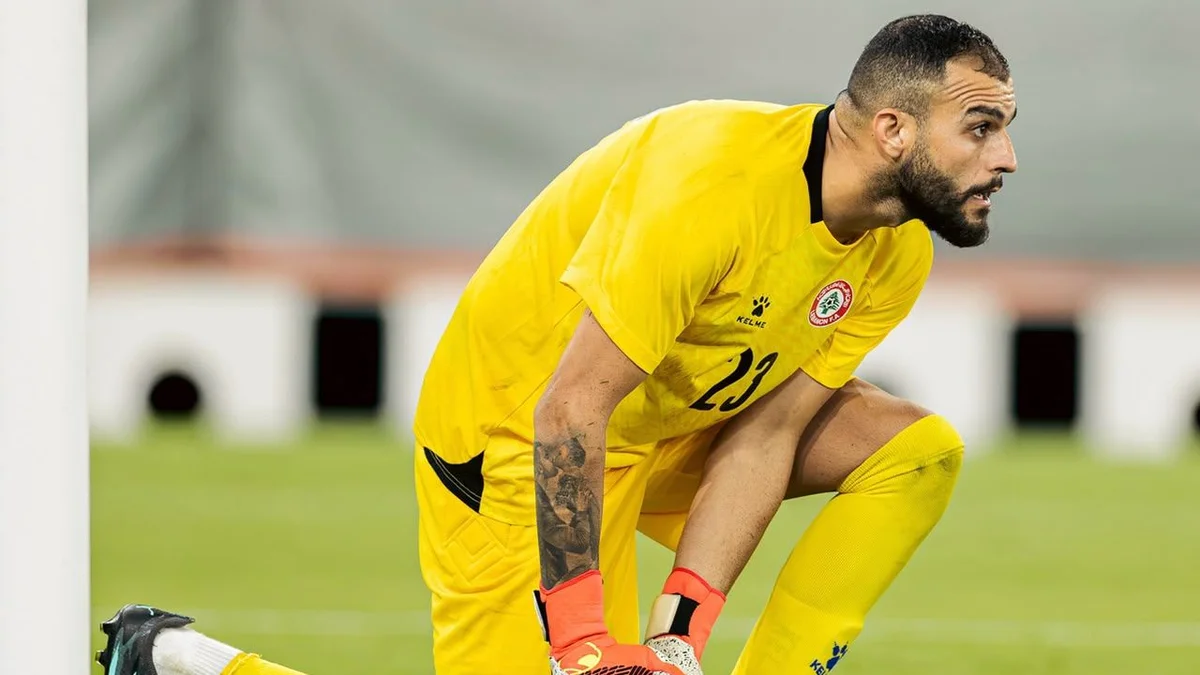
Few goalkeepers in the Lebanese Premier League have been as dependable as Ali Sabeh. According to football database Transfermarkt, his total of 61 clean sheets to date is the second-highest in the modern history of the league, and last season he was a cornerstone of Jwayya’s historic top-four finish in their first season among the elite. He has also earned eight caps for his country.
The signing of Sabeh was personal for Hibri: “It is something a bit emotional, considering the fact that I used to watch him (Sabeh) in my early days.
“But that is what we try to do at KHT Sports; we want to put all of these goalkeepers and exciting prospects under one umbrella to try to show them to the world. If not in Lebanon, maybe abroad.”
Sabeh’s role as brand ambassador for Uhlsport means the 32-year-old goalkeeper’s ambitions will continue to be supported, Hibri said. While his meetings with the ’keeper focus mostly on practical matters such as how many pairs of gloves he needs each season, Hibri also aims to build an understanding the player’s expectations.
“What differentiates us is not just the quality of the product, but having opportunities to grow as a person, as a player and as an ambassador,” he said.
Sabeh told Arab News how much the opportunity he has been given meant to him as a Lebanese footballer: “I am honored that KHT chose me to be the right person to become the first ambassador with Uhlsport. There isn’t a goalkeeper in the world that would reject this opportunity.
“This places a greater responsibility on me, as a Lebanese player, to maintain the level of my performances and keep growing to greater heights.”
He thanked the Hibris for their help arranging the deal: “I’m grateful to Issam and Kamal Hibri for bringing Uhlsport to Lebanon, and for helping me become its first ambassador here.
“I’m also very grateful to my fans — and hopefully Ali Sabeh stays up to the task.”
With that in mind, he said his professional focus now was on two things.
“Right now we’re preparing with the national team through friendlies as we start World Cup qualifiers next year,” he said.
Meanwhile, his club reached the championship group last season, their first among the country’s elite clubs, and challenged for the league title; now they want to go all the way.
“At Jwayya, we are a team focusing on doing the unthinkable and winning the title in our second season in the top flight,” he said.
Hibri believes developments such as Sabeh’s new role as a brand ambassador can contribute significantly to the growth of Lebanese football.
“If you ask Ali how he started in football, compared to a goalkeeper starting in Lebanon right now, they would both tell you a different story,” he said.
“Even Lebanese clubs like Jwayya, Ahed, Nejmeh and Ansar are working in ways that are different to how they used to work five to 10 years ago.”
While the national team’s results might have been better five or 10 years ago, a new generation of Lebanese fans is bringing passion, creativity and belief to a football ecosystem badly in need of solutions. While equipment alone will not lead Lebanon back to participation in the Asian Cup, initiatives such as KHT’s player partnerships can perhaps help the country narrow the gap on other nations.
“This could be a breakthrough for Lebanon, because we have lots of talent and we are seeing them every day,” Hibri said. “In order to reach our goals as a country, they need to be supported.”