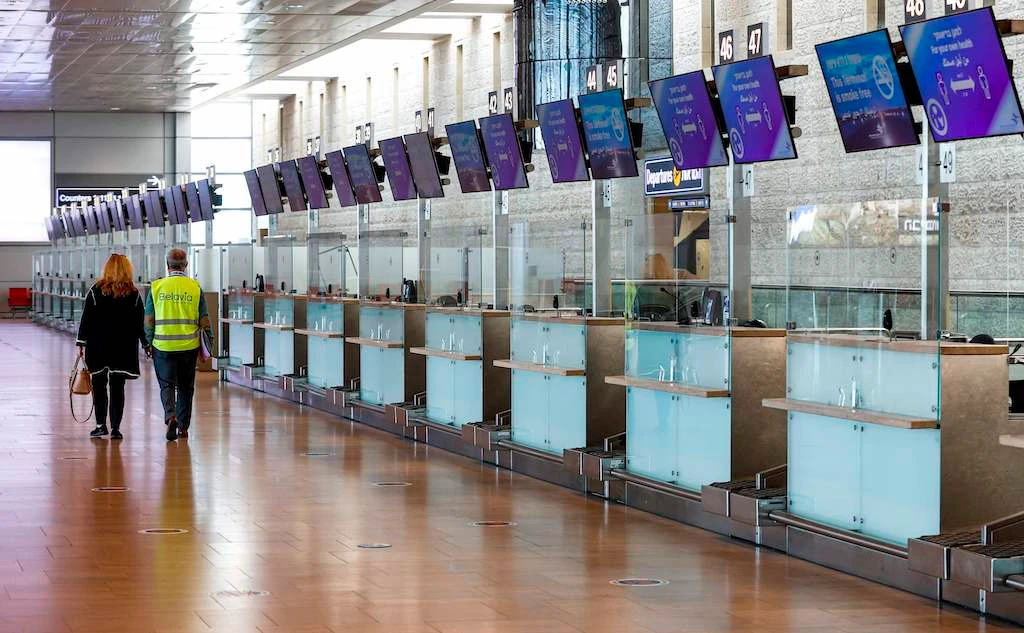
- Channel 4 correspondent Secunder Kermani, who arrived in Israel to cover its upcoming election, was initially denied entry at Ben-Gurion Airport on Monday.
- The incident has renewed scrutiny of Israel’s treatment of international journalists.
- At least six journalists have been denied entry to Israel or the Palestinian territories or had their travel authorizations revoked over their reporting or public statements.
LONDON: British journalist Secunder Kermani said Israeli border officials asked him whether he believed Israel was committing genocide in Gaza after initially denying him entry at Ben-Gurion Airport on Monday.
Kermani, an award-winning foreign affairs correspondent for Channel 4 News, arrived in Israel to cover the country’s upcoming election. He said he received a written notice saying he would not be allowed into the country and was taken to an immigration detention facility.
Border officials also asked whether he considered Hamas and Hezbollah to be terrorist organizations, he said.
“I was asked if I think Israel is committing genocide,” Kermani wrote in a WhatsApp group that includes foreign journalists and Israeli officials, according to Haaretz.
“Is this a new government policy to only allow certain journalists into the country? Even when they work for mainstream news organizations?”
His entry was approved several hours later after Channel 4 contacted Israeli diplomats.
The incident has renewed scrutiny of Israel’s treatment of international journalists reporting on the country.
In a post on X following the detention, Kermani, who in 2024 won an Emmy and a BAFTA for Channel 4’s “Inside Gaza: Israel and Hamas at War,” which covered the beginning of the Gaza war after Oct. 7, said he was concerned that other journalists attempting to enter Israel in recent weeks had faced similar problems
In June, the Committee to Protect Journalists documented at least six cases over the previous year in which foreign journalists had been denied entry to Israel or the Palestinian territories or had their travel authorizations revoked. In several cases, authorities cited the journalists’ reporting or public statements, including their use of terms such as “apartheid” and “genocide.”
The Foreign Press Association said on Monday that it was aware of other cases over the past year in which journalists had been turned back at the border or had their entry permits revoked.
“There is evidence to suggest that they were denied entry or deported on the basis that their reporting was deemed to be unfavorable toward Israel,” the association said, calling on the government to halt a practice it said was incompatible with press freedom.
On Sunday, Israel’s Diaspora Affairs Ministry said German-based journalist Serena Bilanceri had been denied a work visa on its recommendation because she had called for sanctions against Israel. The ministry said the decision was made under Israel’s Entry Law and as part of an arrangement for sharing recommendations with the Population and Immigration Authority.
Her publisher, Taz, said Bilanceri had “at no point called for a boycott of the State of Israel” and criticized Israel for using legitimate criticism of its actions in the West Bank and Gaza as a pretext to restrict press freedom.
French journalist Alice Froussard was denied entry in June after Israeli officials cited her reporting, including references to Israeli military operations in Gaza as a “massacre” and accusations that Israel practices apartheid.
In May, Haaretz reported that Israeli police were systematically reviewing foreign journalists’ work and using those assessments to recommend whether they should be allowed into the country.