- Coalition strikes have destroyed Houthi missile launchers, weapons factories and storage facilities, disrupting the militia’s ability to sustain attacks
- Despite mounting losses, Iranian technology, domestic manufacturing and AI are helping the Houthis develop increasingly sophisticated weapons
LONDON: On Dec. 18, 2009, Houthi fighters in northern Yemen fired several artillery rockets across the border into Saudi Arabia.
No casualties were recorded in what may have been the group’s first cross-border projectile attack on the Kingdom. Yet 17 years later, that strike stands as the opening salvo in a campaign of intermittent bombardment that has claimed hundreds of innocent lives.
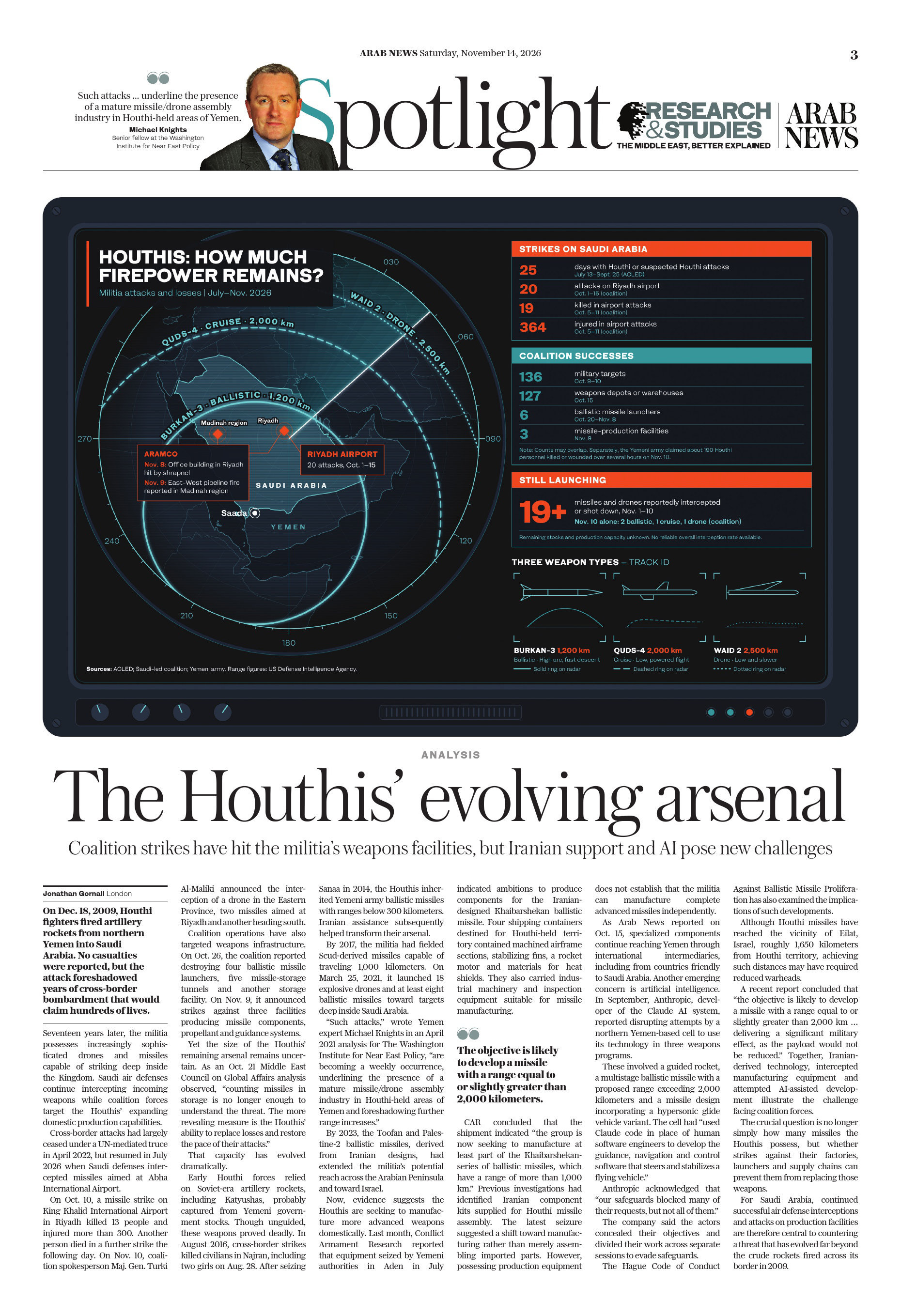
Over that time, the sophistication and lethality of the Houthi missile arsenal have grown exponentially. Events over the past four months show the militia now holds a large stockpile of long-range drones and missiles capable of striking targets across Saudi Arabia.
An earlier wave of attacks ended in April 2022 with a UN-mediated truce between the Houthis and Yemen’s internationally recognized government, halting cross-border strikes on Saudi Arabia.
That truce collapsed in July 2026 when Saudi air defenses intercepted several Houthi missiles fired at Abha International Airport in Asir province.
More attacks followed using ballistic and cruise missiles. On Oct. 10, a missile strike on King Khalid International Airport in Riyadh killed 13 people and injured more than 300. A 14th person died when the airport was struck again the next day.
The Kingdom has continued intercepting incoming fire. On Nov. 10, Maj. Gen. Turki Al-Maliki, spokesperson for the Coalition to Restore Legitimacy in Yemen, announced that defenses had destroyed a drone in the Eastern Province, two missiles aimed at Riyadh and a ballistic missile heading toward the southern region.
At the same time, the coalition is striking back to cripple the Houthis’ emerging domestic weapons production.
On Oct. 26, the coalition reported destroying four ballistic missile launchers, five missile-storage tunnels and another storage facility. On Nov. 9, it announced the destruction of three facilities used to manufacture and assemble ballistic missile components — an assembly factory, a chemical plant producing solid propellant and an electronics facility building guidance systems.
What remains unclear is the scale of the coalition’s challenge — specifically, the size of the Houthis’ remaining stockpiles and how quickly they can replenish lost or fired missiles.
As an Oct. 21 analysis by the Middle East Council on Global Affairs concluded, “counting missiles in storage is no longer enough to understand the threat. The more revealing measure is the Houthis’ ability to replace losses and restore the pace of their attacks.”
It added: “An effective response must both destroy existing capabilities and impede their regeneration, making every loss slower and more expensive to replace — and more damaging to the group’s ability to sustain the war.”
Evidence suggests the Houthis are not only becoming virtually self-sufficient in producing long-range projectiles, but are also adopting advanced technologies — including artificial intelligence — to build deadlier weapons.
In the early days of the rebellion, the Houthis’ most formidable weapons were Soviet-era rocket systems likely captured from government forces. These included 132-millimeter M13 Katyusha rockets, based on a Second World War-era Russian truck-launched design, and 122-millimeter rockets developed in the 1960s for mass salvo fire.
Though crude and unguided, they remained lethal. On Aug. 28, 2016, a rocket fired from Yemen killed two Saudi girls in the border province of Najran, one day after a 5-year-old child died in a similar strike.
Those deaths came amid weeks of cross-border fire that saw seven people killed in a single Najran strike on Aug. 16, alongside hits on a Saudi power station — an early warning of what was to come.
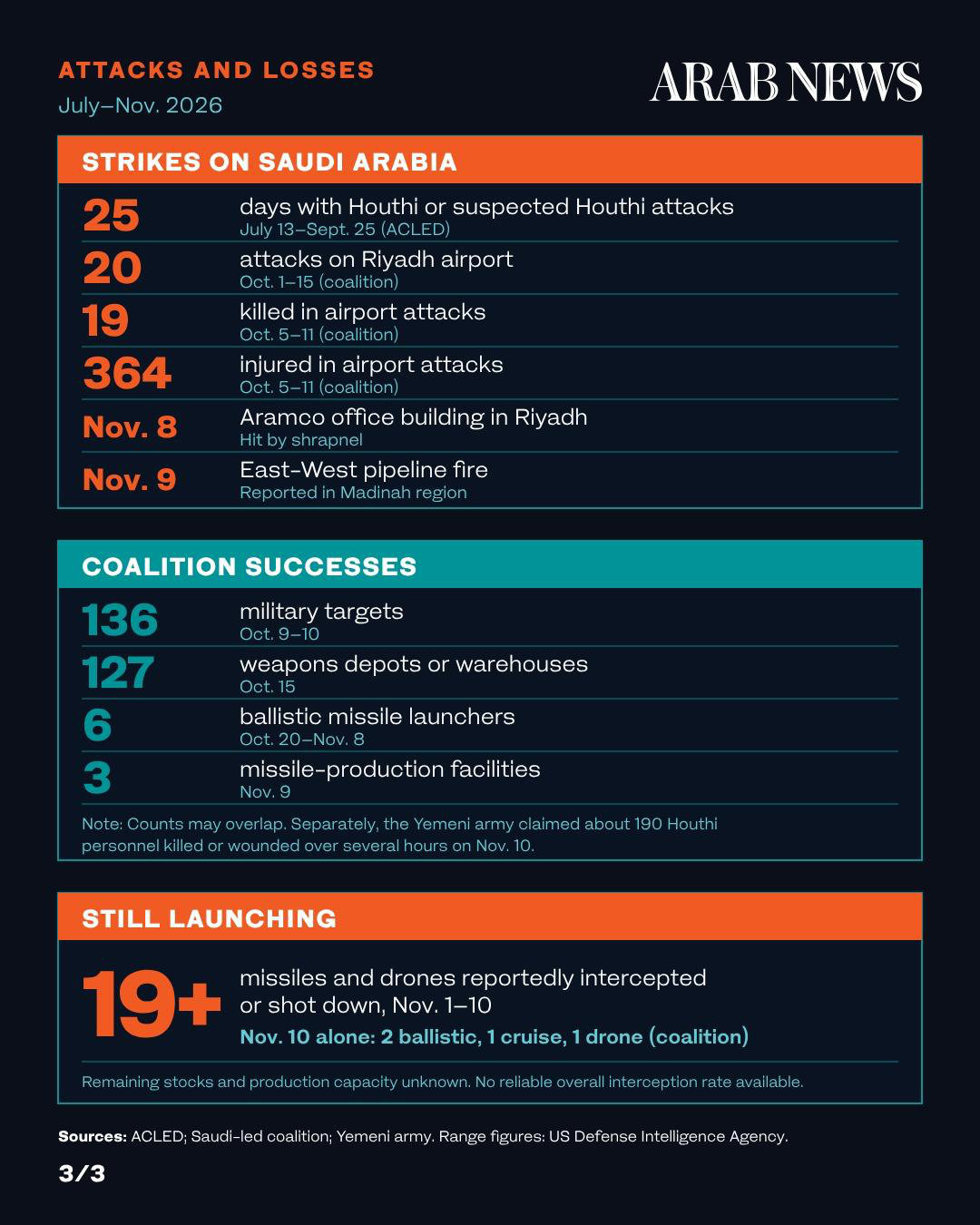
The Houthis’ missile program accelerated after they seized Yemen’s capital, Sanaa, in 2014 and inherited tactical ballistic missiles from the Yemeni army. Those weapons had a range under 300 km, but with Iranian backing, the Houthis rapidly built a far more capable arsenal.
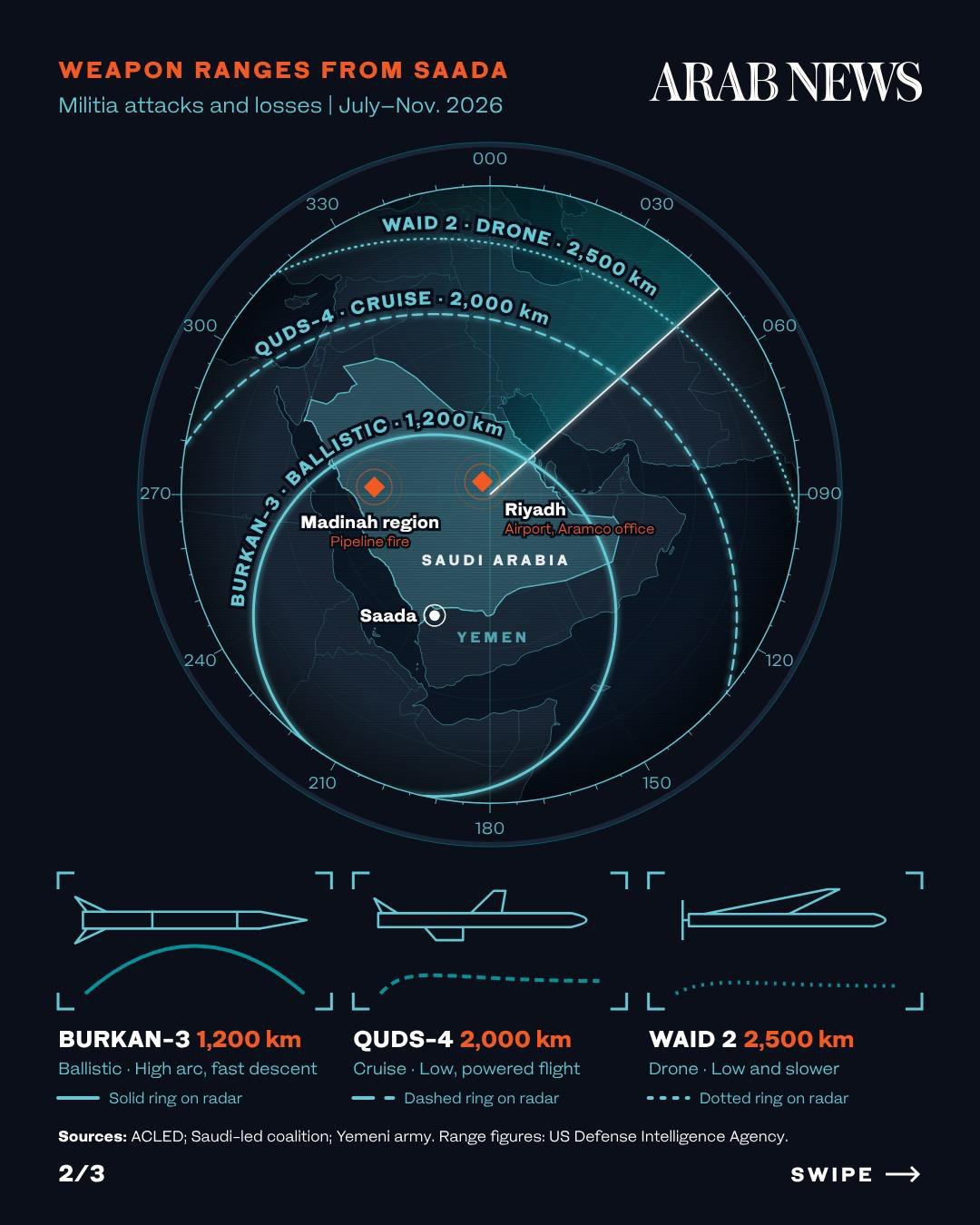
By 2017, they had fielded local variants of the Soviet-era Scud-D missile with a 1,000-km range. On March 25, 2021, they launched an unprecedented wave of 18 explosive drones and at least eight ballistic missiles deep into Saudi territory, targeting sites in the Eastern Province more than 1,400 km away and along the Red Sea coast.
“Such attacks,” wrote Yemen expert Michael Knights in an April 2021 analysis for The Washington Institute for Near East Policy, “are becoming a weekly occurrence, underlining the presence of a mature missile/drone assembly industry in Houthi-held areas of Yemen and foreshadowing further range increases.”
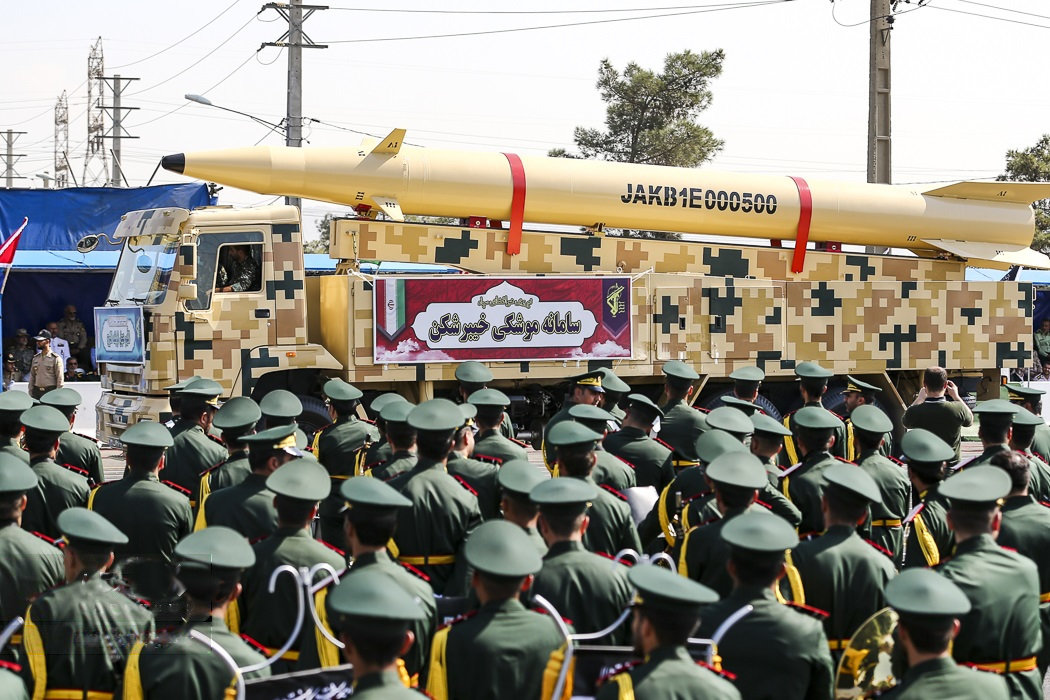
By 2023, the introduction of the Toofan ballistic missile — derived from Iran’s Ghadr-S — and the Palestine-2, based on Iran’s Khaibarshekan, brought the entire Arabian Peninsula and Israel within range.
Last month, weapons-tracking organization Conflict Armament Research reported in a Yemen Field Dispatch that the Houthis were on the verge of manufacturing their own advanced ballistic missiles.
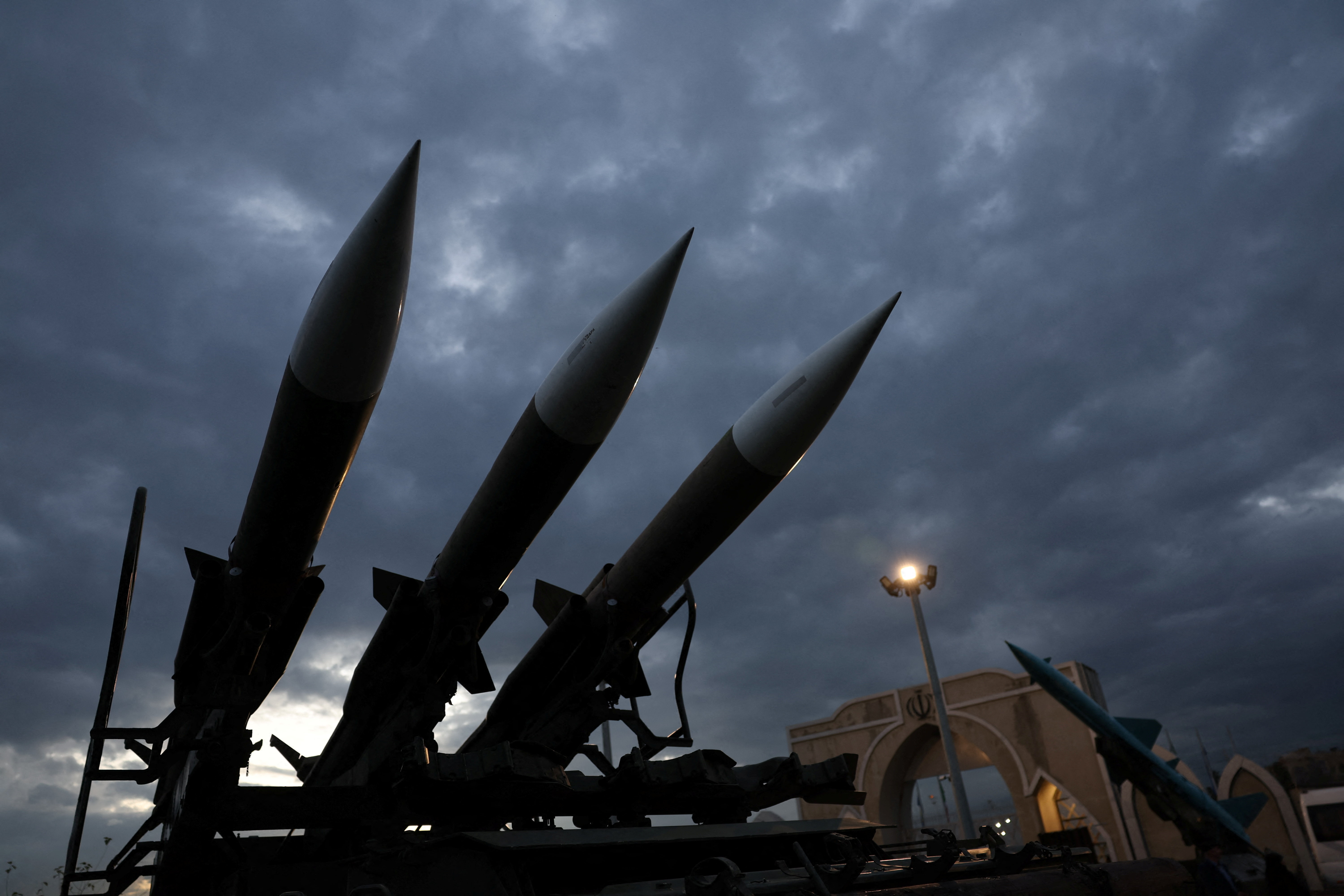
The assessment pointed to “a major leap in the group’s domestic production ambitions and has major regional security implications at a time when Houthi forces are intensifying their deep strike campaign against critical infrastructure in Saudi Arabia.”
CAR’s findings stemmed from Yemeni authorities’ July seizure in Aden of four shipping containers bound for Houthi-held territory.
While Iranian arms smuggling into Yemen is longstanding — previous CAR investigations showed the Houthis assembling missiles from labeled Iranian component “kits” — the July shipment contained far more specialized hardware.
According to CAR’s field team, the cargo indicated “the group is now seeking to manufacture at least part of the Khaibarshekan-series of ballistic missiles, which have a range of more than 1,000 km.”
The containers held Khaibarshekan parts — including machined metal airframe sections, stabilizing fins, a solid-propellant rocket motor and bags of phenolic resin used for supersonic heat shields — intended as “templates” for a domestic production line.
Alongside them were an industrial stamping press, a thermal imager and a portable X-ray system “intended to support missile manufacturing, including quality control and the non-destructive testing of subsystem components.”
Unveiled by Iran in 2022, the Khaibarshekan was described by Iran’s official Mehr News Agency as having “manoeuvrability in the landing phase to pass through the missile shield, and … agility and extraordinary speed in hitting targets in the range of 1,450 km.”
The agency added that “this all-Iranian system has been designed and built from idea to product by hard-working scientists of the Islamic Revolutionary Guard Corps Aerospace Force.”
That technology and production know-how are now in Houthi hands. As Arab News reported on Oct. 15, specialist components used to build the missiles fired at Saudi Arabia continue to reach Yemen through intermediaries via a poorly policed global supply chain, including parts originating in countries friendly to the Kingdom.
The Houthis are also turning to AI agents to advance domestic missile development.
In September, Anthropic — developer of the Claude AI system — published a Threat Intelligence report detailing three cases between December 2025 and August 2026 in which it “identified and disrupted operations in which threat actors tried to use Claude for malicious activity.”
One case involved “a cell of threat actors based in northern Yemen running three weapons development programs: a guided rocket that used a commodity phone-class flight computer with final-phase homing guidance; a multi-stage ballistic missile with a stated range goal above 2,000 km; and a multi-variant missile … that included a hypersonic glide vehicle variant.”
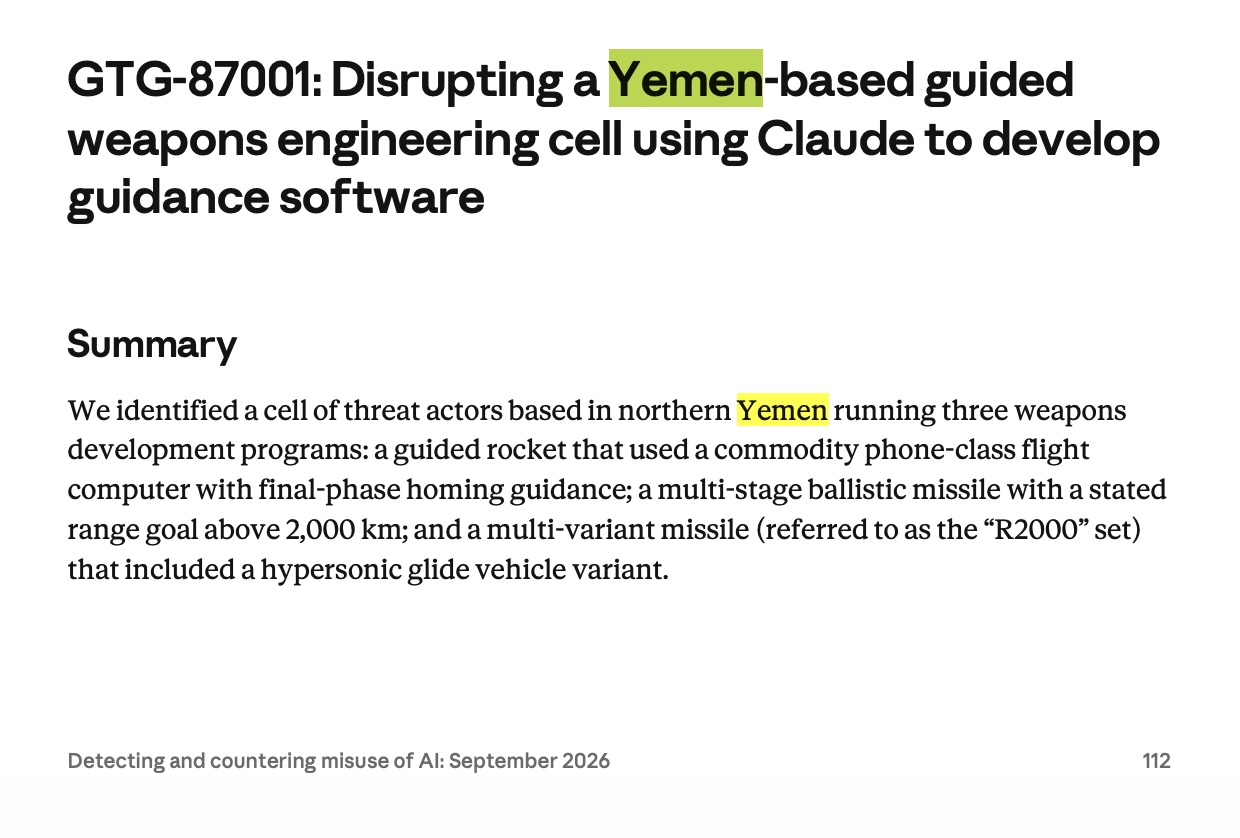
The cell had “used Claude code in place of human software engineers to develop the guidance, navigation and control software that steers and stabilizes a flying vehicle.”
Anthropic noted that “our safeguards blocked many of their requests, but not all of them.”
“The actors used a variety of tactics to evade our safeguards, including hiding their goals and the products the software was meant for, and they split their work across multiple sessions so no single session revealed their full intent.”
The Hague Code of Conduct Against Ballistic Missile Proliferation (HCoC) examined the strategic impact of this AI adoption.
While the Houthis have already fired missiles reaching near Eilat, Israel — roughly 1,650 km from Houthi territory — those strikes likely required lighter, reduced warheads to achieve maximum distance.
In a recent report, the HCoC concluded that “the objective is likely to develop a missile with a range equal to or slightly greater than 2,000 km … delivering a significant military effect, as the payload would not be reduced.”
Backed by AI tools and engineers who defected from the Yemeni army’s Missile Research and Development Center, the Houthis are pursuing nothing less than “mass production, circumvention of embargoes, and penetration of missile defenses.”