- Declaration by group’s foreign ministers accuses Tehran of disrupting global trade by obstructing freedom of maritime navigation through Strait of Hormuz
- They express ‘deep concern’ about worsening humanitarian situation in Yemen and urgently call for a humanitarian corridor to provide aid for civilians in besieged city of Taiz
NEW YORK CITY: The G7’s foreign ministers condemned “in the strongest terms” continuing strikes by the Houthis against Saudi Arabia. They declared solidarity with the Kingdom and Yemen’s internationally recognized government, and affirmed the right of both to defend the security, sovereignty and territorial integrity of their countries under international law.
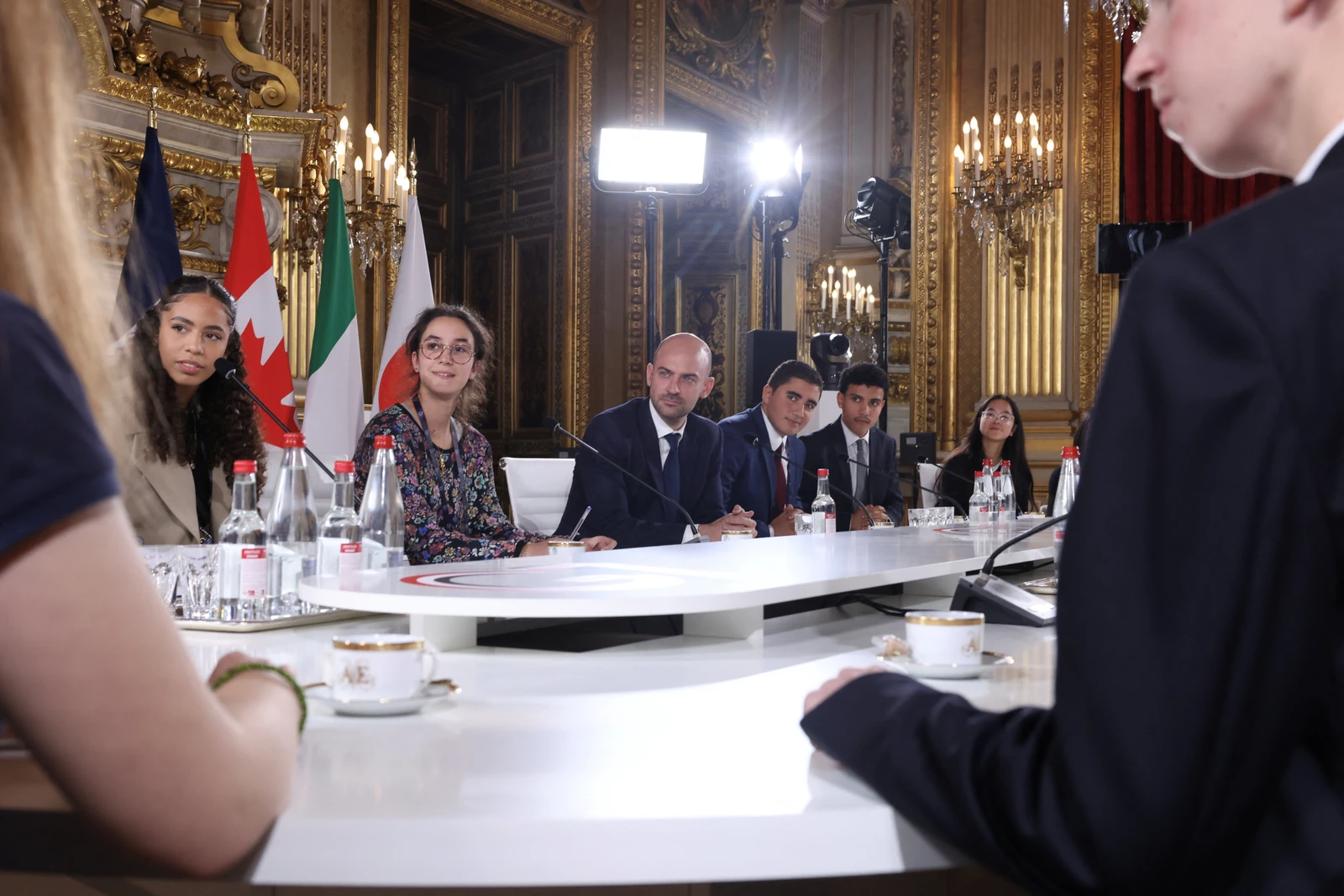
In a joint declaration following their meeting in Paris on Nov. 9 and 10, the ministers also “strongly condemned” attacks by Iran against neighboring nations, and said the obstruction of maritime transit through the Strait of Hormuz by Tehran had disrupted international trade, energy security and the global economy.
The ministers called on the Houthis to “immediately cease all military actions and threats” and to avoid any further escalation so that “an inclusive political process” to resolve the conflict in Yemen could resume. They urged all actors, including Iran, to stop arming and supporting the militia, acts that they said violated several UN Security Council resolutions.
The Houthis have persistently targeted Saudi energy infrastructure and airports with long-range strikes since July, when a fragile ceasefire in Yemen, agreed in 2022, fell apart.
Flights resumed at King Khalid International Airport in Riyadh in late October after a two-week closure that followed a series of deadly Houthi strikes on airports and other targets in the Kingdom.
The G7 ministers also expressed “deep concern” about the worsening humanitarian effects of the conflict in Yemen. They called for civilians to be protected, for safe and unimpeded aid access, and for the urgent establishment of a humanitarian corridor to help people in the besieged city of Taiz.
They repeated their demand for the immediate and unconditional release of all humanitarian workers, including 70 members of UN staff, who “remain unjustly detained” by the Houthis.
Regarding the wider situation in the Gulf, the ministers called on Iran to halt its “persistent attacks against civilian vessels” in the Strait of Hormuz. They rejected any “tolls, fees, illegal costs, discriminations or any limitation” on freedom of passage through the waterway, and backed US Central Command’s operations to clear mines and escort civilian ships.
They also said a multinational defensive initiative led by France and the UK “can play an important role” in efforts to restore maritime traffic through the strait, including by helping to verify that all mines have been removed.
Iran attacked at least 34 commercial vessels in Hormuz and the Gulf during October, the highest monthly total since the US-Israeli war against Iran began at the end of February, according to trade publication Seatrade Maritime News. It added that an incident off the coast of Oman on Nov. 7 was the eighth attack on a vessel by Iran this month in the Strait of Hormuz or Gulf.
The ministers commended the work of regional mediators and repeated a warning that Iran “must never be allowed to develop or acquire a nuclear weapon.” In the absence of a diplomatic solution, they said they would continue to coordinate in an effort to “economically and politically constrain the Iranian regime’s ability to sow instability in the region and around the world.”
They pledged to fully enforce UN sanctions against Tehran that were reinstated in September 2025, through a “snapback” mechanism under Security Council Resolution 2231, as a result of Iran’s failure to comply with its nuclear-research obligations, and called on all UN member states to do the same. They also urged Tehran to resume full cooperation with the International Atomic Energy Agency.
The G7 expressed “grave concern” over Iranian involvement in “violent plots against many of our citizens and territories.”
It specifically highlighted a suspicious incident at RAF Fairford in Gloucestershire on Sept. 27. The British prime minister, Andy Burnham, told Parliament in October that the plot was “highly likely to have been coordinated in Iran, almost certainly directed by Iran’s Islamic Revolutionary Guard.” Tehran rejected the accusation as “unfounded and malicious speculations.”
The G7 said: “Iran should be in no doubt that we are united and remain committed to safeguarding our sovereignty.”
Regarding the situation in Lebanon, the ministers urged all parties to respect the ceasefire agreement with Israel. They said the disarmament of all nonstate armed groups, “foremost among them Hezbollah,” remained essential in efforts to ensure all weapons in the country come under the control of the Lebanese state.
They called on Lebanese and Israeli authorities to make progress on the establishment of pilot zones that would facilitate the “full and verifiable” disarmament of Hezbollah, the deployment of the Lebanese Armed Forces and the withdrawal of Israeli troops.
The mandate for the peacekeeping UN Interim Force in Lebanon is due to expire at the end of this year. With this in mind, the ministers called for the implementation of a “robust, credible and long-lasting security architecture” to support the Lebanese army.
They welcomed a new EU support mission in the country, and urged Lebanese leaders to adopt the financial reforms required by an International Monetary Fund assistance program.
On the issue of Gaza, the ministers reaffirmed their commitment to implementation of Security Council Resolution 2803, which backs a US-led plan to end the conflict the territory and begin the rebuilding process.
They said Hamas “can have no role in Gaza’s future” and must decommission its weapons, while Israel “must progressively withdraw” from the enclave under the conditions of the resolution. They demanded the facilitation of safe, rapid and unimpeded humanitarian access throughout the territory and the opening of more border crossings. They also called for an end to “terrorist attacks and other actions” that raised tensions in the West Bank.