- 50-year-old Palestinian refugee dies after being hit by the singer’s vehicle near the Saeb Salam tunnel
- Preliminary investigations suggest Al-Hallani might have been speeding, judicial source tells Arab News
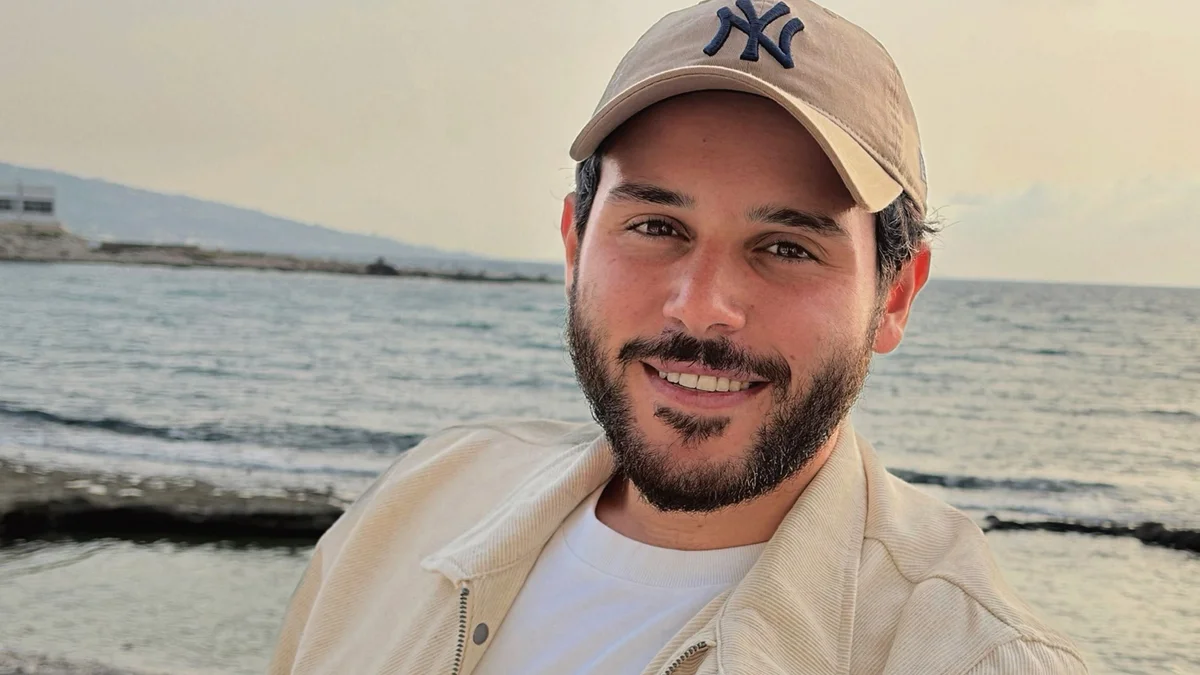
BEIRUT: Lebanese singer Al-Walid Al-Hallani was in police custody on Wednesday after his car struck and killed a 50-year-old Palestinian refugee on a road in Beirut the previous evening.
In a statement outlining the 26-year-old singer’s account of the incident, his office said he was driving in an area with no street lighting, close to the entrance to the Saeb Salam tunnel, when he was suddenly confronted by a pedestrian in the road. He attempted to avoid the man but the side mirror of his vehicle hit him, it continued.
The singer immediately stopped and called the Lebanese Red Cross requesting medical assistance, and remained at the scene until emergency services arrived to help the victim. He also notified the security forces himself and voluntarily accompanied them to a police station, placing himself at the disposal of the judiciary and security authorities for all necessary legal procedures, his office added.
The statement emphasized that the singer was fully cooperating with the investigation and had confidence in the Lebanese judiciary.
A security source told Arab News that laboratory tests had found no traces of alcohol or drugs in Al-Hallani’s system.
The singer had just left a business meeting and was on his way to dinner when the accident occurred, according to his lawyer, Marc Habka.
“Everyone is awaiting the experts’ report, which will determine the distribution of responsibility,” Habka told Arab News.
He confirmed that the victim was a 50-year-old man and explained that any private legal claims would be determined in consultation with the victim’s family, while the question of any public prosecution would depend on the findings of the police investigation.
A judicial source told Arab News that preliminary investigations suggested Al-Hallani might have been speeding at the time of the accident, making it more difficult to avoid a collision.
However, the source added that the singer had undergone preliminary questioning to establish the exact circumstances of the incident and determine the extent of his responsibility, and stressed that it would be premature to draw any conclusions about liability before the investigation was completed.
Under Lebanese law, even if the family of a victim waives its right to private legal claims, a public prosecution can proceed independently. A judge could therefore decide to bring charges against Al-Hallani, if warranted, while ordering his release pending further legal proceedings.