- Lebanese President Joseph Aoun defended Ambassador Nada Hamadeh Moawad following a dismissed complaint about alleged contact with the Israeli ambassador to Washington
- Lebanon’s 1955 boycott law prohibits dealings with Israelis
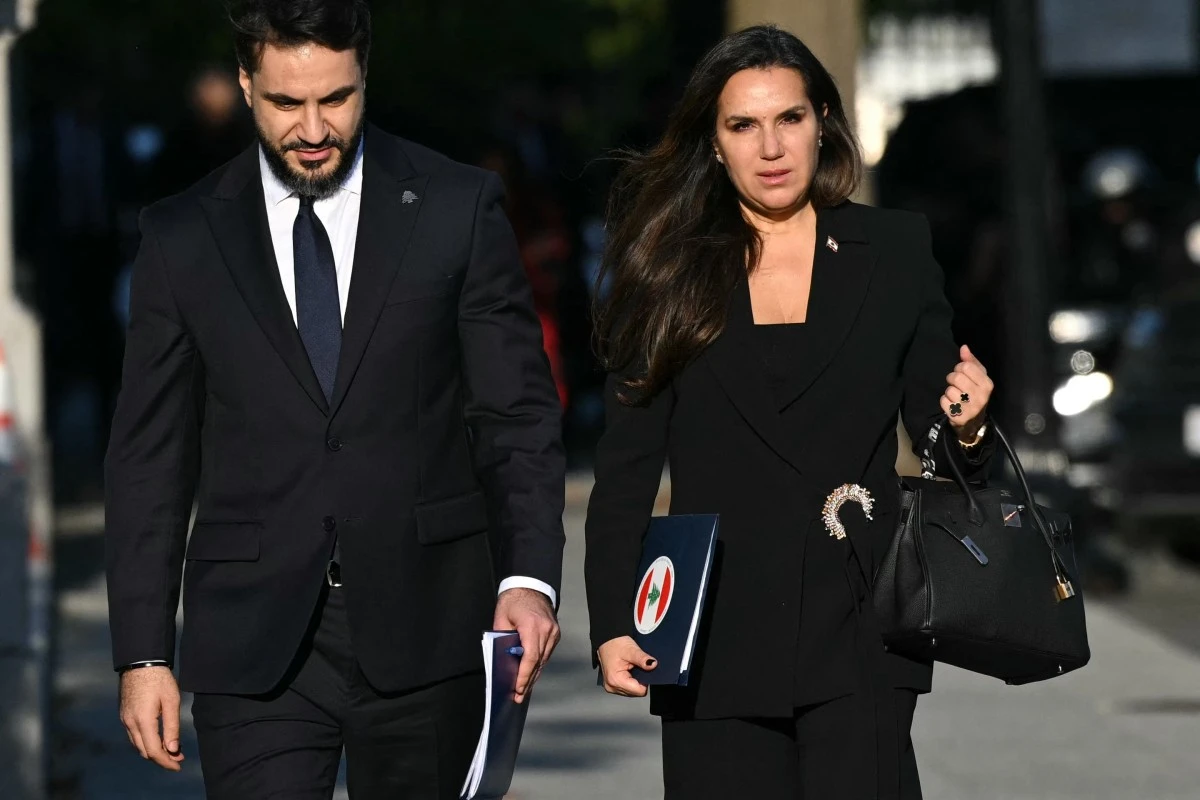
LONDON: Lebanese President Joseph Aoun on Thursday defended the country’s ambassador to Washington after a lawyer filed a complaint against her over an unconfirmed report that she had contacted her Israeli counterpart, according to the Lebanese newspaper Annahar.
Judge Claude Ghanem, the state commissioner to the military court, decided to dismiss the complaint against Ambassador Nada Hamadeh Moawad, Lebanese broadcaster MTV reported on Thursday.
Aoun questioned the media’s handling of the allegation during a meeting with journalism students from the Holy Spirit University of Kaslik.
“On what basis did the press start highlighting the reports against the Lebanese ambassador in Washington and the infringement on her personal dignity and on the state’s foreign policy regarding an event that did not happen?” Aoun said.
The complaint, filed by lawyer Hassan Bazzi, followed a Sept. 27 report by the Lebanese website Beirut Review.
Citing Western diplomatic sources, the website alleged that Moawad had contacted Israeli Ambassador Yechiel Leiter after his son, an Israeli soldier, was seriously wounded in a car-ramming attack in the Israeli-occupied West Bank.
The allegation has not been independently confirmed.
The case drew a sharp rebuke from the Trump administration, which accused Hezbollah-linked actors of trying to obstruct US-brokered diplomacy between Lebanon and Israel.
“It is embarrassing that a military court is handling a complaint against the Lebanese ambassador in Washington for carrying out the policy of their legitimate government and engaging in US-led negotiations,” a State Department spokesperson told CBS News late Tuesday.
The spokesperson urged Lebanon’s military judiciary to focus on prosecuting Hezbollah operatives accused of plotting against the Lebanese government and people, rather than pursuing the ambassador.
The official also called for the repeal of laws and practices that enable the “politicized targeting” of civilians and diplomats while shielding Hezbollah.
The dispute highlights the tensions surrounding diplomatic contacts between Lebanon and Israel, which remain formally at war. Lebanon’s 1955 boycott law prohibits direct and indirect dealings with Israeli individuals and entities.
Moawad and Leiter have taken part in US-brokered negotiations aimed at improving relations between the two countries, an effort opposed by Iran-backed Hezbollah.
Secretary of State Marco Rubio hosted the ambassadors for direct talks in Washington in April, acknowledging that the effort faced “decades of history and complexities.”
The two countries signed a framework agreement in June intended to lay the groundwork for lasting peace. It called for a gradual withdrawal of Israeli forces from southern Lebanon alongside Hezbollah’s disarmament and the deployment of Lebanese government forces.
Implementation has stalled over disagreements about the order of those steps and how compliance would be verified. A formal round of talks in Rome in August ended without a breakthrough.
The ambassadors met again at the State Department in September, and another round of negotiations is expected this month in Rome.