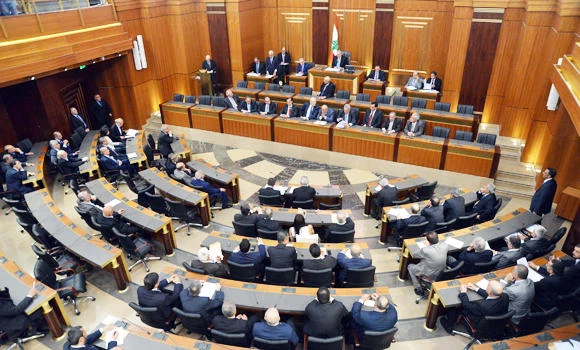
BEIRUT: Lebanon’s Parliament speaker on Wednesday called Parliament to convene next week in the first attempt for months to bring deeply divided politicians together to pass laws vital to keeping the paralyzed state afloat.
Lebanese politicians, bitterly divided by their own rivalries and wider conflict in the region, have been unable to take even basic decisions, including where to dump the country’s rubbish. The paralysis of government was laid bare again in recent days when the government failed to pay the army on time.
“The resumption of legislative work has become more than a necessity for the country,” Parliament speaker Nabih Berri said in a statement, calling the session for next Thursday and Friday. It was not immediately clear whether enough MPs would attend the session to secure a quorum.
Lebanon’s main political blocs have been unable to agree an agenda for a legislative session, obstructing previous efforts to convene the chamber. One of the rare occasions Parliament met was a year ago, when it extended its own term until 2017, after legislative elections were postponed for a second time.
“There is an agreement in principle on attendance of the session to pass important laws, otherwise the country will be in danger. We cannot continue in the country in this way — no government sessions, no legislative sessions, complete paralysis in the institutions of state,” a politician close to Berri told Reuters.
Berri’s statement did not say which laws would be on the agenda. The governor of Lebanon’s central bank, widely seen as one of the only functioning institutions of state, told Reuters on Tuesday it was essential parliament convene to pass laws for development loans, debt issuance, and banks.
World Bank loans approved for Lebanon will be canceled unless approved by parliament before the end of the year, risking more pain for an economy already hit by the deadlock.
“For the first time in 22 years, there is a serious threat to the Lebanese pound if Lebanon delays approving the laws before the end of the year,” said Machnouk, a member of the Future Movement led by Sunni politician Saad Al-Hariri.
Meanwhile, the government has also failed to find a solution to the trash crisis that allowed refuse to pile up in the streets of Beirut this summer. The search for a new dump has been complicated by resistance from local communities, with politicians rejecting a number of proposed sites.
Lebanon’s speaker calls 1st Parliament session in months