TRIPOLI: Libya’s UN-backed unity government will move to Tripoli from Tunis “within a few days,” its prime minister said in a television interview broadcast on Thursday.
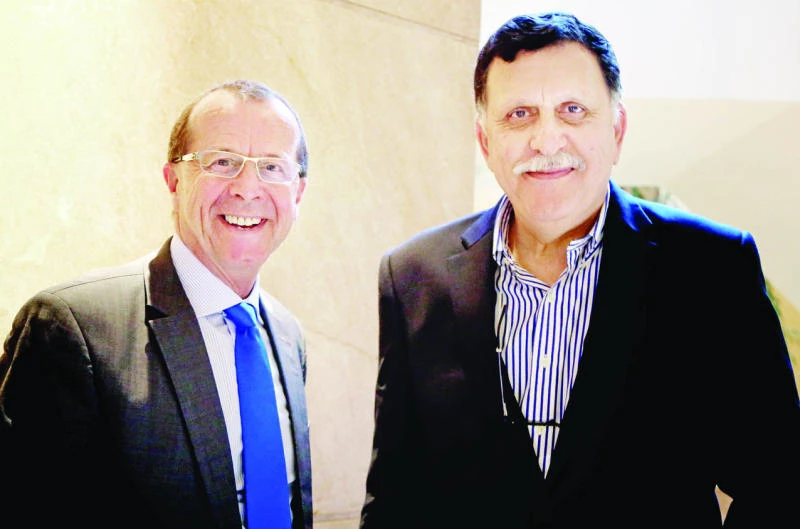
Fayez Seraj said a security plan agreed with police and military forces in Tripoli, with some armed groups, and with the United Nations, would allow the Presidential Council and the government it nominated to transfer to the Libyan capital.
The unity government was named under a plan to end the political chaos and conflict that has beset Libya since the uprising that toppled Muammar Qaddafi five years ago.
Since 2014, the country has had two rival parliaments and governments, one based in Tripoli and one in the east.
“We, the government of national accord, will be in the capital Tripoli soon ... within a few days,” Seraj told Jordan-based Libya HD channel in a pre-recorded interview.
“The armed groups will remain in their camps until an agreement is found with them about whether their members will be integrated and young people absorbed within certain programs according the security plan,” he said.
The unity government has faced opposition from hard-liners on both sides of Libya’s political divide, and the prime minister of the government based in Tripoli this week warned the unity government not to move there.
It remains unclear whether some of the many armed groups present in the capital will fight to prevent the unity government from operating there.
The eastern parliament, which received international recognition, has repeatedly failed to vote to approve the unity government, though a majority of its members signed a statement of support last month.
Western powers have been pushing hard for the new government to start work, hoping that it will be able to tackle an expanding threat from Daesh militants, both by drawing together Libyan armed factions, and by requesting international help.
Seraj, who heads both the Presidential Council and the unity government, said he hoped the eastern parliament would still move to endorse them but they could wait no longer.
The council saw a need to take advantage of the “international momentum” around Libya, though it was up to Libyans to determine their needs.
“If the international community provides assistance I do not think the Libyans would reject that, but within the rules and standards, and according to what Libyans want,” he said.
Libya’s UN-backed govt to move to Tripoli within days