- Maternity, kidney dialysis, general-purpose clinics defined as ‘dual use’ by Israel
- Palestine Aid UK: ‘Combatants cannot use maternity units for anything. It doesn’t make sense’
LONDON: Eight mobile medical units are prepared to enter Gaza but have been blocked by Israel for up to two years at the border, aid groups have said.
The six state-of-the-art mobile maternity units, a kidney dialysis and general-purpose clinic were planned to provide urgent critical care for Palestinians in Gaza, The Independent reported.
However, they have been waiting to enter the Palestinian enclave for up to two years, after charities were told by Israel that the units are “dual use” and could be used by Hamas.
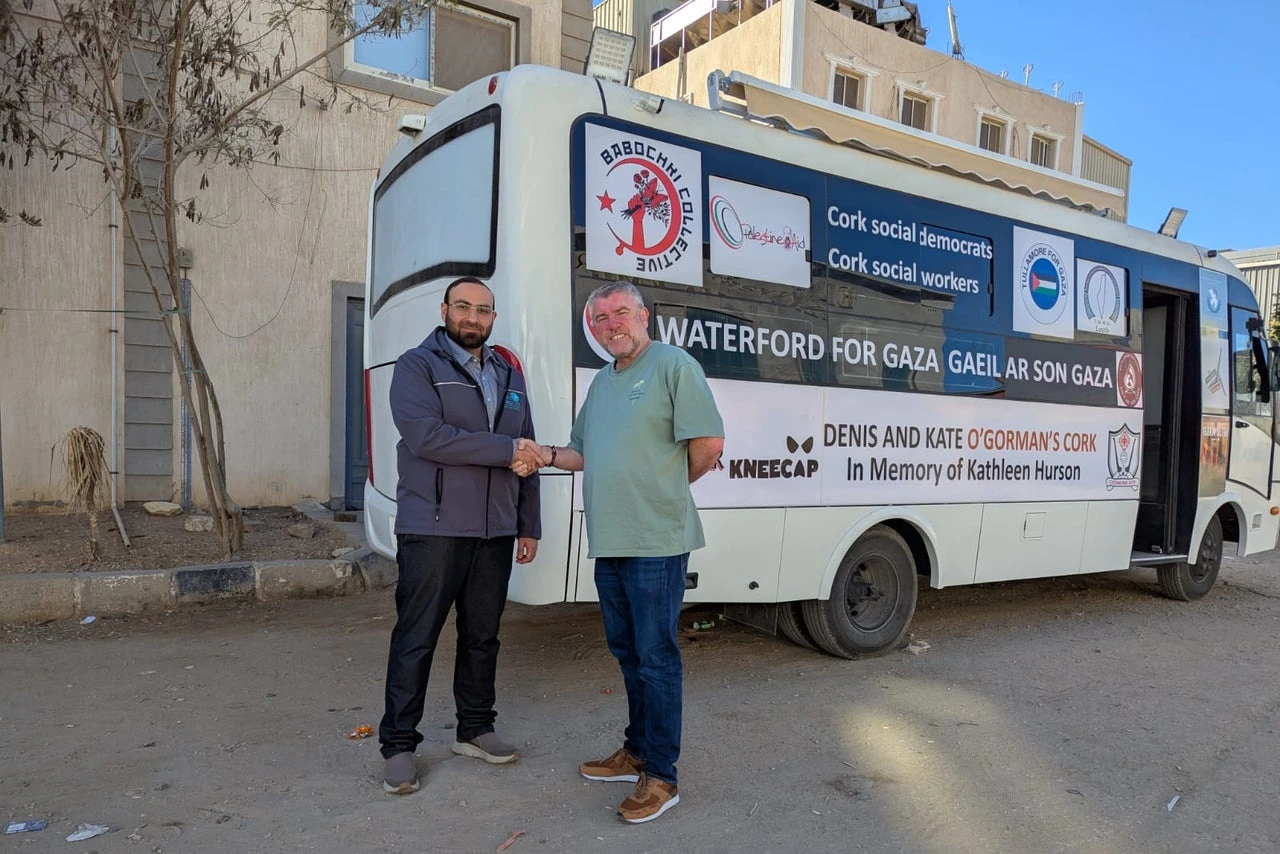
Funding for the mobile medical units was driven by organizations including Palestine Aid UK, Palestine Aid Ireland, Medics Worldwide, and Irish citizen and truck driver John Hurson.
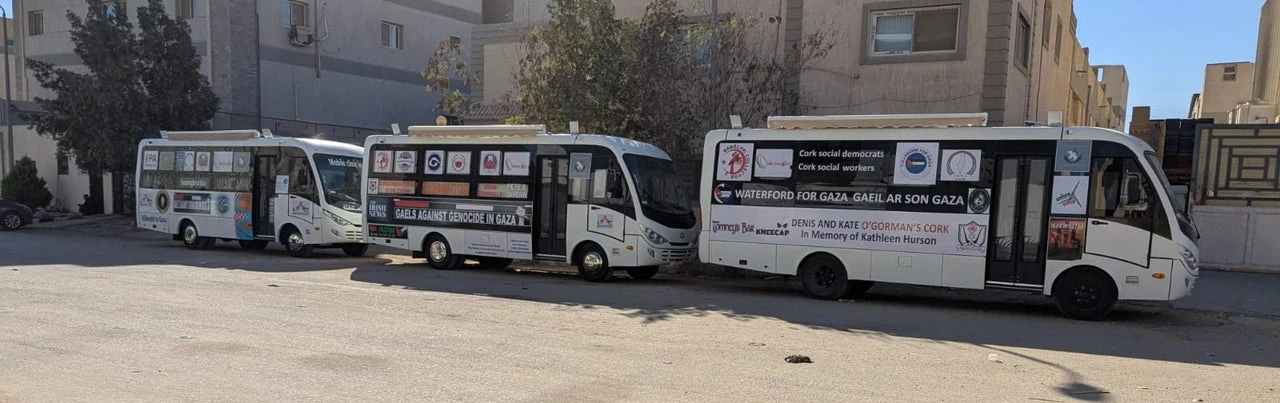
Despite the significant effort to raise money for the units, they are now parked near Cairo as Palestinian patients in Gaza face desperation in accessing healthcare.
Jilu Wahid, CEO of Palestine Aid UK, told The Independent: “These are mothers we are trying to save. We need to allow these units in because they’re going to immediately provide intervention.
“Combatants cannot use maternity units for anything. It doesn’t make sense. They should let them in.”
War-battered Gaza’s medical system has faced devastating attacks from Israeli forces, with all its hospitals either partially damaged or destroyed.
The medical convoy’s maternity units cost $100,000 and are built into vehicles that could travel across Gaza to provide urgent care.
Each clinic can provide antenatal and postnatal care, as well as safe delivery support, emergency obstetric triage and referrals, and necessary checks on newborns, Palestine Aid UK said.
The kidney dialysis unit costs $200,000 and the general clinic is valued at $85,000.
Hurson has led fundraising efforts for three of the units. He told The Independent about his concern for Palestinian mothers and children in Gaza.
“I’ve always been acutely aware of the situation on the ground in Gaza,” he said. “I couldn’t think of anything better to give a child in Gaza the best possible start in life than to be born in a safe, hygienic, secure way, to ensure that mothers get the best of attention and care.
“In western society, we’re used to a very high standard of care and health services. By seeing these clinics being finished and built, I thought this is the ultimate gift to give the women of Gaza because the conditions are horrendous. I’m not even a parent myself but this is an amazing project.
“These units can last a very long time. We’d love to think that for years to come, these gifts from the people of Ireland and the UK will enable children to be born in a safe and dignified space for both the mother and baby, which is very important in any society, not to mention Gaza.”
In the first half of 2026, severe maternal morbidity in Gaza rose to 82 cases per 1,000 deliveries, according to UN data. There were almost 4,000 miscarriages in the enclave during the same period.
The UN Office for the Coordination of Humanitarian Affairs has said more than 57 percent of pregnant women in Gaza were anemic.
Hurson is expected to visit Cairo later this month to meet Egyptian officials and push for progress on deploying the mobile medical units. “We fundraise for these units and they’re collecting dust,” he said.
The situation has been brought to the attention of Irish ambassadors and Irish Taoiseach Micheal Martin who, in parliament in September, condemned Israel’s blocking of the medical units.
The facilities were built precisely to meet Israel’s strict specifications, Wahid said, adding that donors have “stopped fundraising” for more units because of the uncertainty that they will be used.
Medics Worldwide, a Turkiye-based charity, said: “Since completing the preparation, refurbishment and modification of the first mobile medical clinic, Medics Worldwide has made repeated efforts to secure the necessary authorizations and arrangements for the safe passage of these humanitarian medical units into the Gaza Strip and their formal reception by the Palestinian Ministry of Health, the competent authority responsible for managing the health sector and overseeing hospitals in Gaza.
“To this end, Medics has continuously engaged with all relevant parties and authorities, including the Egyptian Red Crescent, the World Health Organization and the relevant Egyptian authorities, seeking their support in facilitating the deployment of the clinics.
“Throughout these efforts, we have encountered no objection from the Egyptian side. However, the obstacle has consistently been the refusal of the Israeli Coordination of Government Activities in the Territories (COGAT), the authority exercising control over border crossings and the entry of shipments and supplies into Gaza.”