UNITED NATIONS: The new UN envoy to Yemen remains tight-lipped about his plans for brokering an end to the country’s brutal civil war but colleagues say he faces one of the biggest challenges of his impressive career.
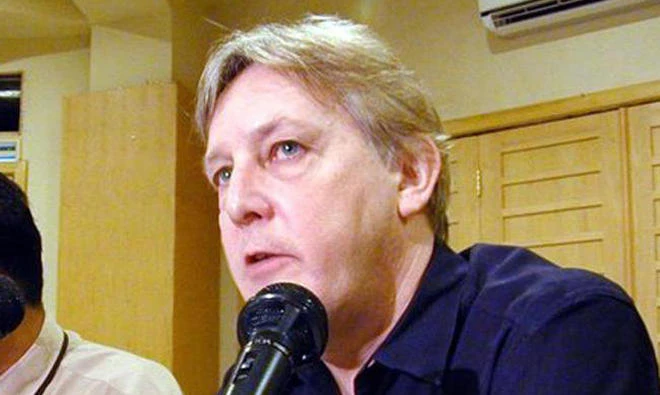
In his first public comments to the media since being appointed to the role, Martin Griffiths told Arab News this week that he would “absolutely not” reveal anything yet about his plans for ending the bloodshed.
“I haven’t started the job yet,” said Griffiths, a British diplomat, on the sidelines of a workshop at UN headquarters on ending wars, which was hosted by Belgium’s UN mission and the International Committee of the Red Cross.
Conflict resolution experts, however, told Arab News that Griffiths faced a daunting challenge. They expect him to allow more Yemeni women and other civilians to sit beside politicians and generals at the negotiation table in a bid to revive talks.
Griffiths, currently the executive director of the Brussels-based European Institute of Peace (EIP), is regarded as being ideally qualified to act as a broker between the Arab coalition backing Yemen’s government and the Iran-backed Houthi rebels who seized control of parts of the country in 2014.
British Foreign Secretary Boris Johnson praised his “wealth of experience” in global relations and his on-the-ground knowledge of “international mediation and conflict resolution” gained from decades in humanitarian endeavors.
Stine Lehmann-Larsen, mediation director for EIP, described Griffiths as an energetic diplomat who could think “outside the box” and ask probing questions in his quest to bring warring parties to the negotiating table.
“Martin is exceptionally good at reaching through to people on a personal level,” Lehmann-Larsen told Arab News.
“His empathy remains central in conflict theaters as politicized and seemingly intractable as Yemen. Of course, he also has decades of peace-making experience, is a sharp strategic thinker, and understands the international system he will be working in very well.”
She said Griffiths would likely work toward a “more durable peace process” by reaching beyond the various armed groups in Yemen.
“In our Yemen project, which Martin led, we engage not only with the armed actors but with civilian Yemeni leaders, and we support the Southern Women for Peace Group, which includes influential, locally based Yemeni women,” Lehmann-Larsen told Arab News.
“We then work to connect these groups to the formal process, to broaden the spectrum of actors involved.”
Last week, the UN Security Council approved UN Secretary-General Antonio Guterres’ decision to appoint Griffiths as envoy, making him the third mediator to take on the challenging mission over the past seven years.
At the end of this month, he is set to replace Ismail Ould Cheikh Ahmed of Mauritania, the UN envoy since April 2015, who announced he would not renew his contract last month after failing to make diplomatic progress in ending the war.
His predecessor, Jamal Benomar, also quit after four years of efforts to establish a political transition fell apart.
Born in 1951, Griffiths was the founding director of the Center for Humanitarian Dialogue in Geneva, which focuses on political dialogue. He held that position from 1999 to 2010, and held other jobs with the British government, UNICEF and Save the Children.
In 1994, he was appointed the director of UN humanitarian affairs in Geneva, and in 1998 became deputy to the UN emergency relief coordinator in New York.
Colleagues at EIP said that while Griffiths does not speak Arabic, he has a deep knowledge of the region, including work in Libya, Iraq and Afghanistan. From 2012-14 he served with all three UN envoys to Syria, including as an adviser to Kofi Annan.
Writing a 2016 op-ed on the war in Syria for Al Jazeera English, he gave an insight into his views on conflict resolution. “Local voices matter and can be decisive,” he wrote. “Conflict parties need to understand that ruling a territory comes with responsibilities. Relying on local good sense is not the last resort, it is a powerful instrument.”
In his new role as envoy to Yemen, he is taking on one of the world’s most challenging peace missions. The UN says Yemen is the world’s worst humanitarian crisis, with some 8 million people on the brink of famine, a cholera epidemic that has infected 1 million people and economic collapse in what was already one of the Arab world’s poorest nations. It estimates that more than 5,000 children have been killed or injured in the conflict.
Carne Ross, another former British diplomat and founder and executive director of Independent Diplomat, a not-for-profit negotiation outfit, underscored the task ahead in Yemen, describing a “huge challenge for a peacemaker.”
“With multiple parties, external as well as internal, to multiple and sometimes overlapping conflicts, there are a great many pieces to stitch together,” Ross told Arab News.
“Martin is a class act, but he will not be helped by the woeful lack of resources at the UN for his work.”
Saudi officials have not commented on the appointment of Griffiths, but speaking on the sidelines of the Munich Security Conference over the weekend, Adel Al-Jubeir, the Kingdom’s foreign minister, said that Riyadh was committed to peace in Yemen.
“We will see how we can launch a political process… so that we can transfer Yemen to a new stage, as we have established a new center to reconstruct Yemen and allocated more than $10 billion to this center, and until the war is ceased, we will embark on the reconstruction of Yemen,” he said.
In his first public comments to the media since being appointed to the role, Martin Griffiths told Arab News this week that he would “absolutely not” reveal anything yet about his plans for ending the bloodshed.
“I haven’t started the job yet,” said Griffiths, a British diplomat, on the sidelines of a workshop at UN headquarters on ending wars, which was hosted by Belgium’s UN mission and the International Committee of the Red Cross.
Conflict resolution experts, however, told Arab News that Griffiths faced a daunting challenge. They expect him to allow more Yemeni women and other civilians to sit beside politicians and generals at the negotiation table in a bid to revive talks.
Griffiths, currently the executive director of the Brussels-based European Institute of Peace (EIP), is regarded as being ideally qualified to act as a broker between the Arab coalition backing Yemen’s government and the Iran-backed Houthi rebels who seized control of parts of the country in 2014.
British Foreign Secretary Boris Johnson praised his “wealth of experience” in global relations and his on-the-ground knowledge of “international mediation and conflict resolution” gained from decades in humanitarian endeavors.
Stine Lehmann-Larsen, mediation director for EIP, described Griffiths as an energetic diplomat who could think “outside the box” and ask probing questions in his quest to bring warring parties to the negotiating table.
“Martin is exceptionally good at reaching through to people on a personal level,” Lehmann-Larsen told Arab News.
“His empathy remains central in conflict theaters as politicized and seemingly intractable as Yemen. Of course, he also has decades of peace-making experience, is a sharp strategic thinker, and understands the international system he will be working in very well.”
She said Griffiths would likely work toward a “more durable peace process” by reaching beyond the various armed groups in Yemen.
“In our Yemen project, which Martin led, we engage not only with the armed actors but with civilian Yemeni leaders, and we support the Southern Women for Peace Group, which includes influential, locally based Yemeni women,” Lehmann-Larsen told Arab News.
“We then work to connect these groups to the formal process, to broaden the spectrum of actors involved.”
Last week, the UN Security Council approved UN Secretary-General Antonio Guterres’ decision to appoint Griffiths as envoy, making him the third mediator to take on the challenging mission over the past seven years.
At the end of this month, he is set to replace Ismail Ould Cheikh Ahmed of Mauritania, the UN envoy since April 2015, who announced he would not renew his contract last month after failing to make diplomatic progress in ending the war.
His predecessor, Jamal Benomar, also quit after four years of efforts to establish a political transition fell apart.
Born in 1951, Griffiths was the founding director of the Center for Humanitarian Dialogue in Geneva, which focuses on political dialogue. He held that position from 1999 to 2010, and held other jobs with the British government, UNICEF and Save the Children.
In 1994, he was appointed the director of UN humanitarian affairs in Geneva, and in 1998 became deputy to the UN emergency relief coordinator in New York.
Colleagues at EIP said that while Griffiths does not speak Arabic, he has a deep knowledge of the region, including work in Libya, Iraq and Afghanistan. From 2012-14 he served with all three UN envoys to Syria, including as an adviser to Kofi Annan.
Writing a 2016 op-ed on the war in Syria for Al Jazeera English, he gave an insight into his views on conflict resolution. “Local voices matter and can be decisive,” he wrote. “Conflict parties need to understand that ruling a territory comes with responsibilities. Relying on local good sense is not the last resort, it is a powerful instrument.”
In his new role as envoy to Yemen, he is taking on one of the world’s most challenging peace missions. The UN says Yemen is the world’s worst humanitarian crisis, with some 8 million people on the brink of famine, a cholera epidemic that has infected 1 million people and economic collapse in what was already one of the Arab world’s poorest nations. It estimates that more than 5,000 children have been killed or injured in the conflict.
Carne Ross, another former British diplomat and founder and executive director of Independent Diplomat, a not-for-profit negotiation outfit, underscored the task ahead in Yemen, describing a “huge challenge for a peacemaker.”
“With multiple parties, external as well as internal, to multiple and sometimes overlapping conflicts, there are a great many pieces to stitch together,” Ross told Arab News.
“Martin is a class act, but he will not be helped by the woeful lack of resources at the UN for his work.”
Saudi officials have not commented on the appointment of Griffiths, but speaking on the sidelines of the Munich Security Conference over the weekend, Adel Al-Jubeir, the Kingdom’s foreign minister, said that Riyadh was committed to peace in Yemen.
“We will see how we can launch a political process… so that we can transfer Yemen to a new stage, as we have established a new center to reconstruct Yemen and allocated more than $10 billion to this center, and until the war is ceased, we will embark on the reconstruction of Yemen,” he said.