- New educational pathway combines theoretical learning with practical training
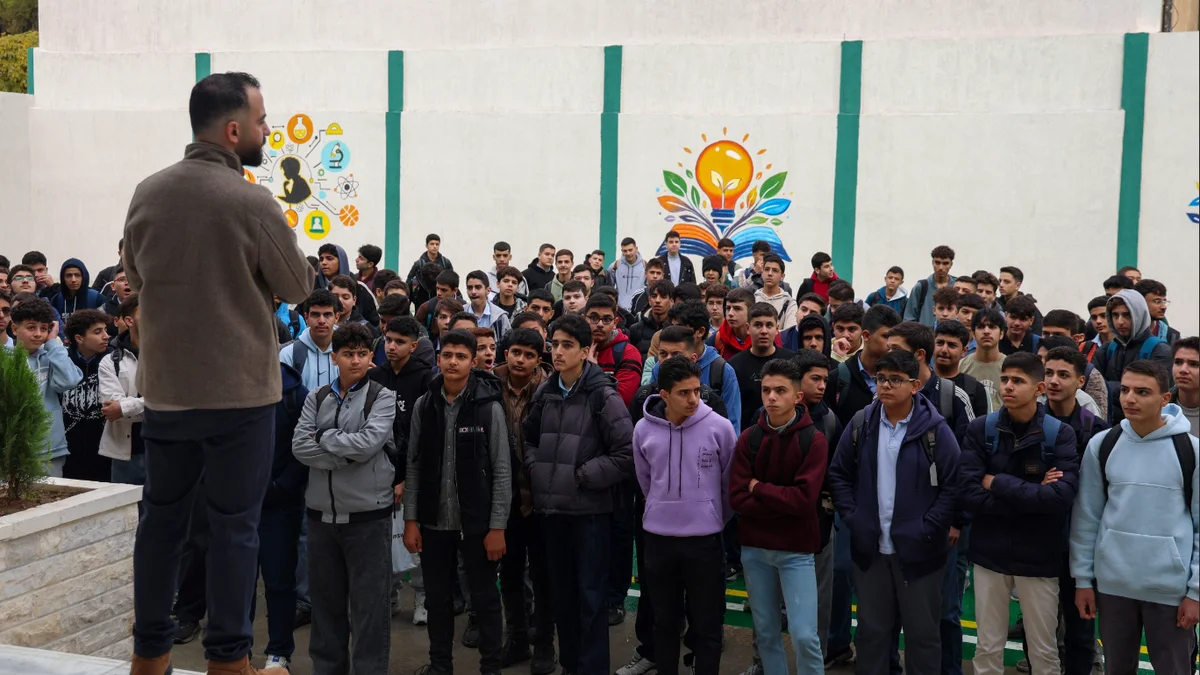
DAMASCUS: Advanced technology schools have opened in Damascus, Homs and Aleppo, beginning classes for the 2026 academic year under a new educational pathway to combine theoretical learning with practical training and prepare specialized personnel for modern digital and industrial sectors.
The program aims to link education with scientific research, production and labor market needs, while providing students with a pathway from secondary school to university-level studies.
In Damascus, Education Minister Mohammad Abdul Rahman Turko and Higher Education and Scientific Research Minister Marwan Al-Halabi inaugurated the advanced technology school.
Turko told reporters that the pathway began in 10th grade and extends to university level, describing it as a qualitative shift in the education system. He said it aims to prepare a generation capable of keeping pace with technological developments and digital transformation, particularly in industrial automation, robotics and other modern technical specializations.
The schools in the Syrian Arab Republic have been equipped with specialized laboratories and computers and will use interactive digital curricula combining theoretical instruction with practical training, Turko added.
Al-Halabi said the program began by identifying students’ talents and developing them through laboratory training, followed by entrepreneurial projects and progression to applied university studies at colleges of advanced technology.
The curriculum covers advanced digital technologies, including artificial intelligence and cybersecurity, as well as industrial technologies such as automation, robotics and nanotechnology.
Damascus school director Iyad Sara said students were admitted after taking an entrance examination. The curriculum includes basic electricity, electronics, computer science, physics and mathematics, with an emphasis on practical learning.
Student Alma Habour said she was enthusiastic about studying technical specializations, particularly AI and computer science.
In Homs, the advanced technology school welcomed 100 students divided among four classes, Education Director Malak Al-Sibai said.
She said the first day included introductory activities to help students learn about the school and explain their goals in joining the program.
The school has laboratories specializing in electronic and logic circuits, cybersecurity and computer systems. Al-Sibai said administrative and teaching staff had been selected according to criteria covering professional competence, experience and educational and ethical standards.
Their performance and students’ progress will be monitored, with a focus on developing students’ skills.
Hassan Abdul Latif, a member of the Homs Executive Office responsible for the education sector, said the school represented a new educational pathway alongside the general science, literary and vocational tracks. He said it would help prepare personnel for work in modern industrial and technological fields.
Student Hamza Al-Hajj Khaled said he hoped to develop his programming and AI skills using the school’s facilities, while student Rawaf Shahbaz said the program offered an opportunity to strengthen his skills in digital and industrial specializations.
In Aleppo, the advanced technology school has opened in the Maysaloun neighborhood. Provincial Education Director Ahmad Obeid said it had been equipped with the laboratories and technologies needed for classroom and practical instruction.
Obeid noted that the distance between the school and some students’ homes posed a challenge, adding that officials were working on suitable solutions, including providing accommodation.
Hazem Mahmoud, school director, said 10th-grade students would initially study common subjects covering both the industrial and digital tracks. They would be assigned to specialized tracks in the second year of secondary education according to their grades and preferences, and continue until completing their secondary school certificate.
The pathway is intended to continue at a college of advanced technology that is being established at the University of Aleppo, Mahmoud said. Students would study for three years to earn a degree in advanced technology, with a fourth year leading to an engineering degree in advanced technology.
Student Yaman Mallah welcomed the opportunity to join the school, saying it offered a new educational experience suited to his technical interests.
Student Bayan Baker said the specialization opened up future opportunities in technology-related fields.
President Ahmad Al-Sharaa issued a decree on Saturday, establishing the National Advanced Technology Pathway under the supervision of the ministries of education and higher education and scientific research, in coordination with other relevant ministries.
The decree provides for specialized secondary schools known as advanced technology schools. Students are admitted at the beginning of the secondary stage through a national entrance examination based on fair and transparent academic criteria.
The Education Ministry held the national standardized admission test on Oct. 20, with 1,024 students participating. A total of 300 students were to be selected for the pathway.