- Houthis prevent trucks carrying food, fuel, other essential goods from entering city, according to residents
ADEN: Hundreds of thousands of residents of Taiz in Yemen are at risk of severe hunger as the Iran-backed Houthis tighten their nearly two-week siege of the densely populated city, local residents and human rights activists have warned.
Residents have begun skipping meals and resorting to cooking with firewood as essential food supplies and cooking gas become increasingly scarce and prices soar.
“If the situation continues as it is now, there will be real hunger,” Jamal Al-Maqtari, a Taiz resident, told Arab News by telephone.
Earlier this month, the Houthis seized the last remaining road linking Taiz with the southern city of Aden, the seat of Yemen’s internationally recognized government. The Saudi-renovated road had served as a vital lifeline for residents of the besieged city.
Since then, the Houthis have prevented trucks carrying food, fuel and other essential goods from entering the city, according to residents, causing severe shortages of basic commodities and lifesaving medicines, while driving up prices.
Al-Maqtari said families had begun rationing food bought during the early days of the siege, with some reducing consumption to just one meal a day to make supplies last longer.
“Food supplies such as wheat, flour, rice and other basic necessities are unavailable. Even when they do reach the city, they are extremely scarce and command high prices,” he said.
The Houthis first imposed a siege on Taiz in early 2015, during the initial stages of their military expansion across Yemen. After failing to capture the city, they seized its main entrances and restricted the movement of people and goods.
The Saudi Development and Reconstruction Program for Yemen later renovated the Hayjat Al-Abed road, providing residents with an alternative route that allowed them to bypass Houthi-controlled checkpoints.
But the Houthis’ latest territorial gains have cut off that route, leaving residents increasingly isolated.
The blockade has also prevented fuel trucks from entering Taiz, threatening to bring hospitals and bakeries to a halt and putting thousands of lives at risk.
Local hospitals, already overwhelmed by casualties from renewed fighting, have been forced to buy fuel on the black market at inflated prices to keep essential services running, medics said.
Thousands of internally displaced people who fled Houthi offensives in their villages and towns in September have also been forced to flee again after the militia captured districts of Taiz where displacement camps were located.
Al-Maqtari said: “Most families are unable to obtain food, so they have reduced their meals to one or two a day. Due to the lack of cooking gas, people have resorted to using firewood.”
Garbage is also piling up in the city’s streets as fuel shortages disrupt waste collection services. Al-Maqtari said the city’s landfill was close to active front lines, making it difficult for garbage trucks to reach the site.
Schools and universities have suspended classes, while businesses and other institutions have closed because of the fighting and siege, leaving thousands of people without work or income.
“Our work has come to a halt. Life has completely ground to a halt. Schools and institutions have shut down entirely due to the siege, active front lines and constant bombardment,” Al-Maqtari said.
Despite the tightened siege, heavy shelling and repeated ground assaults on government positions, the Houthis have so far failed to capture Taiz city.
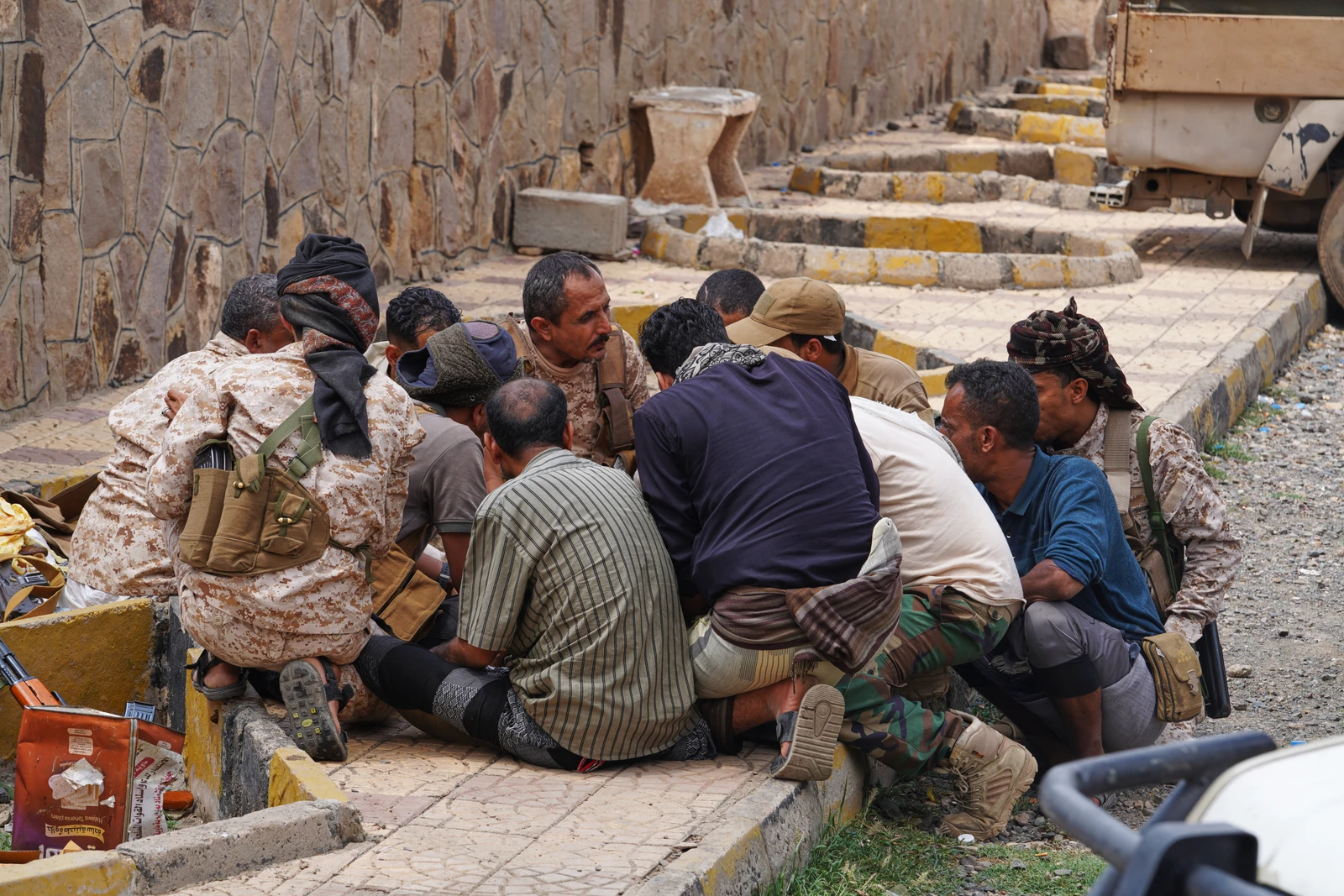
Government soldiers said the blockade had also taken a heavy toll on their families — pushing some toward hunger — but insisted they would not surrender.
Adel Abdulaziz, a Yemeni government soldier, told Arab News that essential food items had disappeared from local markets, while food and fuel prices had tripled.
He said government forces would continue fighting until the Houthis were driven out not only from Taiz but also from the capital Sanaa, adding that the militia had suffered heavy losses during repeated assaults on government positions.
Abdulaziz said: “We remain steadfast, firmly holding our ground, while their corpses litter the valleys, ravines and front lines. Their death toll is immense. They keep pushing forward wave after wave — first, second, third and fourth — launching attacks with reckless, frenzied desperation.”
Meanwhile, human rights activists have called for urgent international intervention to prevent the humanitarian crisis in Taiz from worsening.
Mutahar Al-Badhiji, executive director of the Yemeni Coalition to Monitor Human Rights Violations, known as the Rasd Coalition, told Arab News that Taiz was facing a severe humanitarian crisis, with the Houthis preventing even water tankers from entering the city.
He accused the militia of intensifying its shelling of residential areas in an attempt to force the city into submission.
Al-Badhiji added: “The only ones to suffer from the recent Houthi escalation are innocent civilians, who have endured the ravages of war for a decade and continue to suffer.”