- New forward command aims to strengthen Gulf military coordination after Iranian attacks exposed gaps in collective defense capabilities
- Analysts say success will depend on troop commitments, shared intelligence and authority to respond without lengthy political consultations
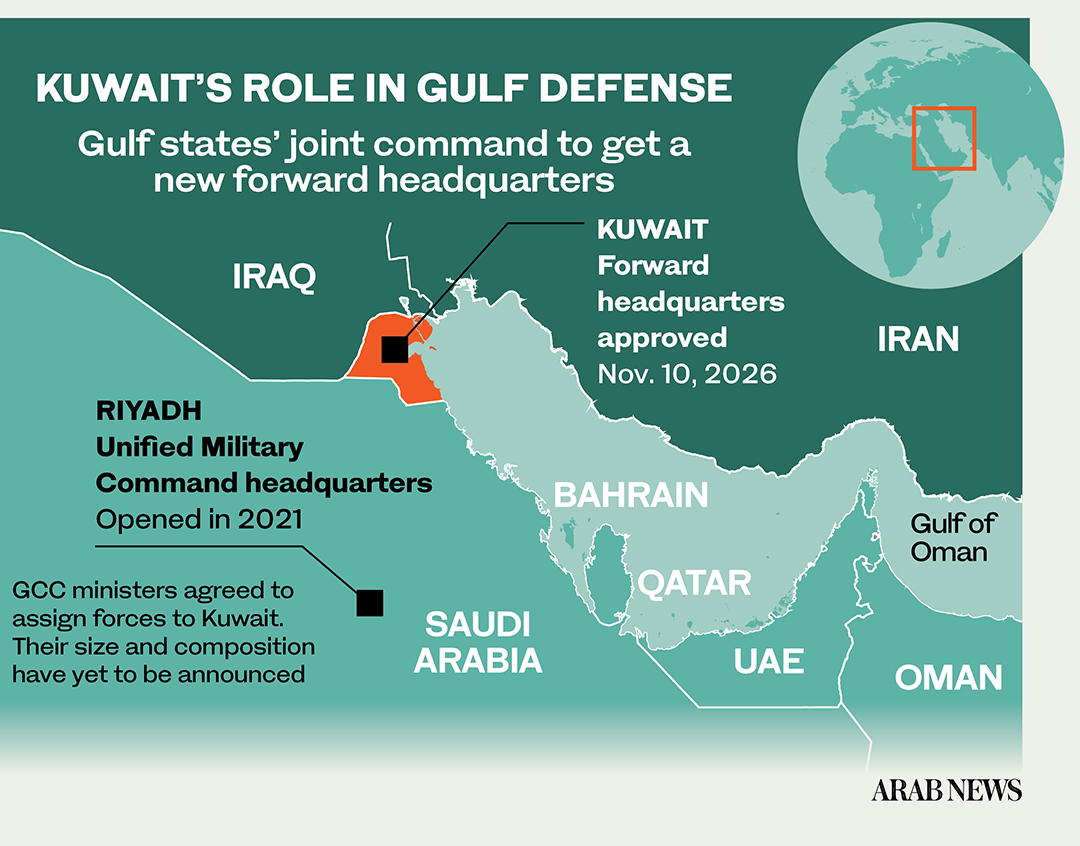
LONDON: The Gulf Cooperation Council has approved the establishment of a joint forward military command in Kuwait — the member state hardest hit by Iranian attacks — marking its most concrete step yet toward turning collective defense commitments into operational capabilities.
Forces will be assigned to the new command, the GCC’s Secretary-General Jasem Mohamed AlBudaiwi said in a statement on Tuesday.
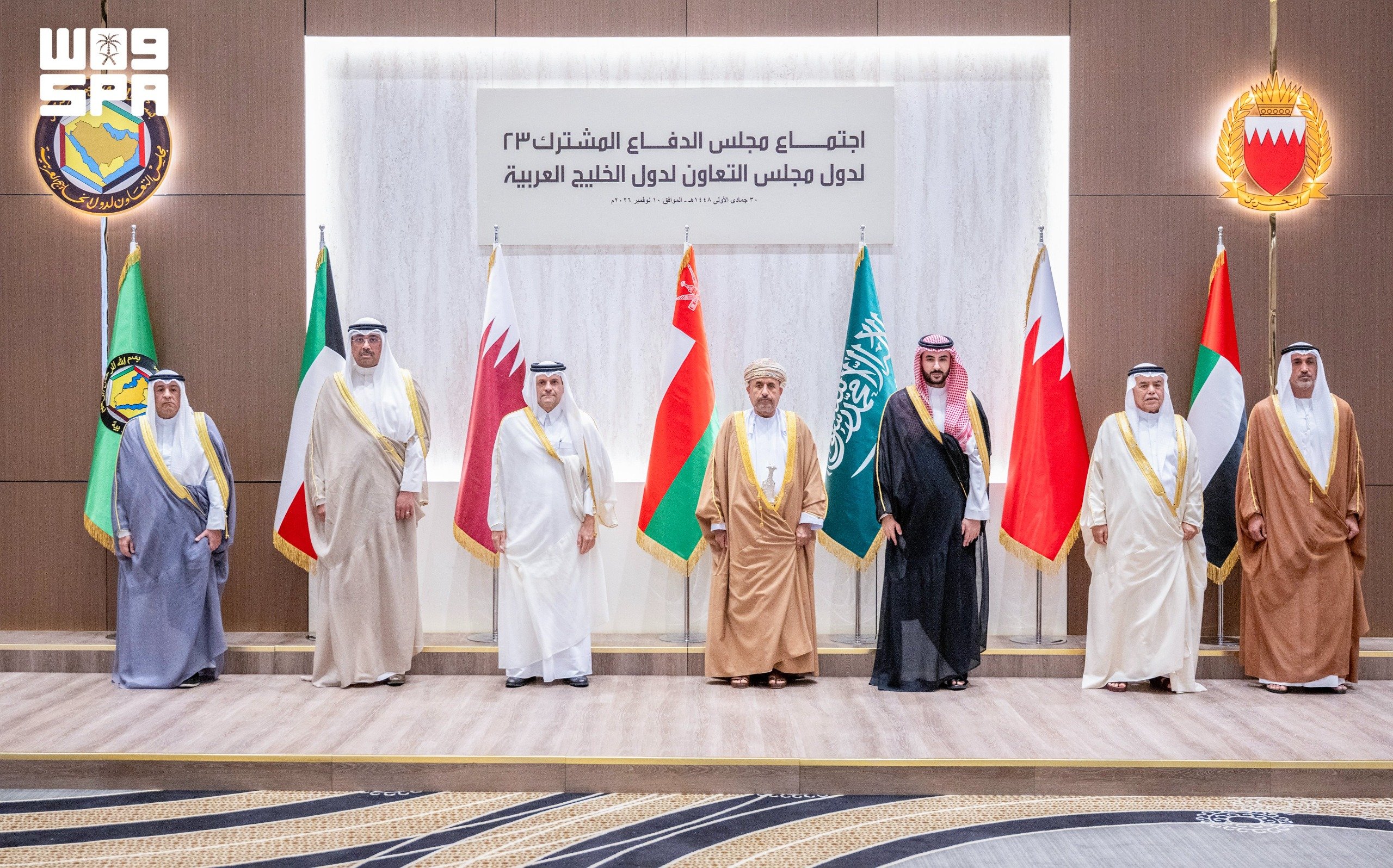
The announcement followed the 23rd session of the GCC’s Joint Defense Council in Manama, attended by defense ministers from all six member states: Bahrain, Kuwait, Oman, Qatar, Saudi Arabia and the UAE.
“The GCC’s joint military action receives the utmost attention, care, and support from their majesties and highnesses, the leaders of the GCC states,” AlBudaiwi said.
“This also reflects their awareness of the responsibility of the armed forces in the GCC states to secure their safety and stability, safeguard their independence, and develop and advance them to keep pace with the hopes and aspirations placed upon them.”
He said the meeting’s agenda included several significant decisions that would “propel the GCC’s joint Gulf military cooperation toward broader horizons of integration.”
However, he did not specify the forward command’s responsibilities, operational scope or the number of troops to be assigned to it.
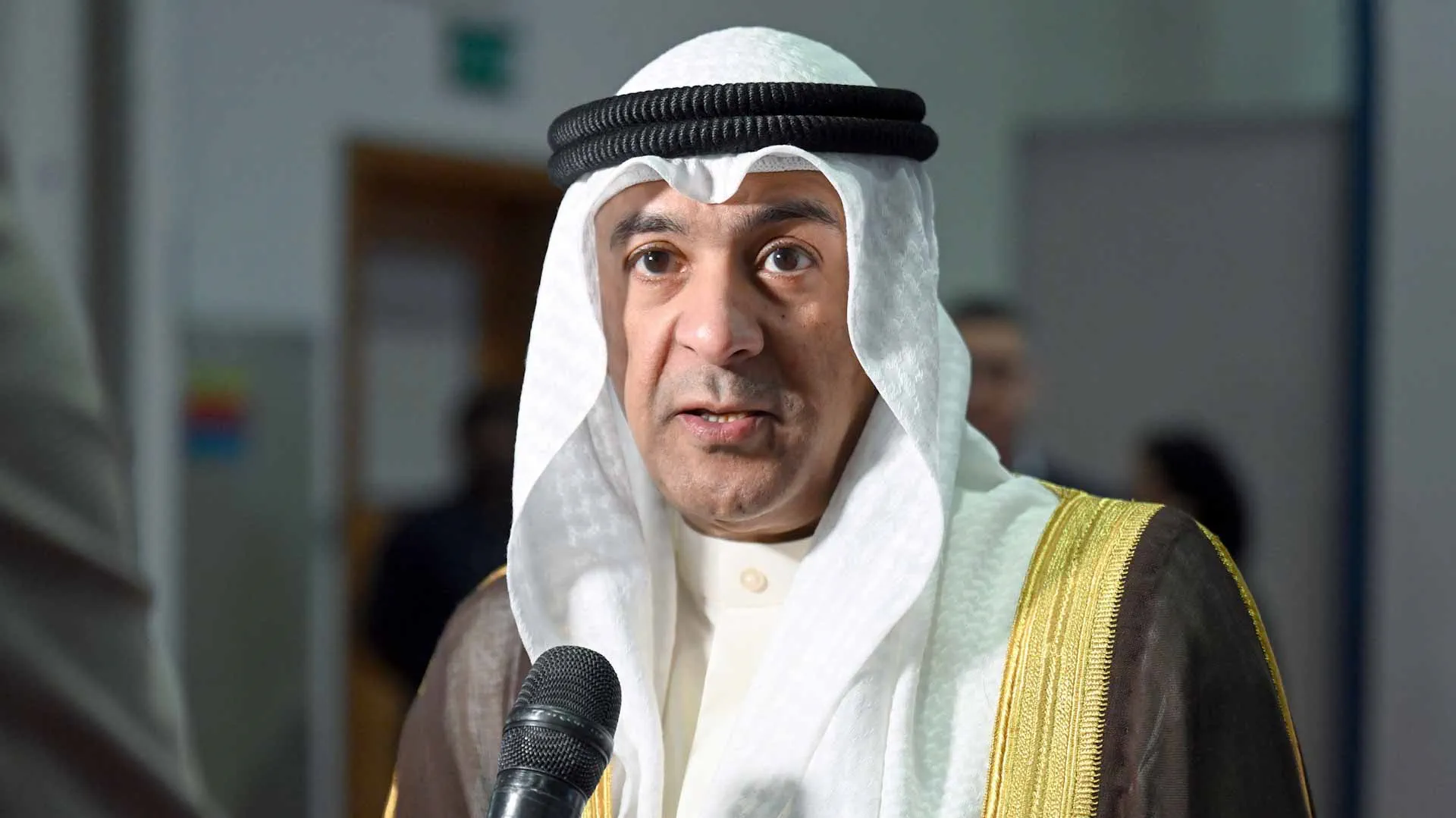
Describing the response to the “treacherous Iranian attacks” as a “shared Gulf responsibility,” he said the “synergy of their military efforts” was essential to protecting the member states’ territory, resources and citizens.
Analysts view the move as a direct response to attacks by Iran and its allies, which have exposed the limitations of individual national responses and the absence of a coordinated GCC deterrent.
“The decision … reflects a Gulf orientation toward strengthening its capacity to carry out joint defense amid ongoing threats posed by Iranian missile and drone attacks, attacks by armed factions launched from Iraq, and Houthi attacks on the Kingdom of Saudi Arabia,” Dr. Abdulaziz Sager, founder and chairman of the Gulf Research Center, told Arab News.
He said the challenge facing the GCC lies in the number of threats and the multiple directions from which they originate, underscoring the need for integrated planning, coordinated capabilities and mutual support.
“The GCC must work toward turning their political commitments to the indivisibility of Gulf security into executable military capability,” he said.
Kuwait’s location at the northern end of the Gulf, he added, makes it a natural forward base for collective defense.
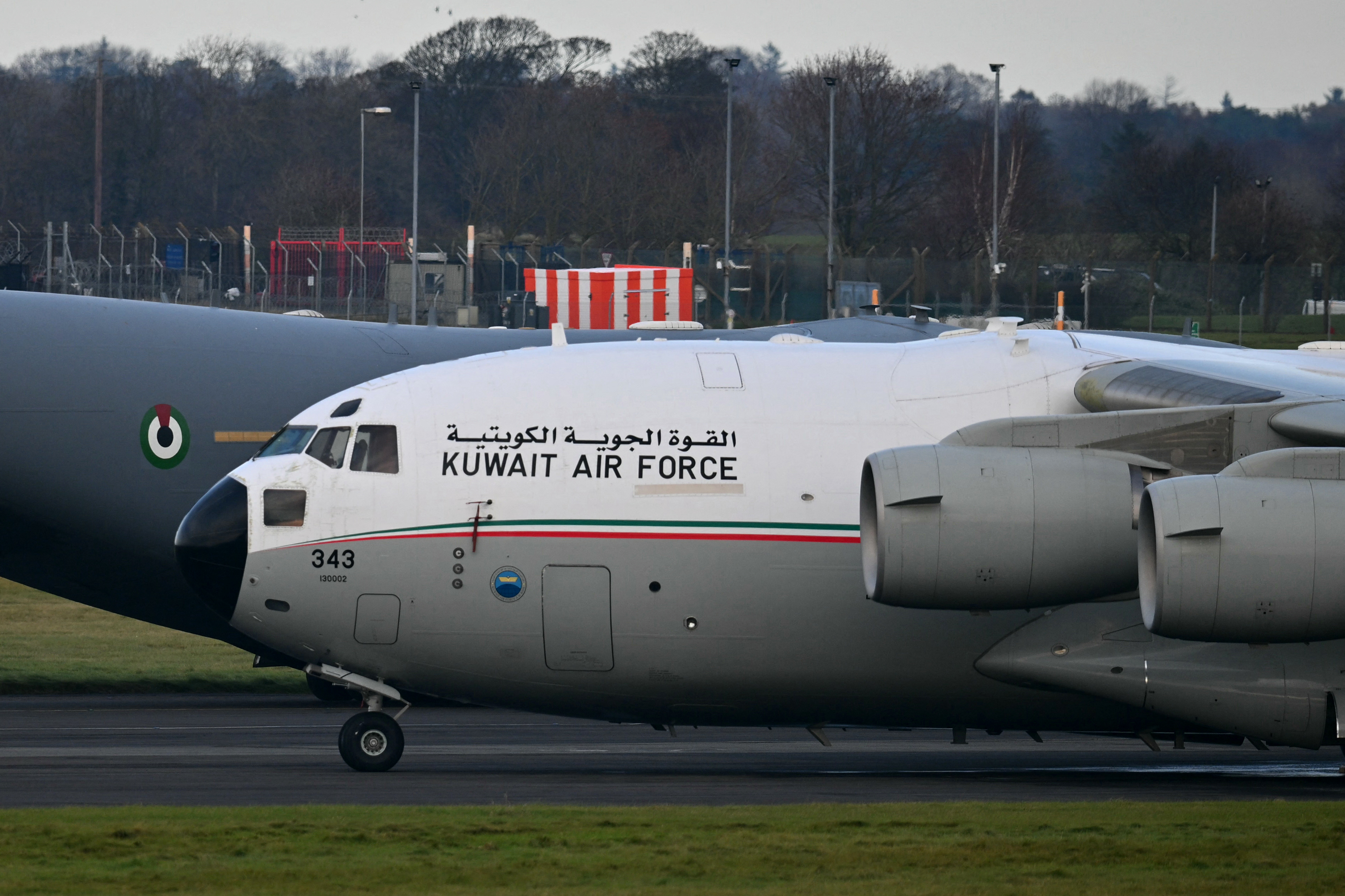
Kuwait has been the GCC member most exposed to attacks since the US-Israeli conflict with Iran erupted in February, facing strikes originating from both Iran and Iraq.
According to the Armed Conflict Location & Event Data Project, one in four attacks on nonmilitary infrastructure recorded across the GCC took place in Kuwait. Targets have included Kuwait International Airport, oil refineries and the Shuaiba power and desalination plant.
“The establishment of a forward command in Kuwait is another important step towards stronger GCC military cooperation,” retired Maj. Gen. Thafer Alajmi, a former Kuwait Air Force fighter pilot, told Arab News.
“It complements the Unified Military Command in Riyadh rather than replacing it. It can also help improve coordination, joint planning and readiness among GCC forces, building on the existing military cooperation between member states.”
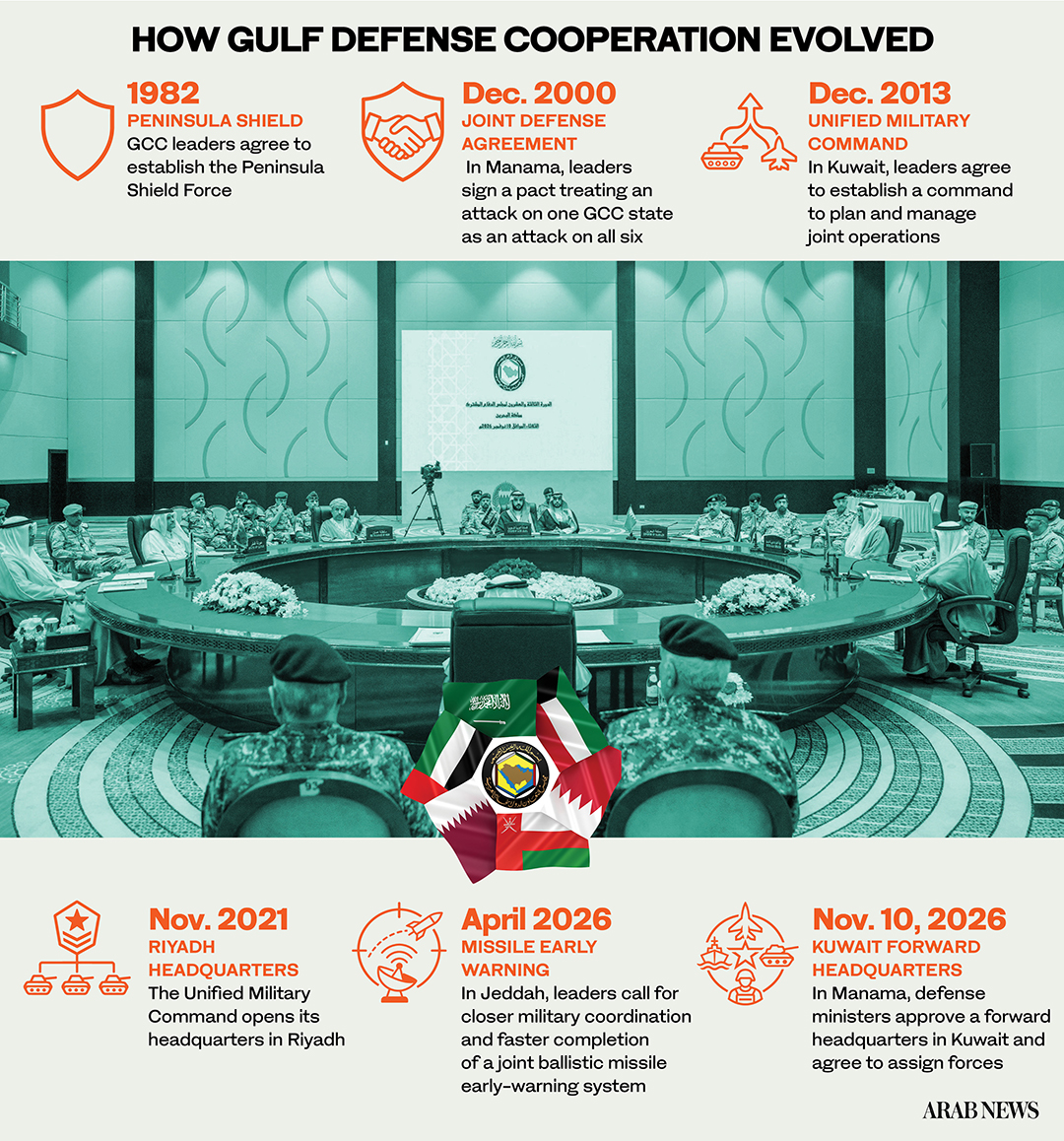
The GCC’s Unified Military Command was established in 2013 to coordinate joint operations and strengthen collective defense. Its headquarters in Riyadh opened in 2021.
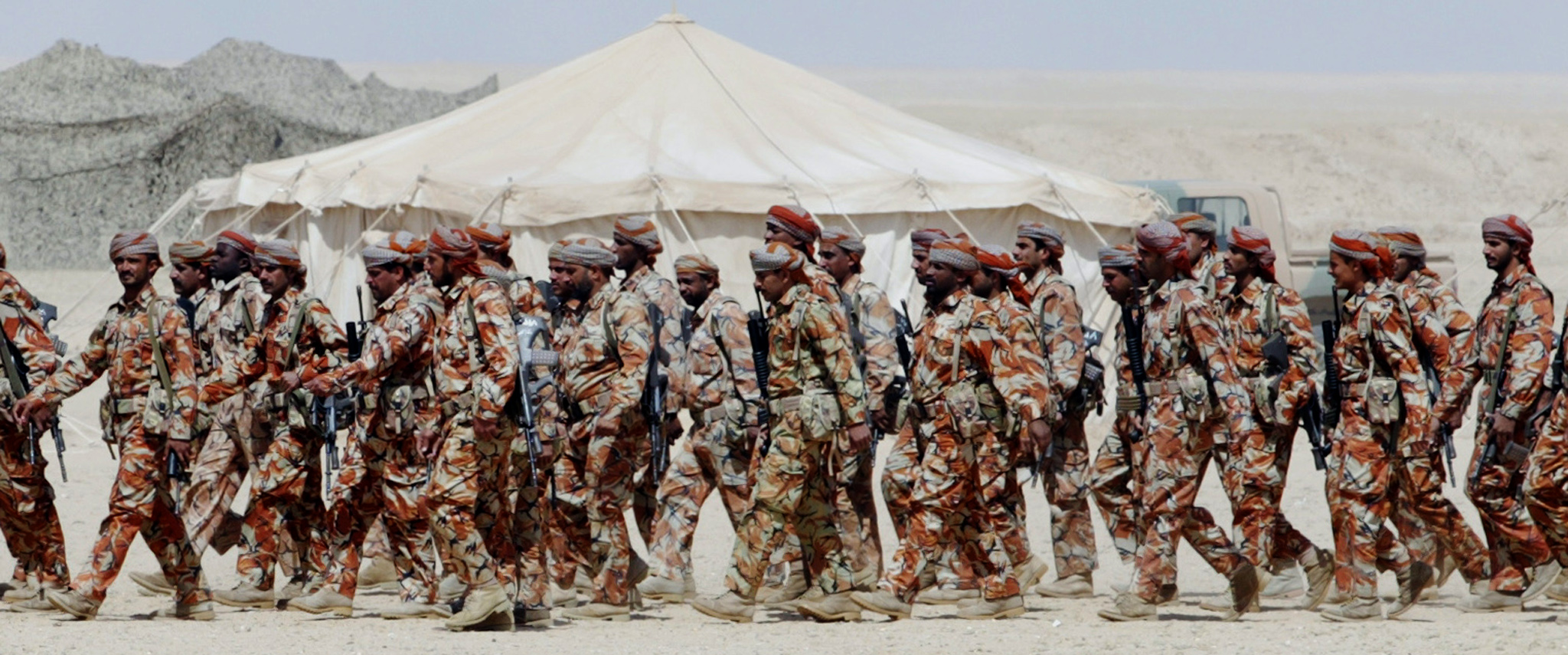
The Peninsula Shield force, the GCC’s longstanding joint military formation, dates back to the mid-1980s and comprises about 40,000 personnel organized into two brigades.
Experts said the significance of the Kuwait decision lies in establishing a more integrated military presence at the northern end of the Gulf, where threats from Iran and armed groups in Iraq have become increasingly pressing.
“It isn’t a new institution. The Unified Military Command was approved in 2013 and opened its Riyadh headquarters in 2021, with Peninsula Shield as its land component,” Muhanad Seloom, senior nonresident fellow at the Doha-based Middle East Council on Global Affairs, told Arab News.
“What Kuwait adds is a standing presence at the head of the Gulf, with forces assigned in advance. That should mean earlier warning of launches from Iran and southern Iraq, a shared intelligence picture for the northern Gulf, and a staff that can direct those forces without waiting for six capitals to agree a deployment.”
For Sager, the Kuwait command represents an opportunity to transform a longstanding institutional framework into a functioning military capability, a shift he said had become increasingly urgent in recent months.
He added: “This is an attempt to revive and activate a real joint military capability. For many years, GCC collective defense has existed largely as a framework. The institutions were there, but there was no standing joint force on the ground.”
Under the proposed arrangement, he said, each member state would assign a designated unit from its armed forces to the new command.
He said: “The overall goal is clear: to turn the principle of common GCC defense into an active, operational reality.
“The immediate significance of the decision lies in enhancing the credibility of collective defense and demonstrating a readiness to share its responsibilities. Its longer-term significance relates to building a sustainable joint defense capability, grounded in a clear chain of command, force readiness, information integration, and effective decision-making.”
The announcement comes as US President Donald Trump has declared that “Iran militarily is effectively over,” playing down speculation about further large-scale American strikes while warning that Washington remains “locked and loaded” should circumstances change.
Iranian officials have repeatedly expressed skepticism about his earlier remarks concerning a possible resolution to the conflict.
Seloom said the timing reflects the prospect of a prolonged conflict without a political settlement, with Gulf governments increasingly preparing for an extended period of “no war, no peace.”
He said: “The timing is institutional as much as strategic. Leaders ordered deeper integration at Jeddah in April, the chiefs of staff met on Oct. 29, and ministers have now signed off.”
He cautioned against interpreting the new command as a provocation toward Tehran.
“A command post in a member state attacked from two directions is defensive, provided the forces assigned are air defense, early warning and surveillance rather than strike assets.
“On Iraq, the message is to the armed factions, not the state. Israel is not the reference threat for a northern Gulf command, though the 2025 strike on Doha is part of why Gulf states now plan for threats from more than one direction.”
Alajmi said recent conflicts had demonstrated the need for closer military cooperation among Gulf states, emphasizing that the objective was to strengthen existing security arrangements rather than replace them.
“I see it as a defensive measure aimed at strengthening regional stability rather than increasing tensions,” he said.
“I don’t see this as a shift away from existing US security partnerships. It is more about strengthening GCC collective defense and military cooperation while maintaining existing international defense partnerships.”
The decision also comes amid an expanding network of regional and international defense arrangements, including the Makkah Pact, recently signed by Saudi Arabia, Pakistan and Turkiye, and bilateral agreements between Gulf states and partners such as the UK and France.
“The Makkah Pact and the GCC Unified Military Command are different defense arrangements, each with its own framework and responsibilities. I do not see them as necessarily conflicting or competing with each other,” Alajmi said.
Seloom acknowledged the potential for institutional “congestion” but argued that the various frameworks “do different jobs.”
“The GCC command is the only structure that integrates the six with each other,” he said. “Overlap becomes a problem only if, in a crisis, each capital calls its own patron first.
“That is close to what happened this year. The principle that an attack on one is an attack on all was reaffirmed, but the responses were national, as Anwar Gargash, former minister of state for foreign affairs for the UAE, acknowledged this month.”
Seloom said collective action had been held back by a number of reasons, including what he called a habit of coordinating through the Americans.
“What must change is narrow but hard: a shared intelligence and air picture, and pre-agreed rules that let commanders act defensively without convening six capitals.”
The announcement has also revived discussion of a unified GCC army. However, Seloom warned that such an ambition could be the “wrong test” of progress, given the political and strategic differences that have frustrated previous attempts at deeper military integration.
“The GCC has been here before,” he said. “Peninsula Shield dates to the 1980s, a 100,000-strong joint force was announced in 2013, and the command approved that year took until 2021 to open its headquarters.
“The obstacles are political. No Gulf state will hand the decision to go to war to a supranational command. The realistic model is closer to NATO than to a single army.
“Kuwait is a meaningful step if three things follow: force contributions from all six, real authority over them, and a common intelligence picture.”