
It is a heated topic of scholarly debate since years whether democracy is possible in the Middle East or not with some arguing that democracy is simply incompatible with the Middle Eastern values, while some saying democracy will work in the region; but it is a matter of time.
It was just Feridun Sinirlioglu, undersecretary to the Permanent Representation of Turkey to the United Nations, who once more opened this debate. According to him, democracy will ultimately come to the Middle East in spite of the issues that the region is facing currently. “Middle East will eventually get a secular democracy established as a reflection of the people’s consent and will. This process may take time. We should be patient about some of our expectations and we should not lose sight of the target”, said Sinirlioglu recently.
His statement raises several questions in the minds of which Middle East are we talking about? What kind of democracy is being suggested when the system changes? Can a particular kind of democracy work in each Middle Eastern country? Do the Middle Eastern people want a “secular” democracy? According to West, what kind of democracy should be supported?
Turkey’s veteran diplomat says that one should not forget that the democratization process in Eastern Europe took 10 years after the Cold War. Indeed it is true; however, the point that should not be missed is that after the collapse of the Soviet Union, the western world supported the political democratization in the Eastern Europe with opening the doors of the institutions like European Union (EU) and NATO to post-Soviet countries. This made the process work faster and more effective. However, today’s Middle East lacks the presence of such democratic institutions.
This is not simply to say that democracy does not work or will not work in the Middle East; but to underline that the current reality in the region suggests that the Middle Eastern countries lack the conditions that prompted democratic change in Eastern Europe. We are speaking about “Middle East” where each country in the region should be evaluated within its own historical context taking into consideration the state apparatus in each country.
As a case example, let’s take Iraq. “Once Saddam is toppled, Iraq would become a beacon of democracy across the Middle East,” said President George W Bush a month before the US invasion of Iraq in 2003. The expectation was that first Saddam Hussein will be ousted, then political freedom followed by economic success will take place and at final stage, one by one, other countries in the region would follow the similar path.
According to the West, the story was planned to end with people in the region living under democratic values, not under bombs.
However, Saddam was toppled, but this didn’t bring about peace and had disastrous effects for Iraq in particular, and the region, in general. Far from getting democracy, Iraq became a battlefield for sectarian and ethnic tensions, not to mention the current fight against the Daesh. Needless to say, when looking at today’s Iraq, one would hardly use the word “Iraq” and “democracy” in the same sentence. What’s the lesson to be taken from this case: No country should be “forced” to become a democracy. It was quite clear in the Iraqi case that a western form of democracy from “top down” failed when this was installed in a state by external forces, rather than internal.
Another example could be Egypt, where there was an optimistic expectation for a future democracy; however, this didn’t happen as we all know. In the context of the Arab Spring, the aim was to topple the dictator, elect a democratic leader and install democratic institutions in the Middle East. However, not only the country’s first democratically elected President Mohammed Morsi was ousted in Egypt; “democracy was ousted” as well. Abnormally, the coup by Gen. Abdel Fattah El-Sissi in 2013 was warmly welcomed by the so-called defenders of the democracy around the world. It was tragic to see how Egypt was pushed to choose its path to “democracy” through bullet, instead of ballot.
More examples could be listed regarding how Middle Eastern people’s desire for democracy and their struggle was not backed or ignored by the “pioneers” of democracy.
Democracy cannot be brought in a silver plate to the Middle Eastern countries, because the ingredients of a suitable democracy for each country in the region should be searched in internal political kitchens. It should be blended with the political culture of each country. History shows us how those who believed in exporting democracy, failed in understanding the cultural structures of the given country, or the region.
It is too early, even will be pessimistic, to say that Middle Eastern people will not enjoy democracy one day. Every country would take its own democracy exam within its own context sooner or later. What really matters is not what the West wants but what the people of the Middle East wish to see in their countries. At the end, they are the real owners of this region.
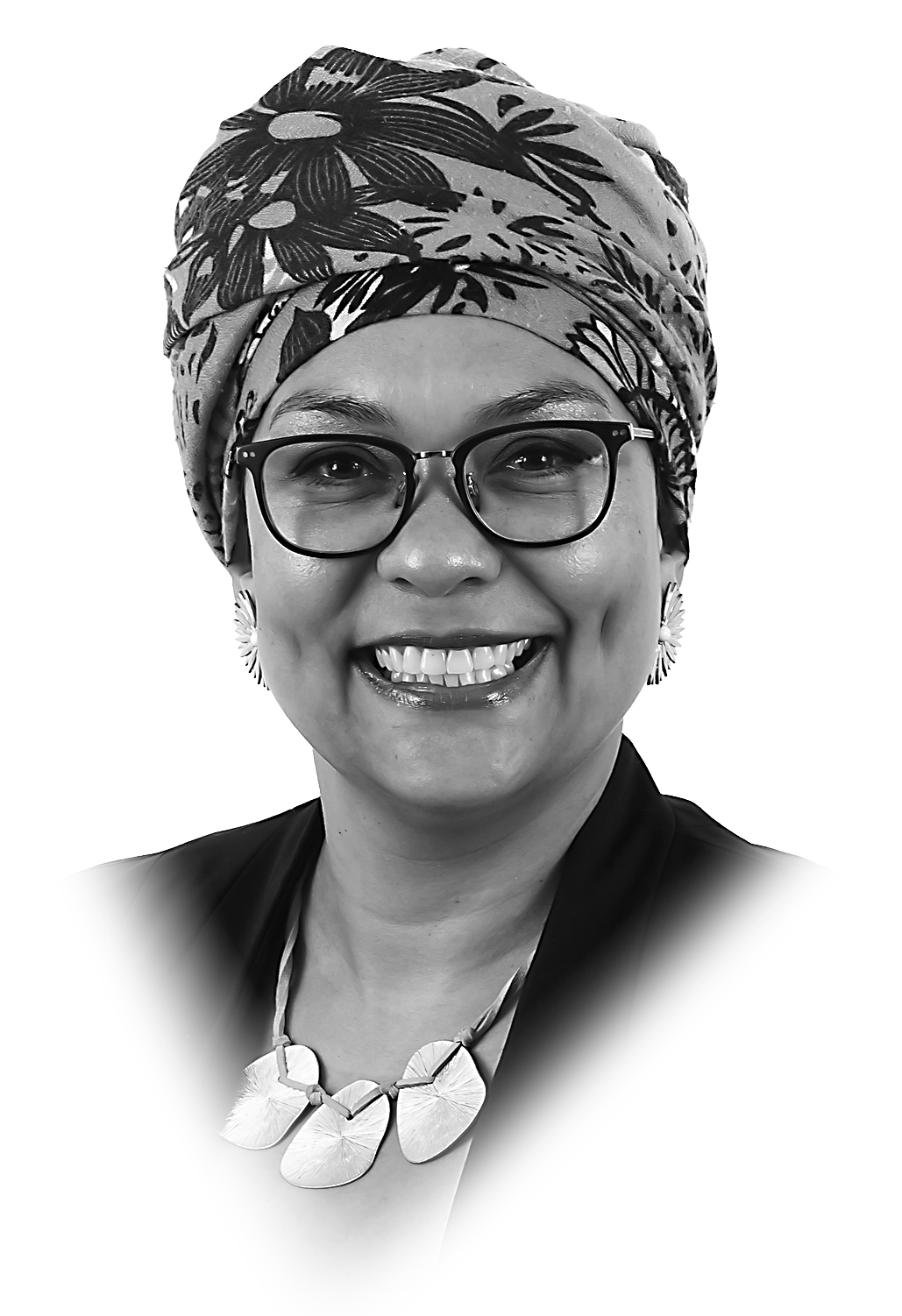
• Sinem Cengiz is a Turkish political analyst who specializes mainly on issues regarding Turkey’s relations with the Middle East. She can be reached on Twitter @SinemCngz.