
"NO."
There isn't much to misunderstand in the word and Humberto da Silveira said it, not with aggression but with a precision that brooked no negotiation. Describing himself as a "classical photographer," he had just declined to be photographed. "My photographs speak for me," he said, "so there is no need for anyone to see what I look like; it would be a distraction." From almost anyone else, that would seem disingenuous. But one glance at da Silveira's portfolio and any thoughts in that direction are instantly dispelled.
The photographs, if they speak for him, also reveal something of his person. He is a very fit-looking man of undetermined middle age with large dark eyes and precisely trimmed pure white hair. In conversation he never strays off the subject and, if diverted, waits patiently until the moment allows him to continue unbroken from where he left off. He exudes commitment and intensity and gives the impression that nothing at all is left to chance. He is a driven man. "It's visual history that inspires me," he says. Living and working in the Middle East for the last 18 years, he has a single objective. His prime consideration before taking a photograph is the state of mind that comes from the balance between his reaction to the scene, historical accuracy and simple "gut feeling." In rather precise, formal speech, he says, "I am determined to compile photographic evidence of the highest quality to contribute to the preservation of archaeological sites and traditions that still speak to us of the ancient world. I need to bear witness to the practical realities of mankind's cultural development." The source of his passion is a love of history.
"It drives me deeply into a state of permanent research to understand mankind's cultural development," he says. "Really, I am trying to answer the question 'How did we get here?' through the record that civilizations have left." His photographs, only produced in black and white, show the same precision and perfection of presentation that the photographer exudes and are remarkable in their detail and subtlety.
Da Silveira took his first photos when he was six. Through his formal education and early life he developed the darkroom and studio skills that were to serve him well later - though it was 20 years before he decided to take up photography professionally.
He left his native Brazil when he was 19 and after traveling in America, Africa, Asia and Europe, he studied photography with Roberto Maia in Rio de Janeiro and attended courses at Parson's School in New York. He followed this by working as assistant to Barry McKinley, a prominent portraitist of politicians, artists and other American public figures, and worked as a professional photographer in Brazil, the US and France. While at French Vogue, he developed the skills that now produce his photographs - intense observation and the paring down of unnecessary emotional clutter that lends them a stark reality.
Black and white photos of this quality remove the viewer from the diverting element of color and allow him to make contact with the essence of the subject. Soul, feel, involvement: they all sound like clichés when describing pictures. But to see these black and white images somehow reveals the essence of the subject and lets the viewer share what the photographer saw and felt when he took the photo. It is art, but it is also an elemental form of communication. Images appeared on rocks as a record and means of communications long before words. Image is the best way of describing the photos - they are images, not of the scene so much as what the photographer wanted to communicate about it, his reaction, his insight. They are somehow clean and pure in a way that color photos can never be. Several factors contribute to that quality, part of which is the perfectionist streak in da Silveira's make up.
The equipment he uses - legendary names such as Linhof, Alpa and Hasselblad - provides much of the technical excellence. Many of the photos are taken on a large format Pentax - little known outside the professional circuit - which combines a portable camera with a high quality image. His involvement with the photograph does not end with the research and the release of the shutter. To achieve the results that he wants, he travels to Paris with the films, delivers them with the details of the negative processing to the developers and repeats the operation with printers. It's total involvement all the way through. "There are very few people who can produce the quality I want," he says. "They will not move without accurate and total input from their clients. They are absolute masters of their trades."
The perfectionist attention to quality continues all the way to the production stage. Printing, like all trades, has its arcane skills and methods, each fitted for a different market. The esoteric world of "art printing" is rarely encountered in daily printed matter. It is hugely skill- intensive and very few printers can produce the results. It is also why da Silveira's volumes of work are not on sale in bookshops. At $1500 each as a rough guide, they are out of range for the mass market.
It is not a matter of simple exclusivity that keeps it this way. "It's all about quality. I have a vision," says da Silveira. "I want to record the classical history of the whole Middle East while it is still there and can still be photographed. And I want to do so to the best of my abilities. No compromise anywhere." His abilities are very considerable, compromises none. The downside is that it is extremely expensive to produce. To produce a new volume of photos requires an investment of around $300,000.
In 1985, the Ahuan Islamic Art Gallery in London invited da Silveira to the opening of the Islamic Gallery of The King Faisal Foundation in Riyadh, Saudi Arabia. The experience was a defining moment in his professional life, leading him to what he describes as "visual history," his true passion. Thereafter, he embarked on a program of extensive archaeological and ethnological research in the Middle East and in Saudi Arabia. This research resulted in his two first masterworks, "Najd" and "Bedu."
"Najd" was published in a run of 3000, with each volume containing 240 pages and 148 photographs. The book illustrates da Silveira's vision of the Kingdom of Saudi Arabia's Neolithic, Classical and 19th Century traditional architecture, in the last years of its functional existence prior to modernization. "This architectural study symbolizes for me the extraordinary, reciprocal dependence between the nomadic Bedu and the settled farming population of the Central Region of Najd," he says. The work was completed on Aug. 31, 1992, produced on the finest quality paper and with the best possible printing services available anywhere.
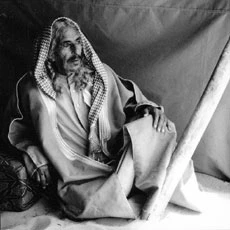
"Bedu" is the sequel to Najd, and represents a proud record of the last true Bedouins of Arabia, the heirs to a nomadic way of life that lasted in the region for many thousands of years, in one of the world's harshest environments, and which, before the photographer's very eyes, was giving way to the forces of modernization.
Printed in a limited edition of 6000 copies - 256 pages, 176 photographs - the book was completed 30th June 1994.
Da Silveira has no intention of entering the commercial field, preferring to seek sponsors who feel as passionately about the history of their countries and cultures as he does. He feels that to commercialize would reduce the quality of the printing and presentation of the photographs and therefore the quality of the record. Most of his work is presented as gifts - to valued individuals or sometimes museums. "Moreover," he says, "I enjoy tremendously working on the chronological and geographical panorama of the Middle East and Mediterranean civilizations, from Sumerian to Byzantine. It will take at least another five years." He faces a range of difficulties, from the need to survive to having his cameras impounded because customs officials thought he might sell them - "I am in a continuous battle," he says. That particular battle motivated him to move to Riyadh where local authorities took a rather more enlightened view. With his record of magnificent work so far, this dapper perfectionist with an iron will and an artist's soul will surely achieve his ambition.