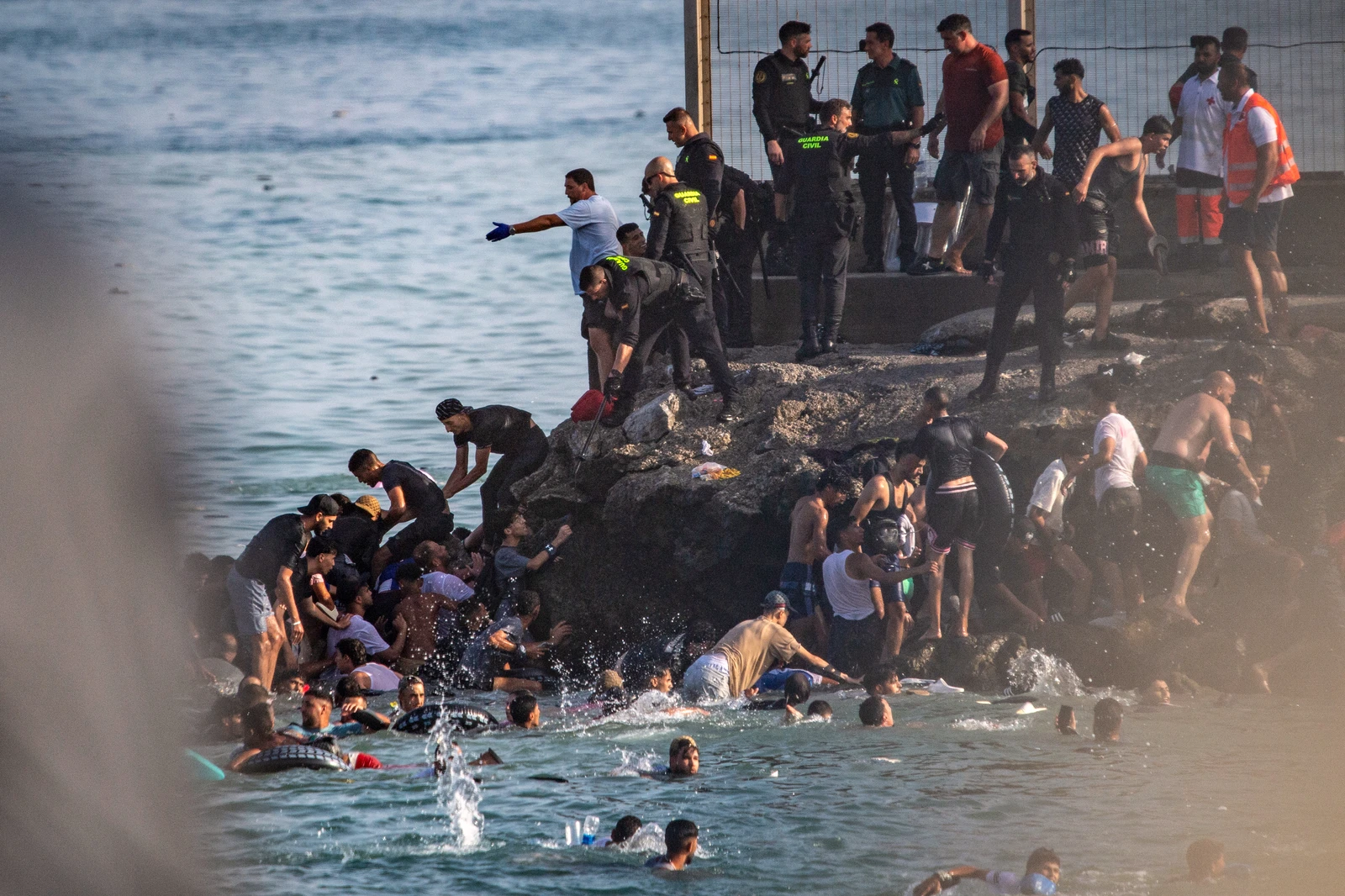
- The EU migration pact, adopted last year and set to come into force in June 2026, hardens procedures for asylum-seekers at its borders
VIENNA: The head of an influential EU-funded migration advisory body has urged the bloc to bolster expulsions of rejected asylum-seekers under its new migration pact and defended his group over human rights concerns.
The director general of the International Center for Migration Policy denied responsibility for what he called “individual cases” of human rights abuses by authorities in countries where his organization works.
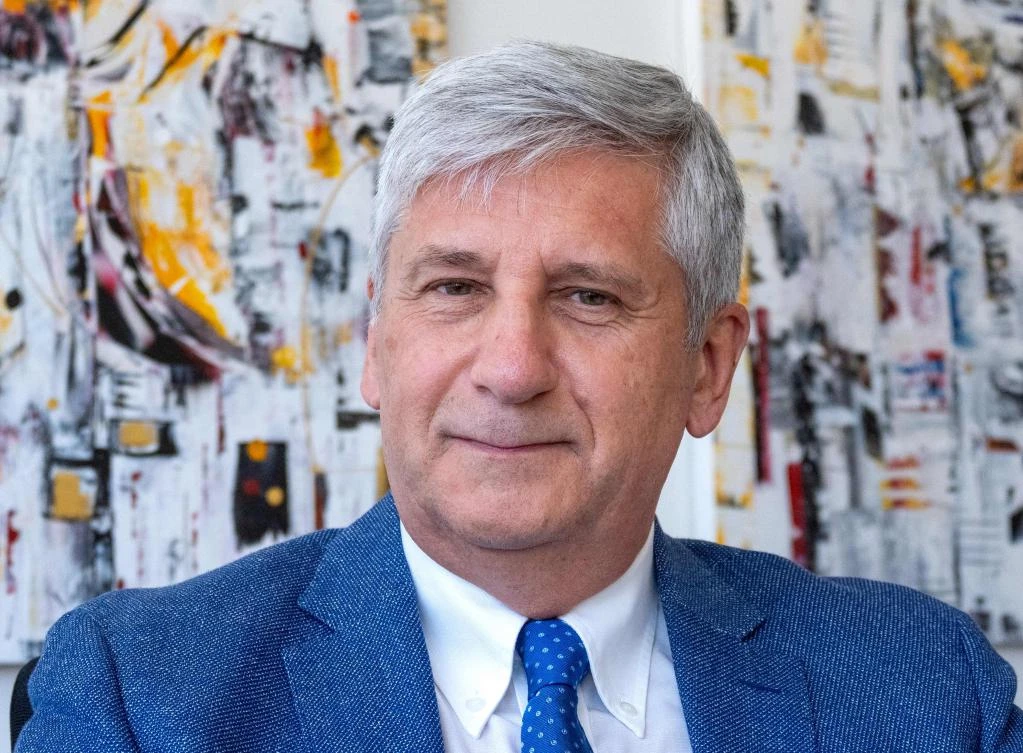
Michael Spindelegger, a former vice chancellor from the conservative Austrian People’s Party, spoke in an interview with AFP as Brussels comes under pressure to keep out or deport migrants, with hard-right anti-immigration parties performing strongly across Europe.
The EU migration pact, adopted last year and set to come into force in June 2026, hardens procedures for asylum-seekers at its borders.
“It’s very important that a well-functioning return policy is established, also in the spirit of the pact,” Spindelegger told AFP.
“If someone comes, isn’t granted asylum, and then stays anyway, and nothing actually happens, that’s a very bad sign for the state of law,” said Spindelegger.
He added it was important to make sure those deported are re-integrated in their home countries so that they don’t leave again.
Currently fewer than 20 percent of people ordered to leave the bloc are returned to their country of origin, according to EU data.
In EU migration reforms, “the train is moving, that’s clear, but there are, of course, still various stations that need to be considered,” Spindelegger said.
“However, in my view, much has already been accomplished at the foundational level.”
The Vienna-based ICMPD advises the European Union authorities and others on migration policy and runs projects in Africa, Asia and Europe.
Human rights groups have repeatedly criticized it over overseas projects aimed at reducing the number of migrant arrivals in Europe.
It has worked with the Tunisian coast guards and Libyan authorities, which have been accused of mistreating migrants.
“I deeply regret whenever negative individual cases (of human rights abuse) persist. We cannot take responsibility for that,” Spindelegger said.
He insisted that training courses run by the ICMPD for border guards in migrant transit countries included training on human rights.
Lukas Gahleitner-Gertz, spokesman of rights group Asylkoordination Austria, dismissed that claim as “window dressing.”
“Cooperation is being advanced with regimes that have a highly doubtful human rights record,” Gahleitner-Gertz told AFP.
Spindelegger said an ICMPD-backed border guard training center built in Tunisia had been a “big success,” helping prepare hundreds of people for the job so far.
A similar training project has been launched in Jordan, while the ICMPD is looking to expand the scheme to Algeria.
Rights groups have also voiced concern at the European Commission’s plans, unveiled in May, to make it easier to send asylum seekers to certain third countries for their applications to be processed.
The proposal is seen as a step toward the creation of sites outside the bloc that would act as hubs for returning migrants.
It needs approval from the European Parliament and member states to become law.
The ICMPD counts 21 mostly EU countries as its members and has a staff of more than 500 people.
Founded by Austria and Switzerland in 1993, it works in more than 90 countries.
Among its members are EU countries such as Germany and Greece and non-EU members, including Turkiye. France, Italy and Spain are not members.
Since Spindelegger, 65, took over the center in 2016, the number of employees has grown four times bigger.
Its budget has increased by five times to more than 100 million euros ($120 million), he said.
Some 70 percent of the budget comes from the European Commission.
Spindelegger will retire at the end of the year. He is due to be replaced by another Austrian conservative politician, Susanne Raab.