
Oil Updates — crude retreats from almost 3-week high driven by Russia supply risks

Update Oil Updates — crude retreats from almost 3-week high driven by Russia supply risks
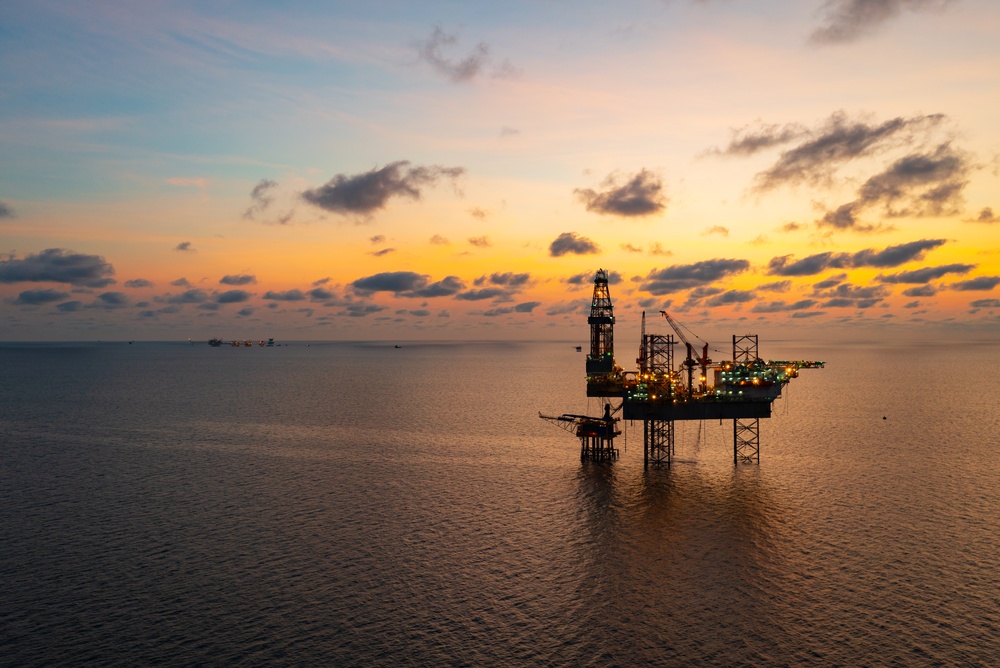
Brent crude was down 51 cents, or 0.7 percent, at $68.29 a barrel by 11:10 a.m. Saudi time. Shutterstock
Short Url
Updated 26 August 2025
Follow

Oil Updates — crude retreats from almost 3-week high driven by Russia supply risks

Oil Updates — crude retreats from almost 3-week high driven by Russia supply risks

LONDON: Oil prices fell on Tuesday after surging nearly 2 percent in the previous session as traders monitor developments surrounding the war in Ukraine and potential disruption to Russian fuel supplies.

Brent crude was down 51 cents, or 0.7 percent, at $68.29 a barrel by 11:10 a.m. Saudi time, having hit its highest since early August in the previous session. West Texas Intermediate crude lost 57 cents, or about 0.9 percent, to $64.23.

“The modest setback today is due to risk aversion, with equity markets trading lower,” said UBS analyst Giovanni Staunovo. “Geopolitical factors are something to watch for, particularly what Trump might do if there is no meeting between Russia and Ukraine.”

Oil’s rally on Monday was primarily driven by supply risks after Ukraine strikes on Russian energy infrastructure and the possibility of further US sanctions on Russian oil.

Ukraine’s attacks in response to Russia’s advances in the conflict and its pounding of Ukrainian gas and power facilities have disrupted Moscow’s oil processing and exports and created gasoline shortages in some parts of Russia.

US President Donald Trump, meanwhile, has renewed his threat to impose sanctions on Russia if there is no progress toward a peace deal in the next two weeks.

However, sources have told Reuters that US and Russian government officials discussed several energy deals on the sidelines of this month’s negotiations seeking peace in Ukraine.

“Given the huge amount of uncertainties in the oil market caused by the Ukrainian conflict and the tariff war, investors will remain unwilling to commit themselves to either direction on a prolonged basis,” said PVM Oil Associates analyst Tamas Varga.

In the medium term, Brent prices could be bound to a trading range of $65-$74 for the foreseeable future, he added.

Looming US tariffs against India over its continued purchases of Russian oil are also in focus, said Saxo Bank commodities strategist Ole Hansen. India is the third-largest buyer of Russian crude.

Indian exports could face US duties of up to 50 percent — among the highest imposed by Washington.



Saudi Arabia, Canada explore ways to enhance cooperation in technology, innovation 

Saudi Arabia, Canada explore ways to enhance cooperation in technology, innovation 
Updated 04 November 2025
Follow

Saudi Arabia, Canada explore ways to enhance cooperation in technology, innovation 

Saudi Arabia, Canada explore ways to enhance cooperation in technology, innovation 

RIYADH: Saudi Arabia’s technology and innovation partnership with Canada is set to receive a boost after senior ministers met to explore new avenues of cooperation and strengthen trade ties. 

Saudi Minister of Investment Khalid Al-Falih said in a post on X that he met with Canada’s Minister of Artificial Intelligence and Digital Innovation Evan Solomon to discuss ways to strengthen relations between the countries and to build partnerships that contribute to mutual economic growth, particularly in priority investment sectors. 

This comes as trade between the two nations continues to expand. In February, Saudi Arabia exported SR641 million ($170 million) to Canada, marking an 86.6 percent increase from SR344 million in February 2024, according to data from the Observatory of Economic Complexity.

It also follows an agreement in January 2024 for both countries to re-exchange trade delegations to enhance economic relations and boost trade and investment flows. 

In a subsequent post on X, Al-Falih stated: “The dialogue took place between me and Anita Anand, the Canadian Minister of Foreign Affairs, in the presence of the Saudi ambassador to Canada, Amal Yahya Al-Moallimi.” 

He added: “We discussed supporting and strengthening relations between our two countries, and facilitating investment exchange, in order to achieve more fruitful cooperation in the most important sectors, which will bring success to both peoples.” 

Artificial intelligence has become a central pillar of Saudi Arabia’s post-oil economic strategy, with the Kingdom leveraging advanced technologies to drive data-led industries and automation. 

Now at the halfway point of Vision 2030, the country is accelerating efforts to position itself as a global technology leader, balancing innovation with sustainability goals. 
Key initiatives — including the Project Transcendence program, valued at around $100 billion — aim to further establish Saudi Arabia as a global hub for AI innovation. 

Over the past five years, Saudi Arabia has made significant progress toward establishing itself as a regional artificial-intelligence hub. PwC projects that AI could contribute about $235 billion — or 12.4 percent — to the Kingdom’s gross domestic product by 2030.