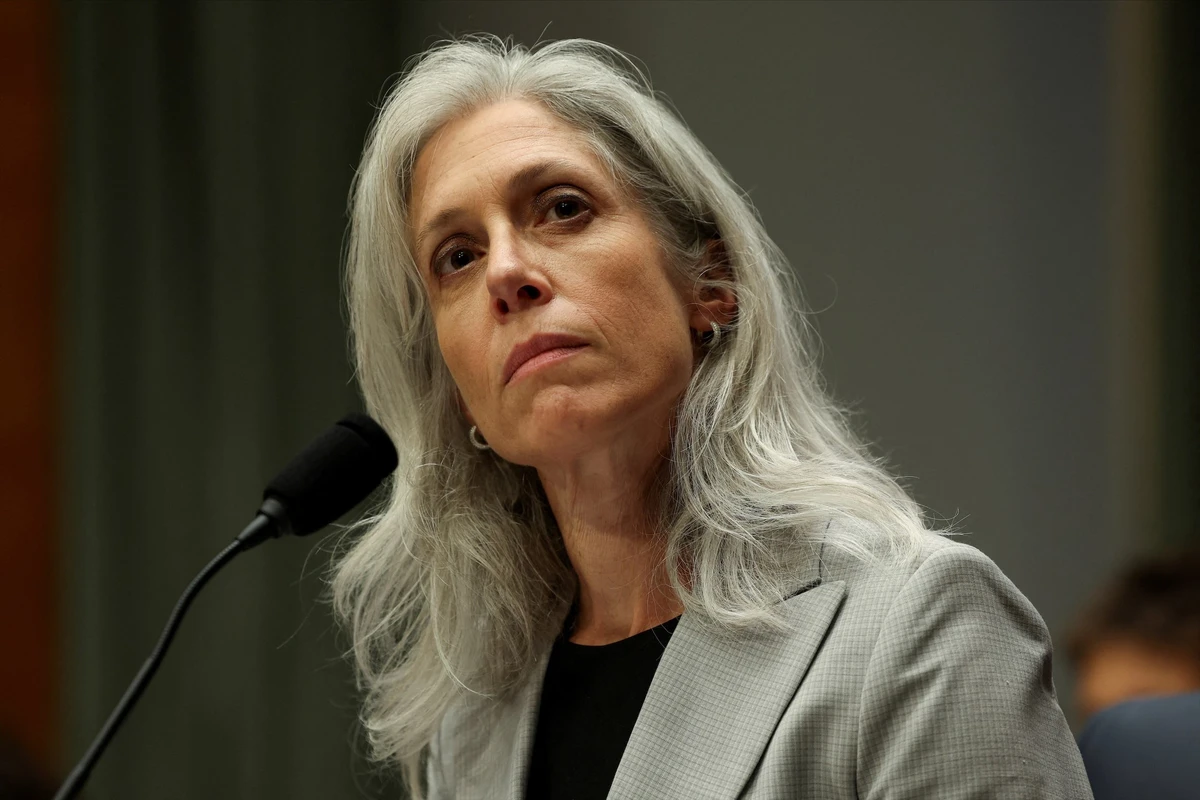
- Susan Monarez challenges dismissal citing unscientific directives by HHS Secretary Kennedy
- Senior CDC officials resign over vaccine policy, misinformation, and public health weaponization
WASHINGTON: US Centers for Disease Control and Prevention Director Susan Monarez has left the agency less than a month after being sworn in, the Department of Health and Human Services said on Wednesday, and four senior officials have resigned amid growing tensions over vaccine policies and public health directives.
Monarez’s attorneys said she is challenging her ouster, accusing US Secretary of Health and Human Services Robert F. Kennedy Jr. of targeting her for refusing to support “unscientific directives” and dismiss health experts.
“Dr. Monarez has neither resigned nor received notification from the White House that she has been fired, and as a person of integrity and devoted to science, she will not resign,” attorneys Mark S. Zaid and Abbe David Lowell said in a statement.
CDC Chief Medical Officer Debra Houry and National Center for Immunization and Respiratory Diseases Director Demeter Daskalakis have resigned, Houry told Reuters. They cited a rise in health misinformation especially on vaccines, attacks on science, the weaponization of public health, and attempts to cut the agency’s budget and influence in their resignation letters, reviewed by Reuters.
National Center for Emerging and Zoonotic Infectious Diseases Director Daniel Jernigan also stepped down, days after the agency reported the first US human case of screwworm linked to an ongoing outbreak in Central America. Jen Layden, Director of the CDC Office of Public Health Data, Surveillance and Technology, has also resigned, NBC News reported.
“Recently, the overstating of risks and the rise of misinformation have cost lives, as demonstrated by the highest number of US measles cases in 30 years and the violent attack on our agency,” Houry wrote in her resignation.
Budget cuts proposed by President Donald Trump’s administration and plans by Kennedy to reorganize the agency would harm its ability to address these challenges.
‘Ongoing weaponization’
The White House sought to cut the CDC’s budget by almost $3.6 billion in its 2026 budget proposal, leaving it with a $4 billion budget, and Kennedy announced a layoff plan earlier this year that cut 2,400 CDC employees, though some 700 were rehired.
“I am not able to serve in this role any longer because of the ongoing weaponizing of public health,” Daskalakis wrote. He declined to comment for this story.
HHS did not provide a reason for Monarez’s departure from the agency and did not address the resignations.
“Susan Monarez is no longer director of the Centers for Disease Control and Prevention. We thank her for her dedicated service to the American people,” a posting on the department’s official X account said.
The CDC has faced mounting challenges under Kennedy’s leadership, including a shooting at its Atlanta headquarters earlier this month. The union representing CDC workers said the incident “compounds months of mistreatment, neglect, and vilification that CDC staff have endured.”
Fiona Havers, a former CDC official who resigned in June over vaccine policy, described the recent resignations as “devastating for the CDC,” adding that the departing leaders acted as a “buffer between career CDC scientists and RFK Jr. and this administration’s attacks on public health.”
Sweeping changes
Kennedy has made sweeping changes to vaccine policies, including withdrawing federal recommendations for COVID shots for pregnant women and healthy children in May, and firing all members of the CDC’s expert vaccine advisory panel in June whom he replaced with hand-picked advisers including fellow anti-vaccine activists. He announced further changes to COVID vaccine eligibility on Wednesday.
In a pointed resignation letter addressed to Dr. Houry and posted by Daskalakis on X Wednesday evening, Daskalakis said the CDC’s vaccination recommendations were putting young Americans and pregnant women at risk and disparaged Kennedy’s decision to fire the panel. He said the health agency’s policies would return America to a pre-vaccine era where only the strong survive, risking the well-being and security of the country.
Monarez, a federal government scientist, was confirmed by the US Senate on July 29 after Trump nominated her earlier in the year and was sworn in by Kennedy on July 31.
She was Trump’s second nominee for the role after he withdrew his nomination in March of former Republican congressman and vaccine critic Dave Weldon, a Kennedy ally, just hours before his scheduled confirmation hearing.
Monarez’s comments during her confirmation hearing, in which she said she has not seen evidence linking vaccines and autism, contrasted her with Kennedy, who has promoted the discredited claim of such a link.
Kennedy has launched a department-wide effort to investigate the causes of the condition and said on Wednesday there would be news soon on that front.
“We have announcements that are coming out in September on autism of changes that we are going to make that will dramatically impact the effects,” he said during an event with Texas Governor Gregg Abbott.