Ukraine’s Zelensky proposes joint aerial shield with allies

Ukraine’s Zelensky proposes joint aerial shield with allies
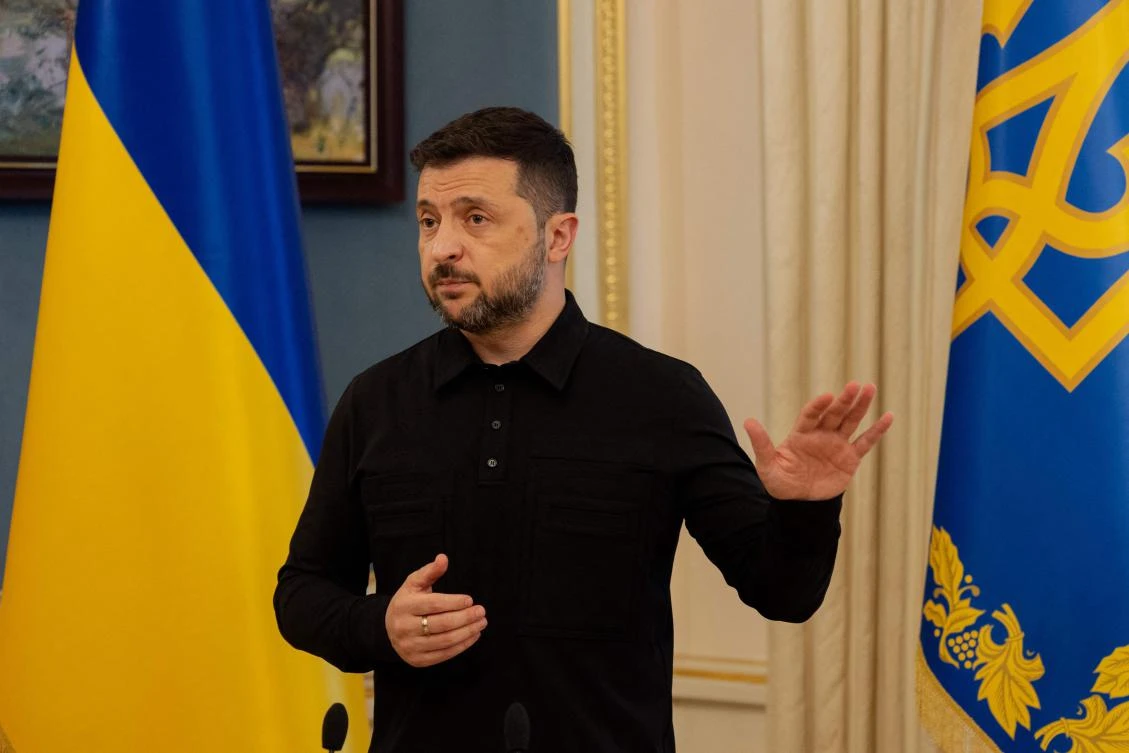
Ukrainian President Volodymyr Zelensky has offered to build a joint aerial defense shield with its allies to protect against threats from Russia. (AFP)
Short Url
Updated 29 September 2025
Follow

Ukraine’s Zelensky proposes joint aerial shield with allies

Ukraine’s Zelensky proposes joint aerial shield with allies
  • NATO leaders have said that Russia has been testing the alliance’s readiness and resolve
  • A series of airspace incursions that caused alarm on NATO’s eastern flank

WARSAW: Ukraine has offered to build a joint aerial defense shield with its allies to protect against threats from Russia, Ukrainian President Volodymyr Zelensky said on Monday, after a series of airspace incursions that caused alarm on NATO’s eastern flank.
NATO leaders have said that Russia has been testing the alliance’s readiness and resolve with airspace incursions in Poland and the Baltic states, and Kyiv says its experience in dealing with aerial threats would be valuable.
“Ukraine proposes to Poland and all our partners to build a joint, fully reliable shield against Russian aerial threats,” he said in an address to the Warsaw Security Forum delivered via video link.
“This is possible. Ukraine can counter all kinds of Russian drones and missiles and if we act together in the region we will have enough weapons and production capacity.”
Ukraine has already said that its troops and engineers will train their Polish counterparts on countering drones.
The topic of defense cooperation with Kyiv was high on the agenda as leaders gathered in Warsaw for the annual security forum.
German Defense Minister Boris Pistorius told the conference that “Europe’s and Ukraine’s defense industry must work together more closely and effectively.”
“The European Union must back this by providing a much more flexible regulatory framework for the defense industry in Europe.”
Following the Russian incursions into NATO airspace, countries on the alliance’s eastern flank have agreed on the need for a “drone wall” with advanced detection, tracking and interception capabilities.
However, Pistorius warned that establishing this would not be a quick process.
“We’re not talking about a concept that will be realized within the next three or four years,” he said. “We need to prioritize, and recognize that we require more capabilities and capacities than previously described.”

Germany’s Merz calls for repatriation of Syrians as far-right surges

Germany’s Merz calls for repatriation of Syrians as far-right surges
Updated 55 min 6 sec ago
Follow

Germany’s Merz calls for repatriation of Syrians as far-right surges

Germany’s Merz calls for repatriation of Syrians as far-right surges
  • “There are now no longer any grounds for asylum in Germany, and therefore we can also begin with repatriations,” Merz said
  • The party has campaigned on an anti-migrant platform and argues that Islam is incompatible with German society

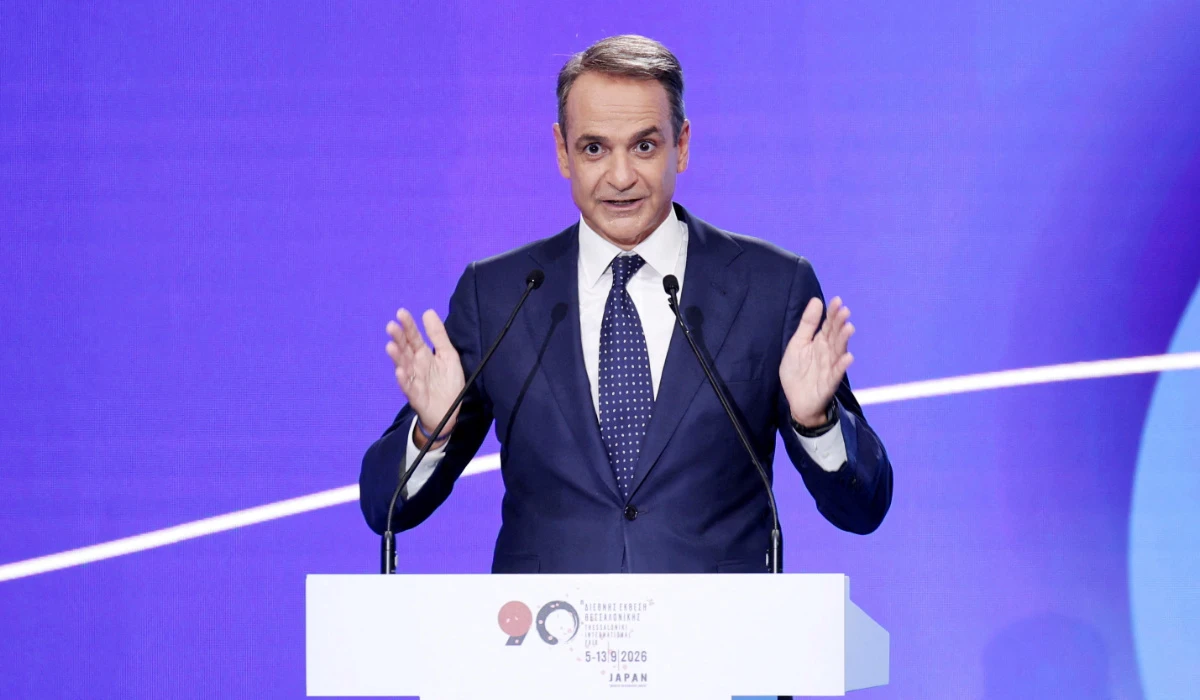
BERLIN: Syrians no longer have grounds for asylum in Germany now the civil war in their country is over, German Chancellor Friedrich Merz said, as his conservatives seek to fend off a surging far-right ahead of a slew of state elections next year.
Germany was the EU country that took in the largest number of refugees from the 14-year-long Syrian civil war due to former Chancellor Angela Merkel’s open-door policy, with around one million Syrians living in the country today.
But Merz and several fellow conservatives in his coalition cabinet say the situation has changed following the fall last December of Bashar Assad’s government and end of the war — despite the fact Syria remains in a deep humanitarian crisis and forcible returns would face steep legal challenges.

COUNTERING THE AfD
“There are now no longer any grounds for asylum in Germany, and therefore we can also begin with repatriations,” Merz said late on Monday, adding that he expected many Syrians to return of their own accord to rebuild the country.
“Without these people, rebuilding will not be possible. Those in Germany who then refuse to return to the country can, of course, also be deported in the near future.”
The far-right Alternative for Germany has surged ahead of Merz’s conservatives in opinion polls ahead of five state elections next year that could give the AfD its first state premier.
The party has campaigned on an anti-migrant platform and argues that Islam is incompatible with German society.
Migration has consistently topped polls about Germans’ top concerns in recent years, and some mainstream conservative strategists believe only a hard-line asylum policy can counter the AfD. Others advocate challenging the AfD more robustly.
The United Nations has warned that conditions in Syria currently do not allow for large-scale repatriations, with some 70 percent of the population still relying on humanitarian aid — a sentiment echoed by German Foreign Minister Johann Wadephul during his trip to the country last week.
AfD co-leader Alice Weidel called that “a slap in the face to the victims of Islamist violence,” referring to the arrest of a 22-year-old Syrian in Berlin on Sunday accused of preparing a “jihadi” attack in the latest of a series of high-profile incidents that have fueled public concerns over security and migration.

VOLUNTARY RETURNS
Germany has been examining the possibility of deporting Syrians with criminal records for several months, and Merz said on Monday he had invited Syrian President Ahmed Al-Sharaa to Germany to discuss the issue.
Now a policy of broader repatriations — preferably voluntary — is being discussed.
Chancellery chief Thorsten Frei said on Monday that young Sunni Muslim men were “certainly not subject to any danger or risk of destitution in Syria” anymore.
“Germany will only be able to help people in such situations on a lasting basis if, once the country has been pacified, a large proportion of these people then return to their homeland,” said Frei.
Hundreds of thousands of Bosnians were repatriated from Germany in the late 1990s after the end of the war there, largely via voluntary returns in part prompted by the knowledge their residence permits would not be extended.
Bosnia had a clearer peace architecture, with international monitoring, than Syria has today — and Germany would likely face legal challenges if it sought to forcibly return Syrians.
Only around 1,000 Syrians returned to Syria with German federal assistance in the first half of this year. Hundreds of thousands of Syrians in Germany still hold only temporary residence permits.