Arab Energy Organization firms post record $280m profit

Arab Energy Organization firms post record $280m profit
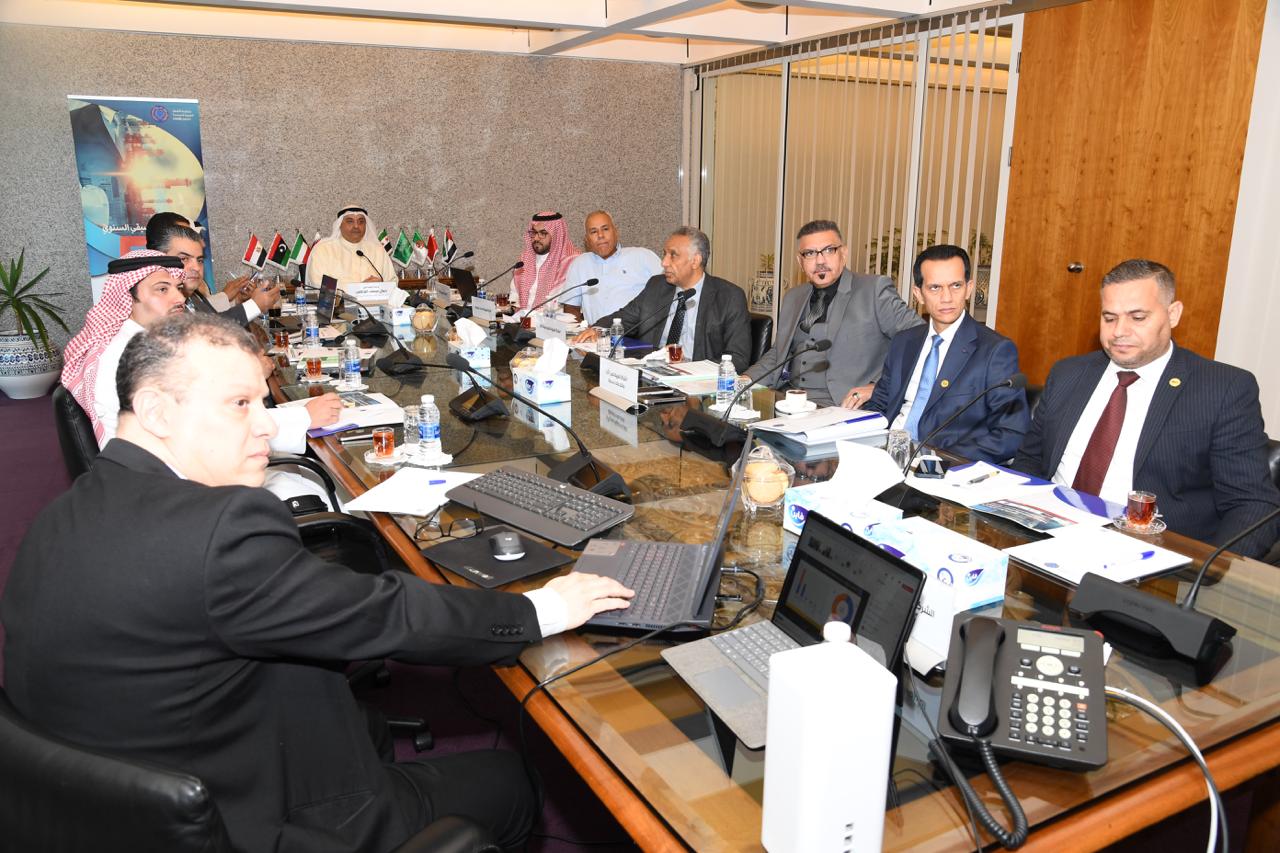
The meeting was attended by representatives of the Arab Shipbuilding and Repair Yard Co., or ASRY, the Arab Energy Fund, the Arab Petroleum Services Co., the Arab Drilling and Workover Co., and the Arab Well Logging and Well Services Co. KUNA
Short Url
Updated 09 October 2025
Follow

Arab Energy Organization firms post record $280m profit

Arab Energy Organization firms post record $280m profit

JEDDAH: Arab energy companies posted record net profits of over $280 million in 2024 — their highest ever — driven by strong business volumes and strategic initiatives, according to the Arab Energy Organization. 

The achievement reflects the resilience of Arab energy firms amid volatile markets and follows efforts to modernize operations and strengthen coordination across member states, said Secretary-General Jamal Al-Loughani during the opening of the organization’s 54th Annual Coordinating Meeting. 

He stressed the importance of providing necessary support to foster growth, enhance prosperity, and achieve their founding objectives, the Kuwait News Agency, or KUNA, reported. 

“Al-Loughani underscored the need to build on previous meetings and their positive outcomes, moving toward a new phase that opens avenues for cooperation among affiliated companies and with national companies of a similar nature and activity in member states,” KUNA reported. 

The official commended the companies’ efforts, describing them as a catalyst for deeper Arab cooperation.  He highlighted their “pivotal and constructive role” in fostering collaboration and creating opportunities to strengthen the petroleum industry across member states, despite challenges arising from regional and global market conditions. 

Al-Loughani also highlighted the “continuous and constructive” communication maintained between the General Secretariat and the affiliated firms through designated liaison officers, KUNA reported. 

During the meeting, representatives of the organization’s affiliated companies reviewed major activities for 2024 and the first half of 2025, including commercial and technical operations, financial results, human resources activities, and training programs.  

They also presented several plans and projects aimed at enhancing performance, adapting to current market fluctuations, and maximizing revenue. 

The meeting was attended by representatives of the Arab Shipbuilding and Repair Yard Co., or ASRY, the Arab Energy Fund, the Arab Petroleum Services Co., the Arab Drilling and Workover Co., and the Arab Well Logging and Well Services Co. 

The Arab Energy Organization, formerly known as the Organization of Arab Petroleum Exporting Countries, was restructured and renamed in December following a Saudi-led proposal to broaden its mandate beyond oil to cover the wider energy sector. 

Saudi Arabia’s ACWA Power, a major renewable energy firm and one of the region’s key players, reported a 2024 net profit of SR1.75 billion ($466 million), up 5.7 percent year on year, underscoring the Arab energy sector’s gradual shift toward sustainable growth. 

GCC insurance outlook stable on growth, diversification gains: Moody’s 

GCC insurance outlook stable on growth, diversification gains: Moody’s 
Updated 5 sec ago
Follow

GCC insurance outlook stable on growth, diversification gains: Moody’s 

GCC insurance outlook stable on growth, diversification gains: Moody’s 

RIYADH: The Gulf Cooperation Council’s insurance sector is expected to remain stable over the next 12 to 18 months, supported by strong economic growth and rising non-oil investments, according to Moody’s Ratings. 

In its latest GCC Insurance Outlook, Moody’s said economic diversification and compulsory insurance schemes are expected to underpin the sector’s growth. 

The region’s non-life segment, which represents more than 80 percent of premium revenues, will benefit from government-backed infrastructure and diversification projects, particularly in Saudi Arabia and the UAE, which together generate 80 percent of the GCC’s total insurance premiums. 

S&P Global Ratings has similarly projected sustained expansion for the Gulf’s insurance industry, particularly within the Islamic segment, which it expects to grow by around 10 percent annually in 2025 and 2026. 

In its latest report, Moody’s stated: “The industry will also benefit from the spread of compulsory insurance and rising demand for health and life cover.” 

It added: “Larger insurers will continue to outperform smaller ones, which will struggle to remain profitable because of intense price competition, rising claims, and high technology and regulatory costs.” 

Moody’s forecasted real gross domestic product growth of around 4 percent for 2026, led by the UAE and Saudi Arabia, with additional contributions from Kuwait, Oman, and Qatar. 

Expansion in construction, tourism, and manufacturing is expected to increase demand for property, liability, health, and specialty insurance, while greater consumer awareness and reduced subsidies in utilities and education are expected to boost demand for life and savings policies. 

According to the report, “Profitability is improving overall,” with non-life insurance prices rising in 2025, particularly in the UAE, where insurers raised premiums following heavy storm-related claims in 2024. 

Moody’s said the sector should post “positive underwriting profit for the remainder of 2025 and into 2026.” 

However, the agency noted that large insurers will capture most of the profitability gains next year due to economies of scale, while smaller peers “will struggle to make an underwriting profit amid intense competitive pressure.” 

Increased reinsurance prices, regulatory expenses, and technology investments are squeezing margins for smaller firms, and the dominance of insurance aggregators is further driving competition based on price. 

Moody’s also cautioned that GCC insurers’ high exposure to equities and real estate raises asset risks, particularly amid geopolitical uncertainty in the Middle East. 

“This increases the sector’s investment risk and magnifies its exposure to downside scenarios related to geopolitical tension,” the report said. 

Saudi insurers face additional strain on capital buffers due to slower profit growth and higher risk exposures, while UAE insurers have benefited from stronger profitability and price adjustments. 

Regulators across the GCC are tightening capital and risk requirements, which Moody’s expects will accelerate consolidation— especially in Saudi Arabia, where authorities have taken a more assertive stance on compliance. 

The agency added that while the sector’s outlook remains stable, market dynamics are shifting toward larger, better-capitalized players. Consolidation, it added, will ultimately “support the sector’s credit strength over time.”