- The International Committee of the Red Cross is expected to oversee the releases after Hamas offered a list of the 20 living hostages it would release as part of the deal
CAIRO: Hamas on Monday published a list of over 1,900 Palestinian prisoners it said will be released in Israel-Hamas war ceasefire. The release comes after the militant group offered a list of the 20 living hostages it would release as part of the deal.
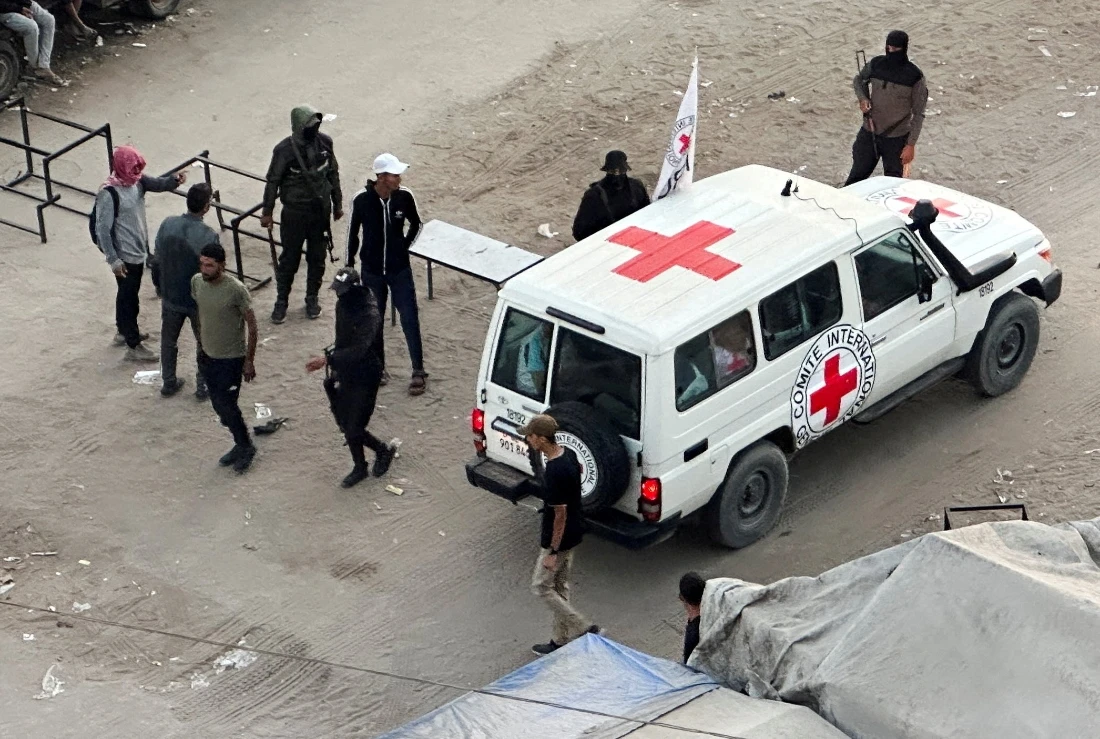
The International Committee of the Red Cross is expected to oversee the releases.
The ceasefire, which began noon Friday (0900 GMT), is aimed at winding down the deadliest and most destructive war ever fought between Israel and the Hamas militant group.
The war began with Hamas’ Oct. 7, 2023, attack on Israel, that killed some 1,200 people and saw 250 others taken hostage. The war in Gaza has killed over 67,000 Palestinians, local health officials there say.
Israelis on Monday prepared to welcome home the last 20 living hostages from devastated Gaza and mourn the return of the dead, in the key exchange of the breakthrough ceasefire after two years of war.
Palestinians awaited the release of hundreds of prisoners held by Israel. US President Donald Trump was arriving in the region along with other leaders to discuss the US-proposed deal and postwar plans. A surge of humanitarian aid was expected into famine-stricken Gaza, where hundreds of thousands of people have been left homeless.
While major questions remain about the future of Hamas and Gaza, the exchange of hostages and prisoners marked a key step toward ending the deadliest war ever between Israel and the militant group.
Living hostages expected first
Hamas released a list early Monday morning of the 20 living hostages it will free as part of the ceasefire.
Major Israeli TV stations were airing special overnight broadcasts ahead of the hostages’ release as anticipation grew. People began to gather near a large screen in Hostages Square in Tel Aviv before dawn.
“It’s very exciting,” said Meir Kaller, who spent a sleepless night there.
The hostages’ return caps a painful chapter for Israel. Since they were captured in the October 2023 Hamas attack that ignited the war, newscasts have marked their days in captivity and Israelis have worn yellow pins and ribbons in solidarity. Tens of thousands have joined their families in weekly demonstrations calling for their release.
As the war dragged on, demonstrators accused Prime Minister Benjamin Netanyahu of dragging his feet for political purposes, even as he accused Hamas of intransigence. Last week, under heavy international pressure and increasing isolation for Israel, the bitter enemies agreed to the ceasefire.
With the hostages’ release, the sense of urgency around the war for many Israelis will be effectively over.
Israel expects the living hostages to be released together Monday. They will be handed to the International Committee of the Red Cross and then to the Israeli military, which will take them to the Reim military base to be reunited with families.
It is unlikely that the remains of up to 28 other hostages will be returned at the same time. An international task force will work to locate deceased hostages who are not returned within 72 hours, said Gal Hirsch, Israel’s coordinator for the hostages and the missing.
The timing has not been announced for the release of Palestinian prisoners. They include 250 people serving life sentences for convictions in attacks on Israelis, in addition to 1,700 seized from Gaza during the war and held without charge. They will be returned to the West Bank or Gaza or sent into exile.
While Israel considers the prisoners to be terrorists, Palestinians view them as freedom fighters against Israeli occupation. Israel has warned Palestinians in the West Bank against celebrating after people are released, according to a prisoner’s family and a Palestinian official familiar with the plans. They spoke on condition of anonymity because they feared retribution.
Red Cross vehicles were seen driving in both Gaza and Israel early Monday.
Trump in Israel and Egypt
Trump was first visiting Israel, where a White House schedule said he will meet with families of the hostages and speak at the Knesset, Israel’s parliament. Vice President JD Vance said Trump was likely to meet with newly freed hostages.
“The war is over,” Trump asserted to reporters as he departed, adding he thought the ceasefire would hold.
Trump will continue to Egypt, where President Abdel Fattah El-Sisi’s office said he will co-chair a “peace summit” Monday with regional and international leaders.
Mahmoud Abbas, leader of the internationally recognized Palestinian Authority, will attend, a judge and adviser to Abbas, Mahmoud Al-Habbash, told The Associated Press. Netanyahu has rejected any role in postwar Gaza for Abbas, though the US plan leaves the possibility open if his Palestinian Authority undergoes reforms. Hamas seized control of Gaza in 2007.
Other key questions in the ceasefire deal have yet to be resolved, including the future governance of Gaza and who will pay for a billion-dollar reconstruction process. Israel wants to ensure that the weakened Hamas disarms, and Netanyahu has warned Israel could do it “the hard way.” Hamas refuses to disarm and wants to ensure Israel pulls its troops completely out of Gaza.
The Israeli military has withdrawn from much of Gaza City, the southern city of Khan Younis and other areas. Troops remain in most of the southern city of Rafah, towns of Gaza’s far north and the wide strip along Gaza’s border with Israel.
Under the US plan, an international body will govern Gaza, overseeing Palestinian technocrats running day-to-day affairs. Hamas has said Gaza’s government should be worked out among Palestinians.
The plan calls for an Arab-led international security force in Gaza, along with Palestinian police trained by Egypt and Jordan. It said Israeli forces would leave areas as those forces deploy. About 200 US troops are now in Israel to monitor the ceasefire.
The plan also mentions the possibility of a future Palestinian state, another nonstarter for Netanyahu.
‘Much of Gaza is a wasteland’
The United Nations has said Israel so far has approved 190,000 metric tons of aid to enter Gaza, which was besieged after Israel ended the previous ceasefire in March.
The Israeli military body in charge of humanitarian aid in Gaza said the amount of aid entering was expected to increase Sunday to around 600 trucks per day, as stipulated in the agreement.
“Much of Gaza is a wasteland,” UN humanitarian chief Tom Fletcher told the AP on Sunday. He said the UN has a plan for the next two months to restore basic medical and other services, bring in thousands of tons of food and fuel and remove rubble.
Two years of war
The war began when Hamas-led militants launched a surprise attack on southern Israel on Oct. 7, 2023, in which some 1,200 people were killed and 250 taken hostage.
In Israel’s ensuing offensive, more than 67,000 Palestinians have been killed, according to Gaza’s Health Ministry, which doesn’t differentiate between civilians and combatants but says around half the deaths were women and children. The ministry is part of the Hamas-run government, and the UN and many independent experts consider its figures to be the most reliable estimate of wartime casualties.
The toll will grow as bodies are pulled from rubble previously made inaccessible by fighting.
The war has destroyed large swaths of Gaza and displaced about 90 percent of its 2 million residents. It has also triggered other conflicts in the region, sparked worldwide protests and led to allegations of genocide that Israel denies.