Unexploded bombs pose ‘enormous’ risks in Gaza, NGO warns

Unexploded bombs pose ‘enormous’ risks in Gaza, NGO warns
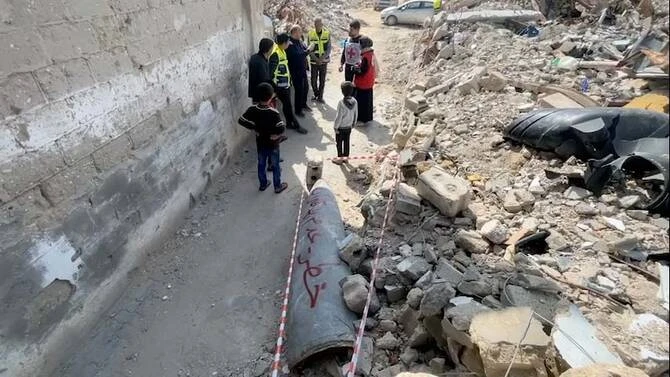
Unexploded ordnance in Gaza poses "enormous" risks for displaced people returning home during a US-led ceasefire, the NGO Handicap International warned Tuesday, calling for the entry of equipment needed for demining. (Reuters/File)
Short Url
Updated 14 October 2025
Follow

Unexploded bombs pose ‘enormous’ risks in Gaza, NGO warns

Unexploded bombs pose ‘enormous’ risks in Gaza, NGO warns
  • “The risks are enormous — an estimated 70,000 tons of explosives have been dropped on Gaza” since the start of the war, said Yaeesh
  • Handicap International specializes in mine clearance and assistance to victims of anti-personnel mines

JERUSALEM: Unexploded ordnance in Gaza poses “enormous” risks for displaced people returning home during a US-led ceasefire, the NGO Handicap International warned Tuesday, calling for the entry of equipment needed for demining.
“The risks are enormous — an estimated 70,000 tons of explosives have been dropped on Gaza” since the start of the war, said Anne-Claire Yaeesh, the organization’s director for the Palestinian territories.
Handicap International specializes in mine clearance and assistance to victims of anti-personnel mines.
Unexploded ordnance, ranging from undetonated bombs or grenades to simple bullets, has become a common sight in the Gaza Strip during the two years of the war, sparked by Hamas’s unprecedented attack on Israel on October 7, 2023.
“The layers of rubble and levels of accumulation are extremely high,” Yaeesh said.
She warned that the risks are aggravated by the “extremely complex” nature of the environment, due to the limited space in densely populated urban areas.
In January, the UN’s Mine Action Service (UNMAS) estimated that “5 to 10 percent” of the munitions fired on Gaza had not exploded.
Since then, fighting has continued, with the Israeli army notably launching a large-scale operation in mid-September in Gaza City.
A ceasefire, the third since the start of the war, came into effect on Friday in the Gaza Strip.
Contacted by AFP, UNMAS said that due to restrictions imposed over the past two years, its teams had “not been able to conduct large-scale survey operations in Gaza,” and the agency therefore does not have “a comprehensive picture of the (explosive ordnance) threat in the Strip.”

- Explosive hazards on roads -

Nicholas Orr, a former UK military deminer who worked in Gaza for Handicap International, told AFP in March that he was unable to obtain permission to conduct bomb disposal in Gaza, as Israeli aerial surveillance could have mistaken him for a militant attempting to repurpose unexploded ordnance into weapons.
UNMAS nonetheless stressed that since the ceasefire came into effect on October 10 requests for technical expertise “have surged,” and the agency has been called upon for “a range of humanitarian missions including to areas that were previously inaccessible.”
In the coming days, “a large part of the efforts will focus on ensuring the safety of debris management operations” and clearing rubble, particularly along the roads used by the thousands of displaced people returning home.
While the UN Office for the Coordination of Humanitarian Affairs said Monday that humanitarian workers would “assess key roads for explosive hazards,” UNMAS stated that it has “a limited number of armored vehicles on the ground which means that we can only conduct a certain number of explosive hazard assessments each day.”
The United Nations agency also said it had not yet obtained authorization from Israeli authorities to bring in the necessary equipment for the destruction of unexploded ordnance.
At the moment, UNMAS said it had three armored vehicles “at the border waiting to enter Gaza, which will allow safer and larger-scale operations.”
US says it has regional support for Gaza peace resolution and proposed UN stabilization force

US says it has regional support for Gaza peace resolution and proposed UN stabilization force
Updated 06 November 2025
Follow

US says it has regional support for Gaza peace resolution and proposed UN stabilization force

US says it has regional support for Gaza peace resolution and proposed UN stabilization force
  • Under the draft proposal, governance of Gaza would be transferred away from Hamas and demilitarization imposed on the group
  • A copy of the draft resolution was circulated Wednesday night for formal consideration by Security Council

NEW YORK CITY: The US mission to the UN on Wednesday said that key regional partners, including Saudi Arabia, Qatar and the UAE, have thrown their weight behind its draft resolution for Gaza.

The development signals a diplomatic push within the UN Security Council to advance a two-year transitional mandate for the war-torn enclave, and the deployment of an international stabilization force.

During a meeting convened by the US ambassador to the UN, Mike Waltz, the 10 elected, non-permanent members of the council (Algeria, Denmark, Greece, Guyana, Pakistan, Panama, South Korea, Sierra Leone, Slovenia and Somalia), joined by regional states including Saudi Arabia, Egypt, Qatar, Turkiye and the UAE, expressed support for the Washington-led initiative, a spokesperson for the US mission said.

The draft resolution endorses the creation of a transitional governance body, a so-called “Board of Peace.” Control of Gaza would therefore be transferred out of the hands of Hamas, and demilitarization would be imposed on the group.

The draft resolution also authorizes the deployment of an “International Stabilization Force” in Gaza that would operate under a two-year UN mandate. It would have the authority to use “all necessary measures” to protect civilians, oversee flows of humanitarian aid, secure zones along the borders with Israel and Egypt, demilitarize non-state actors, and train a new Palestinian police force.

A copy of the draft resolution was circulated Wednesday night for formal consideration by all 15 members of the Security Council. 

The regional buy-in to the draft reflects the “historic opportunity” to end decades of bloodshed in the Middle East and transform Gaza into a safer, more prosperous territory, the spokesperson continued, and underlines the intent of the US to translate the resolution into results rather than “endless talk.”

The backing of major regional actors is significant because their participation is widely viewed as a prerequisite for authorization of any multinational stabilization force to operate in Gaza, and gain international legitimacy.

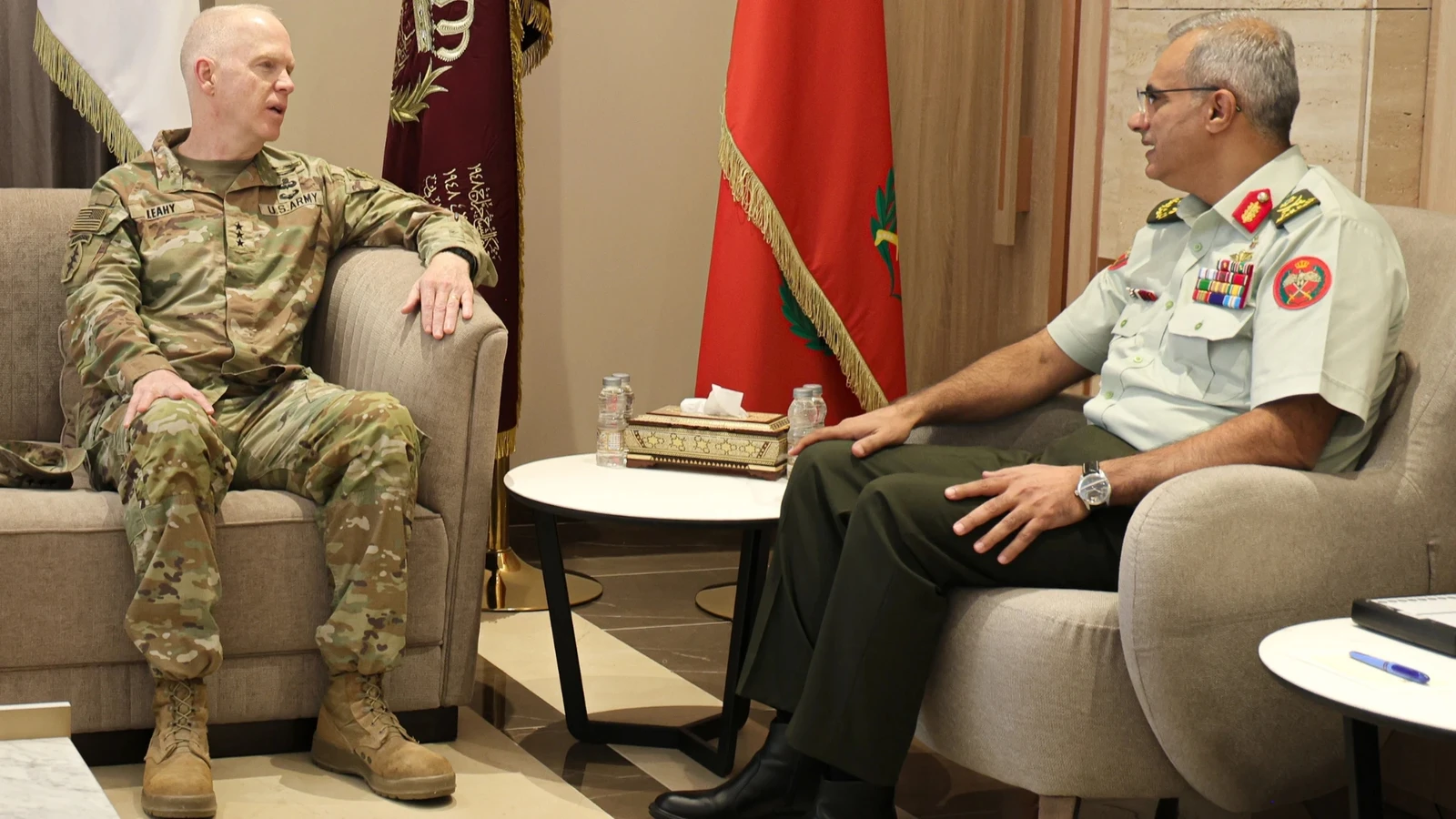
The US spokesperson stressed that no US troops would be deployed in Gaza. Instead, Washington has engaged in talks with states including Indonesia, the UAE, Egypt, Qatar, Turkiye and Azerbaijan about contributing troops to an international stabilization force.

The draft text reportedly stipulates that such a force would operate under a unified command, as agreed by the Board of Peace, Egypt and Israel once status-of-mission agreements are reached.

It further outlines a sequence of events through which the force will stabilize the security situation in Gaza, demilitarize non-state armed groups, decommission weapons, and oversee training and support for the newly vetted Palestinian police force.