- “Life after the ceasefire is still anxious. Is the war really over?” said Naggar, who has been displaced about a dozen times since the war began
- In the coastal area of Muwasi, crowded with displaced Palestinians, Naggar’s tent has started to wear thin
DEIR AL-BALAH, Gaza Strip: Bassil Naggar can finally sleep without getting jolted awake by the sounds of Israeli airstrikes.
For Naggar and his displaced family, and for many in Gaza facing similar challenges, the ceasefire in the Israel-Hamas war has provided a much-needed respite from a two-year war that has killed tens of thousands of Palestinians and left much of the territory in ruins.
But many daily struggles, big and small, persist — from how to put an actual roof over one’s head and what to wear as winter approaches, to how to secure proper food, to worries over whether the fragile ceasefire will hold.
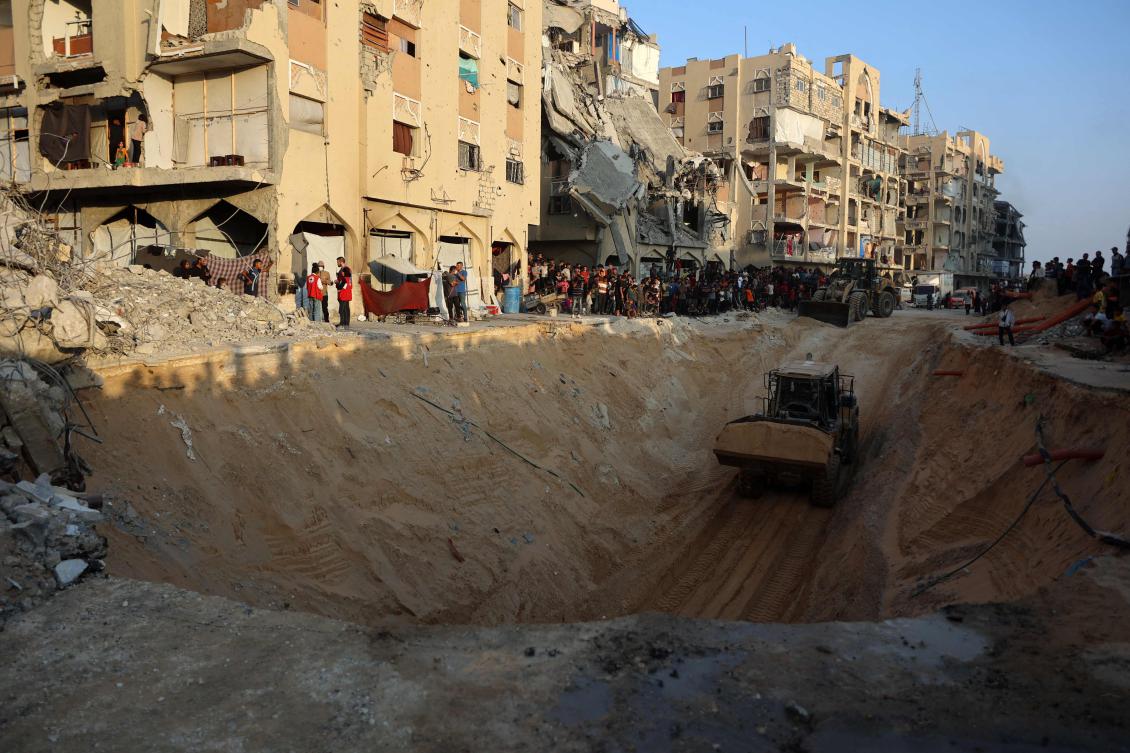
The extent of some of the personal and communal losses has become clearer since the ceasefire went into effect on Oct. 10, allowing many to return to their neighborhoods and discover what remains of their homes.
“Life after the ceasefire is still anxious. Is the war really over?” said Naggar, who has been displaced about a dozen times since the war began.
Fueling his fears are memories of the deadly Israeli airstrikes in March that shattered an earlier truce.
In the coastal area of Muwasi, crowded with displaced Palestinians, Naggar’s tent has started to wear thin. He said his home in eastern Khan Younis has been burned. He worries about how his family can keep warm in winter.
They’ve been surviving mostly on canned food, such as fava beans and chickpeas. He said he’s starting to see instant noodles and potato chips in the market. Prices have come down some, but remain too expensive, he added.
The World Food Program is moving “swiftly to scale up food assistance and reach families who have endured months of blockade, displacement and hunger,” spokesperson Abeer Etefa said Friday in Geneva.
“We’re still below what we need, but we’re getting there,” Etefa said.
Challenges she cited include damaged infrastructure and the need for more open crossings into Gaza.
Earlier in the week, the entrance of desperately needed humanitarian aid into Gaza was paused for two days for the exchange of hostages and prisoners and for a Jewish holiday. Israel had also threatened to reduce the number of trucks allowed into Gaza, saying Hamas was too slow to return remaining bodies of hostages.
Under the ceasefire agreement, hundreds of trucks are to be allowed to enter Gaza daily. COGAT, the Israeli military body overseeing humanitarian aid, did not respond to a query about how many trucks carrying aid have made it into Gaza since the ceasefire.
Naggar said he hasn’t noticed a significant change in the amount of aid available since the ceasefire started.
In the Oct. 7, 2023, attack that sparked the war, Hamas-led militants abducted 251 people, and killed around 1,200.
In Israel’s ensuing offensive, nearly 68,000 Palestinians were killed in Gaza, according to the Gaza Health Ministry, which is part of the Hamas-run government. The ministry maintains detailed casualty records that are seen as generally reliable by UN agencies and independent experts.
On Thursday, hardships were on display at a crowded charity kitchen in the central city of Deir Al-Balah, where scores of Palestinians held bowls and pots as they waited in front of large vats of rice. One woman displaced from Khan Younis, Fatima Shaat, said she waited for six hours for food.
Basma Abu Al-Kheir said while some goods have come in, “there is no possibility of buying what we want” because prices are too high.
In Deir Al-Balah, Fida Ziyad said tomatoes, cucumbers, and eggplants are available at the market, but poultry and meat are in short supply — and all of it costs more than it did before the war. Ziyad, who lost her home in northern Gaza, said she’s wary of what lies ahead, with many thorny issues about Gaza still unresolved.
For many, normalcy remains elusive.
After the ceasefire, Mohamed Samy went back to check on his home in Jabaliya to find it reduced to rubble. Samy, who now lives in Gaza City, said much of his situation hasn’t changed since the ceasefire.
“Even drinking water, I have to walk, sometimes up to an hour, to get to the water truck.”
In August, the world’s leading authority on food crises said Gaza City was gripped by famine, which the group warned then was likely to spread without a ceasefire and an end to restrictions on humanitarian aid. At the time, Israel rejected the report, with Prime Minister Benjamin Netanyahu calling it an “outright lie.”
Before then, aid groups had warned for months that Israel’s restrictions of food and other aid into Gaza, and its military offensive, were causing starvation among Palestinian civilians, particularly children.
Since the beginning of the ceasefire, at least nine humanitarian organizations have gradually resumed services in Gaza City and parts of northern Gaza for displaced families and returnees, according to a UN humanitarian affairs report released Thursday.
In Deir Al-Balah, Ayman Abu Saif still relies on charity kitchens for food.
“It’s either rice or pasta,” said Abu Saif, who once worked in the hospitality and restaurants fields and has been repeatedly displaced during the war.
“The prices in the market are now more reasonable,” he said. That has led to a small win: He bought his children three apples for the first time in more than a year.
He remains uncertain about returning to where he lived in Gaza City, saying he saw a photo of his home destroyed. And it’s not just his home that’s gone.
“There is no water and no infrastructure. I cannot go back even if I want to.”
In a glimpse of the challenges ahead, many displaced Palestinians returning to their neighborhoods found themselves walking through collapsed, pockmarked and hollowed out buildings and sifting through debris for traces of their past lives.
Abu Saif laments the toll the war has taken on his children — and fears for their future.
“It’s good that the bloodshed has stopped, but we have lost everything,” he said.
His six-year-old-son hasn’t received a proper education and probably won’t anytime soon, he said.
“I do not want my kids to think that this is what life is, to run behind a charity kitchen to get food, or walk lengthy miles to get clean water,” said Abu Saif. “This is not reality and this is not what life is, and I am not sure life in Gaza will change soon.”