
Saudi ride-hailing trips surge 78% in Q3, topping 39m

Saudi ride-hailing trips surge 78% in Q3, topping 39m
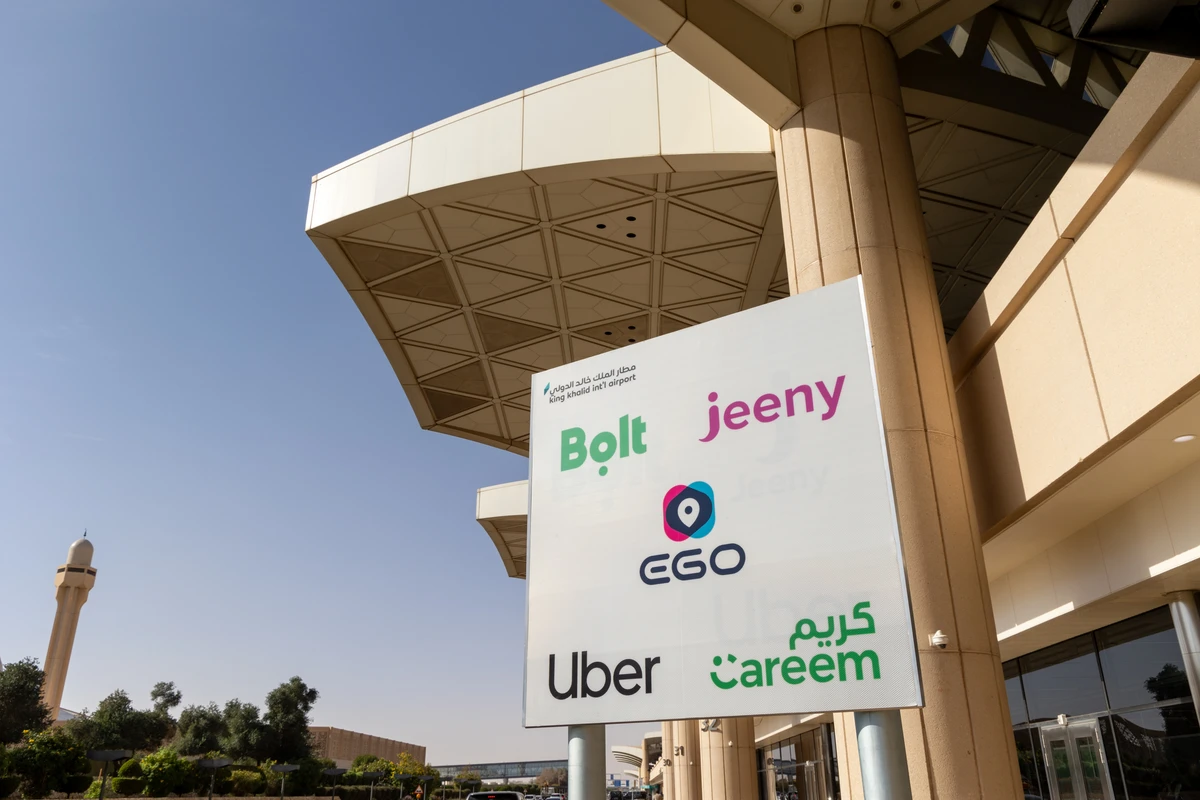
Bolt, Jeeny, EGO, Uber, Careem ride share vehicle pickup area in King Khalid International Airport in Riyadh, Saudi Arabia. Getty
Short Url
Updated 21 October 2025
Follow

Saudi ride-hailing trips surge 78% in Q3, topping 39m

Saudi ride-hailing trips surge 78% in Q3, topping 39m

RIYADH: Saudi Arabia’s ride-hailing sector witnessed a major surge during the third quarter of 2025, reaching 39.04 million trips thanks to a 78 percent year-on-year increase, according to the Transport General Authority. 

The TGA revealed that ride-hailing trips were heavily concentrated in the Kingdom’s major urban centers, with the Riyadh region responsible for 43.9 percent of all trips.

It was followed by the Makkah region at 22.13 percent and the Eastern Province at 14.5 percent, according to a report from the Saudi Press Agency.

This comes as a significant demonstration of the rapid modernization of the Kingdom’s transit networks, complementing an expansion in rail travel, which recorded a 335 percent year-on-year surge in passengers, also reaching 39 million in the same quarter. 

The overall expansion across both road and rail transport aligns with the objectives of the National Transport and Logistics Strategy, which aims to raise the sector’s contribution to the gross domestic product to 10 percent by 2030, up from the current 6 percent.

The remaining regional shares were distributed across the Kingdom. Madinah region accounted for 5.76 percent, followed by Aseer region at 3.55 percent and Qassim region at 3 percent. 

Tabuk region held a 2.49 percent share, while Hail and Jazan registered 1.85 and 1.13 percent, respectively. 

Najran saw a 0.58 percent share, with Al-Jouf registering 0.55 percent. The Northern Borders and Al-Baha posted a 0.28 percent and a 0.23 percent share, respectively.

This widespread usage underscores the integration of digital mobility solutions across the nation. It also comes as the market becomes increasingly competitive with the recent entry of new services such as inDrive which launched in Riyadh in September, following its successful debut in Jeddah.
Middle East’s sports economy holds $75bn growth potential, report estimates

Middle East’s sports economy holds $75bn growth potential, report estimates
Updated 8 sec ago
Follow

Middle East’s sports economy holds $75bn growth potential, report estimates

Middle East’s sports economy holds $75bn growth potential, report estimates

RIYADH: The Middle East’s sports economy has a $75 billion growth opportunity, driven by the need to close a significant participation gap, a new report showed. 

While 85 percent of the region’s population regularly consumes sports content, only 30 percent actively participate — highlighting a disconnect that could unlock substantial economic value if addressed, according to Oliver Wyman. 

Titled “Unlocking the Middle East’s Sport Economy,” the report outlines how the region is entering a pivotal phase as it prepares to host global events such as the 2030 Asian Games in Doha, the 2034 Asian Games in Riyadh, and the 2034 FIFA World Cup in Saudi Arabia. 

Governments across the Middle East have already committed more than $100 billion to sports infrastructure through 2034, spanning stadiums, wellness districts, and community recreation spaces. This wave of investment coincides with demographic advantages, as nearly 60 percent of the population is under the age of 30. 

These conditions position sport as a transformative driver of both economic and social development. Saudi Arabia alone could generate up to $200 billion in revenue from tourism, media, and global investment linked to its sports ambitions. 

“The Middle East is entering a defining decade for sport,” said Guillaume Thibault, head of Sports and Entertainment – India, Middle East and Africa, Oliver Wyman. 

“By moving beyond world-class events to make sport part of everyday life – through inclusive infrastructure, digital ecosystems, and vibrant local engagement – the region can unlock the full potential of its sport economy and shape the future of global sport innovation,” he added. 

The report also highlights a shift from viewing sport purely as competition to embracing it as a lifestyle, supported by digital integration, health and wellness trends, and broader community engagement. 

Sport-related tourism now accounts for 10 percent of global travel spending, totaling $600 billion annually, while the rise of “sportainment” — blending sport and entertainment — is reshaping commercial strategies within a global experience economy projected to reach $15 trillion by 2034. 

Regional projections suggest annual growth of 5 percent in sport participation, 10 percent in the overall sport economy, and 14 percent in sport tourism.  

The study highlights the importance of embedding sport into daily routines through community-centered urban planning and inclusive infrastructure.