Saudi Industrial Hackathon winners to receive special program to implement ideas in factories 

Saudi Industrial Hackathon winners to receive special program to implement ideas in factories 
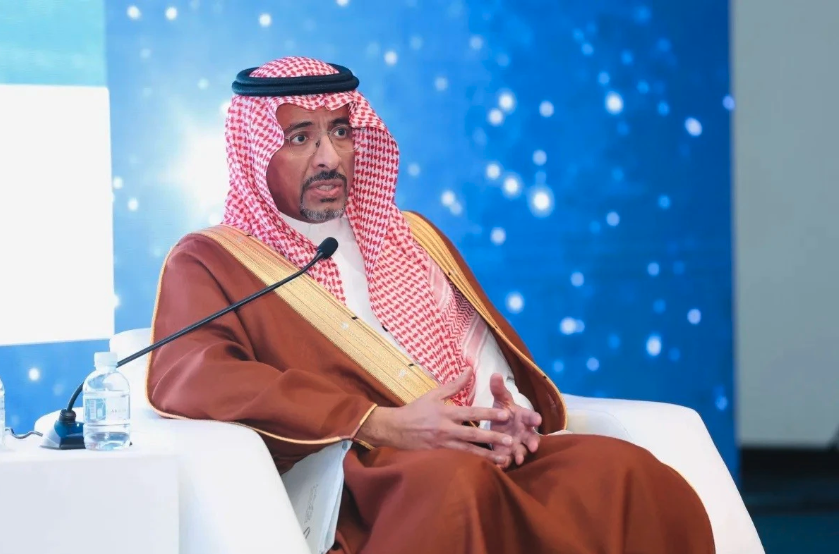
Minister of Industry and Mineral Resources Bandar Alkhorayef. File
Short Url
Updated 27 October 2025
Follow

Saudi Industrial Hackathon winners to receive special program to implement ideas in factories 

Saudi Industrial Hackathon winners to receive special program to implement ideas in factories 

RIYADH: Winners of the fourth Industrial Hackathon will gain access to a special program that helps turn their ideas into reality through implementation by Saudi factories for potential investment returns, revealed a senior minister. 

In an interview with Al-Eqtisadiah, Minister of Industry and Mineral Resources and Chairman of the Board of Directors of the Saudi Industrial Development Fund Bandar Alkhorayef emphasized the importance of supporting young innovators and following up on their projects. 

The camp featured 229 contestants representing 60 teams across four main tracks: design, production, sustainability, and automation — the latter newly introduced for this edition. 

According to a statement, total prize money exceeded SR1.7 million ($450,000), distributed among the top three entries in each of the four challenge tracks: Design, Production, Sustainability, and Automation. 

The winners in each track received SR120,000, second-place teams were awarded SR80,000, and those in third-place got SR60,000, recognizing their creative efforts and innovative contributions across diverse industrial fields. 

He noted that the initiative’s partners from companies and factories play a key role in helping these entrepreneurs develop their ideas, expressing hope that some will become industrialists in the near future. 

This initiative aligns with the hackathon’s broader goal of harnessing the creative potential of citizens and residents to develop innovative solutions to challenges faced by national factories, in support of SIDF’s strategy to foster innovation and industrial development. 

It also reflects the fund’s long-term contribution to the Kingdom’s industrial growth. Over the past 50 years, SIDF has extended loans worth more than SR180 billion to various projects, according to figures released in 2024 to mark its half-century milestone. 

“The Minister of Industry honored the winners of the fourth edition of the Industrial Hackathon training camp, organized by the SIDF. It aims to enable participants to develop their ideas and transform them into innovative industrial solutions, reflecting the Kingdom’s ambitions to support innovation and the industrial sector,” Al-Eqtisadiah reported. 

The event also included hands-on learning components such as the “Fabrication Lab,” where participants could experiment with ideas and build prototypes, and the “Ideas Factory,” a collaborative space for problem-solving and experience sharing. Workshops and enrichment sessions further enhanced participants’ innovation and teamwork skills. 

The Industrial Hackathon is organized in partnership with Riyad Bank, Sipchem, King Abdullah University of Science and Technology, and King Abdulaziz City for Science and Technology, with platinum sponsorship from Ma’aden. 

Established in 1974, SIDF serves as the Kingdom’s main enabler of industrial development. Over the past five decades, it has provided innovative financial and advisory solutions that have supported Saudi Arabia’s sustainable industrial transformation

Saudi Arabia’s non-oil sector posts strong growth as PMI hits 60.2 

Saudi Arabia’s non-oil sector posts strong growth as PMI hits 60.2 
Updated 8 sec ago
Follow

Saudi Arabia’s non-oil sector posts strong growth as PMI hits 60.2 

Saudi Arabia’s non-oil sector posts strong growth as PMI hits 60.2 

RIYADH: Saudi Arabia’s non-oil economy accelerated in October, with the Purchasing Managers’ Index climbing to 60.2, its second-highest level in more than a decade, signaling strong business growth momentum. 

The latest survey by Riyad Bank and S&P Global showed a sharp improvement in operating conditions across the Kingdom’s private sector, underpinned by solid demand, rising employment, and robust output growth.  

The October reading, up from 57.8 in September, highlights the sustained momentum of the non-oil economy as Vision 2030 reforms continue to drive diversification away from crude revenues. 

Speaking at the Future Investment Initiative in October, Saudi Arabia’s Minister of Economy and Planning Faisal Alibrahim said the Kingdom’s gross domestic product is expected to expand by 5.1 percent in 2025, supported by continued growth in non-oil activities. 

Commenting on the latest report, Naif Al-Ghaith, chief economist at Riyad Bank, said: “Saudi Arabia’s non-oil private sector recorded a solid improvement in business conditions in October, with the PMI rising to 60.2, marking one of the strongest readings in over a decade.”  

He added: “The acceleration was driven by broad-based gains in output, new orders, and employment, reflecting sustained demand momentum and continued strength in the non-oil economy.”  

Al-Ghaith noted that the latest survey results also indicate a strong start to the final quarter of the year, supported by both domestic and external demand. 

According to the report, the pace of growth in new orders received by non-oil companies accelerated for the third consecutive month in October, with 48 percent of surveyed firms reporting higher sales. 

Participating companies attributed the sales growth to improving economic conditions, a growing client base, and increased foreign investment. 

Output and employment also expanded sharply during the month, with job creation rising at the fastest pace in nearly 16 years.

Al-Ghaith said the persistent rise in new export orders highlights the growing competitiveness of Saudi firms and the progress achieved under ongoing diversification initiatives. 

“The rise in demand encouraged firms to expand production and workforce capacity at the fastest rate since 2009, as businesses expanded capacity to meet new workloads. Purchasing activity and inventories also increased, while suppliers’ delivery times continued to improve, reflecting efficient coordination and resilient supply chains,” he added.  

October data indicated a sharp rise in input costs for non-oil firms, driven mainly by wage increases from salary revisions and bonuses. 

On the outlook, companies remained optimistic, citing strong market demand, ongoing project work, and government investment initiatives. 

“Optimism is underpinned by solid domestic demand and the momentum of ongoing projects. Although some concerns persist around costs and competition, sentiment overall remains strongly positive, reflecting confidence in the economy’s continued expansion and the strength of the non-oil private sector,” concluded Al-Ghaith.