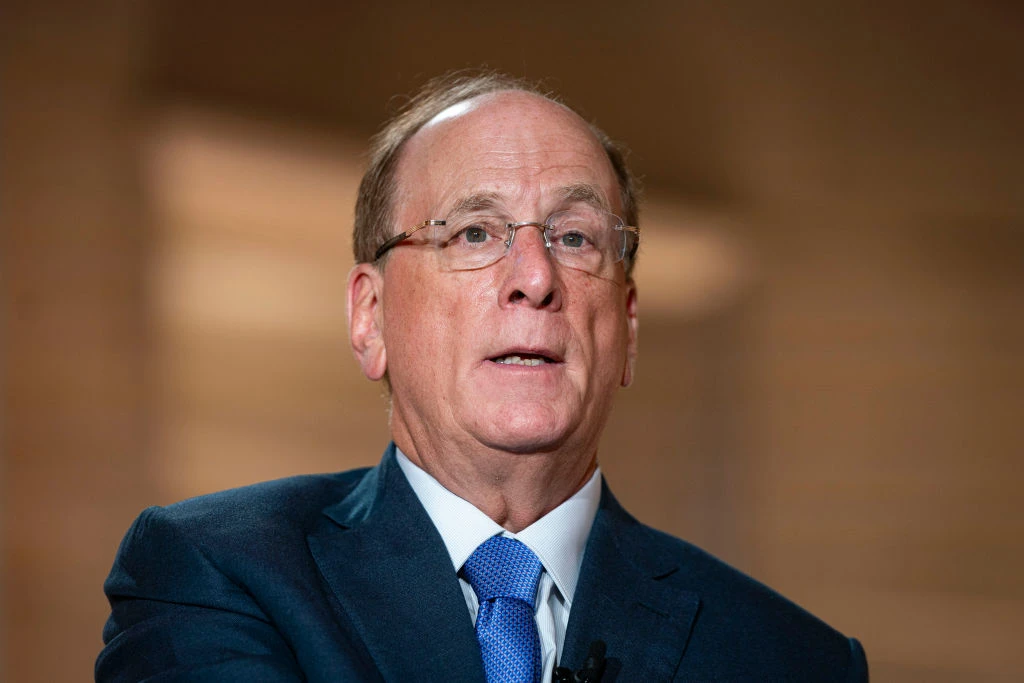
Saudi Arabia emerges as global investment hub on positive changes: BlackRock CEO

Saudi Arabia emerges as global investment hub on positive changes: BlackRock CEO
Larry Fink, chairman and CEO of BlackRock. Getty
Short Url
Updated 28 October 2025
Follow

Saudi Arabia emerges as global investment hub on positive changes: BlackRock CEO

Saudi Arabia emerges as global investment hub on positive changes: BlackRock CEO

RIYADH: Larry Fink, chairman and CEO of BlackRock, the world’s largest asset management firm, stated that Saudi Arabia is undergoing a positive economic transformation, making it a prominent destination for global investment.

He highlighted major projects such as Jafurah as evidence of the growing investment momentum in the Kingdom.

Speaking at a panel discussion on the sidelines of the Future Investment Initiative in Riyadh, Fink noted that during his visit, he observed numerous positive changes and an increase in opportunities across energy, labor, infrastructure, and other sectors.

He added that developments in Saudi Arabia and the Gulf region represent a significant shift, positioning the region as a magnet for global capital.

Fink also emphasized that the world is entering a phase of rapid transformation of financial assets into digital assets, and preparations are needed to understand how technology can transform the financial sector — not just through artificial intelligence, but via comprehensive technological transformation across the global financial system.

He pointed out that central banks’ key questions revolve around digital currencies, their impact on the US dollar, and how companies will adapt to digital payment systems.
Saudi Arabia’s non-oil sector posts strong growth as PMI hits 60.2 

Saudi Arabia’s non-oil sector posts strong growth as PMI hits 60.2 
Updated 8 sec ago
Follow

Saudi Arabia’s non-oil sector posts strong growth as PMI hits 60.2 

Saudi Arabia’s non-oil sector posts strong growth as PMI hits 60.2 

RIYADH: Saudi Arabia’s non-oil economy accelerated in October, with the Purchasing Managers’ Index climbing to 60.2, its second-highest level in more than a decade, signaling strong business growth momentum. 

The latest survey by Riyad Bank and S&P Global showed a sharp improvement in operating conditions across the Kingdom’s private sector, underpinned by solid demand, rising employment, and robust output growth.  

The October reading, up from 57.8 in September, highlights the sustained momentum of the non-oil economy as Vision 2030 reforms continue to drive diversification away from crude revenues. 

Speaking at the Future Investment Initiative in October, Saudi Arabia’s Minister of Economy and Planning Faisal Alibrahim said the Kingdom’s gross domestic product is expected to expand by 5.1 percent in 2025, supported by continued growth in non-oil activities. 

Commenting on the latest report, Naif Al-Ghaith, chief economist at Riyad Bank, said: “Saudi Arabia’s non-oil private sector recorded a solid improvement in business conditions in October, with the PMI rising to 60.2, marking one of the strongest readings in over a decade.”  

He added: “The acceleration was driven by broad-based gains in output, new orders, and employment, reflecting sustained demand momentum and continued strength in the non-oil economy.”  

Al-Ghaith noted that the latest survey results also indicate a strong start to the final quarter of the year, supported by both domestic and external demand. 

According to the report, the pace of growth in new orders received by non-oil companies accelerated for the third consecutive month in October, with 48 percent of surveyed firms reporting higher sales. 

Participating companies attributed the sales growth to improving economic conditions, a growing client base, and increased foreign investment. 

Output and employment also expanded sharply during the month, with job creation rising at the fastest pace in nearly 16 years.

Al-Ghaith said the persistent rise in new export orders highlights the growing competitiveness of Saudi firms and the progress achieved under ongoing diversification initiatives. 

“The rise in demand encouraged firms to expand production and workforce capacity at the fastest rate since 2009, as businesses expanded capacity to meet new workloads. Purchasing activity and inventories also increased, while suppliers’ delivery times continued to improve, reflecting efficient coordination and resilient supply chains,” he added.  

October data indicated a sharp rise in input costs for non-oil firms, driven mainly by wage increases from salary revisions and bonuses. 

On the outlook, companies remained optimistic, citing strong market demand, ongoing project work, and government investment initiatives. 

“Optimism is underpinned by solid domestic demand and the momentum of ongoing projects. Although some concerns persist around costs and competition, sentiment overall remains strongly positive, reflecting confidence in the economy’s continued expansion and the strength of the non-oil private sector,” concluded Al-Ghaith.