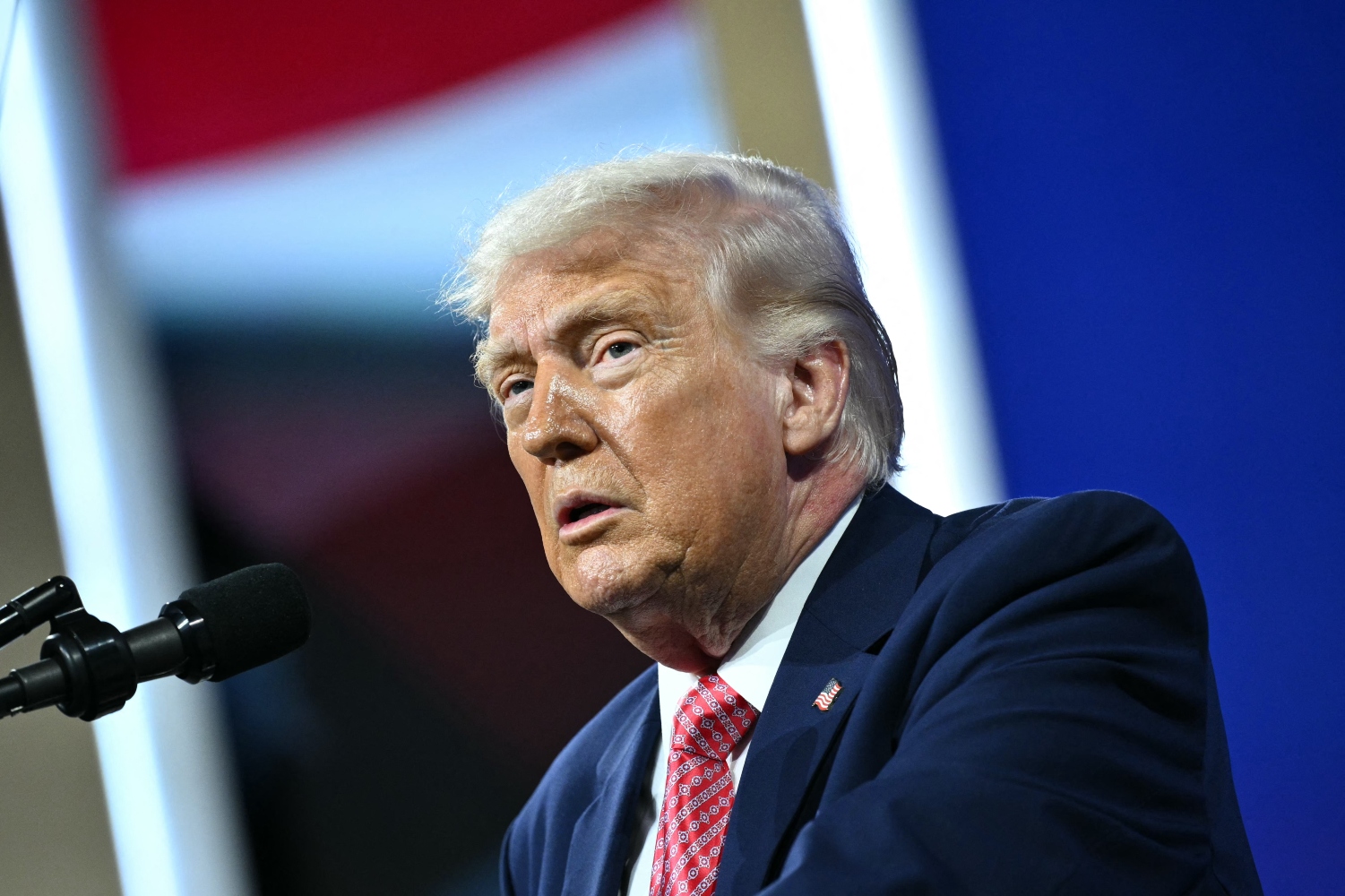
US President Donald Trump’s approach differs from those of his predecessors. He has different friendships, rivalries and ways of running wars. He is a general who runs the battle in person through screens, social media and the telephone. His statements have nothing to do with traditional diplomacy. His threats to NATO are unprecedented. His celebration of the elimination of some of the Iranian leadership in the first strikes of the war was bizarre.
He strikes hard and then proposes negotiations. He does not stop long to listen to who he is talking to. He speaks of Iran’s surrender, ignoring the fact that the regime, which does not have the ability to win this war, is incapable of surrendering or admitting defeat. Iran is not an ordinary country. It is a revolution that refused to embrace the features of a state, its conditions or its commitments toward its neighbors and the world.
In talking about the current war, the roles of three main men come up. The first is Gen. Qassem Soleimani, the slain leader of Iran’s Quds Force. He acted as though a decisive war with Israel was inevitable. He believed that wiping Israel off the map was not impossible, even if it took a series of wars. He told several members of the so-called Axis of Resistance that a “major blow” would pummel Israel with rockets and drones fired from several maps. The attacks would destroy Israel’s defenses, image and the Israelis’ trust in it, kicking off a major wave of emigration.
For years, Soleimani succeeded in building what he called ‘Soleimani’s armies’ in Lebanon, Syria, Iraq and Yemen
Ghassan Charbel
Soleimani also spoke of changing the features of the region by severing the “American string” that, in his view, ties together several Arab countries and stands in the way of Iran exporting its revolution. So, he came up with the plan to surround Israel and the targeted Arab countries with a “belt” of tunnels, rockets and drones.
Among Soleimani’s major duties was destabilizing the system that the US set up in Iraq after the ouster of Saddam Hussein’s regime. He destabilized it through allies and the system was hollowed out and a parallel army set up. After the emergence of Daesh, Soleimani succeeded in establishing and supporting the Popular Mobilization Forces and later transformed it into a legitimate force that operates with a high degree of independence.
Another one of Soleimani’s missions was to end the isolation of Lebanon’s Hezbollah and Syrian President Bashar Assad’s regime after they were accused of being involved in the assassination of former Lebanese Prime Minister Rafik Hariri. The 2006 war between Hezbollah and Israel achieved that, with Soleimani himself overseeing battles from Lebanon.
For years, Soleimani succeeded in building what he called “Soleimani’s armies” in Lebanon, Syria, Iraq and Yemen. He managed to temporarily avert the breach of the Axis of Resistance in Syria when he persuaded Vladimir Putin to intervene to save Assad’s regime from collapse. Soleimani’s fingerprints are also all over developments in Gaza and Sanaa.
Iran tried for years to sever the so-called American string without slipping into a direct confrontation with the US. Visiting journalists in Tehran would often be told “you are asking about a war that will never happen,” and “Iran goes to the edge of the abyss with the US, but it never falls into it because it is aware that America has the ability to set it back several decades.”
Iran adopted this policy of avoiding the abyss when Trump ordered Soleimani’s assassination near Baghdad airport on Jan. 3, 2020. Iran made do with a “symbolic” response despite how deeply wounded the supreme leader was with the assassination of the man who was closest to his mind and heart.
Trump effectively upturned the conflict between the US and Iran. No one before him dared to take a move so bold as to assassinate the commander of the Quds Force and engineer of the “parallel armies.” The decision to assassinate him was more dangerous than the assassination of Osama bin Laden because Soleimani had the backing of a major regional power that operated its “small roaming armies” in several maps.
The Middle East might soon find itself confronted with a new reality both in Iran and the region generally
Ghassan Charbel
After Trump’s return to the White House, he was visited by a man whose position allowed him to meet American and Iranian officials over the years. I learned from him that Trump’s generals were pushing the idea of punishing Iran for its nuclear ambitions, harassment of American forces, threats to moderate countries and attempts to seize energy routes and keys to the region. The man said that the Trump administration would not hesitate in carrying out a major coup against the one Iran itself carried out in the region.
From this position, one can understand why the US has embraced the change that has taken place in Syria and that led to the severing of the routes between Soleimani’s armies. Here rises the role of the second man, Benjamin Netanyahu, who succeeded in convincing Trump that Iran and Soleimani’s armies are an imminent threat to not just Israel but the US as well.
Today, we can speak of three major errors committed by the Iranian leadership. The first was sliding into a direct war with history’s most powerful army, as touted by Trump. The second was revealing its hostile intentions toward Arab Gulf countries and Jordan after pounding them with rockets and drones that far exceed the numbers it has fired at Israel. The third was believing that the Strait of Hormuz is a hostage that it can capture to squeeze the global economy.
We have entered the second month of the major war. If the American and Israeli strikes succeed in destroying Iran’s offensive and defensive capabilities and its ability to threaten its neighbors and the region’s straits, then the Middle East will find itself confronted with a new reality both in Iran and generally, especially in countries where “Soleimani’s armies” operate. Iran’s loss of ability to fire at regional countries effectively means a change in regime, position and balances of power between it and its neighbors.
Trump is the most dangerous general against Iran and Soleimani’s armies. The success of his coup against the long Iranian coup will change the features of the region and its various balances of power. America may have acted decisively in the region, while Russia appears mired in Ukraine and China has opted for wisdom and reason.
- Ghassan Charbel is editor-in-chief of Asharq Al-Awsat newspaper. X: @GhasanCharbel
This article first appeared in Asharq Al-Awsat.