- The report also found that 82 percent of Saudi students are more likely to enroll in programs offering generative AI micro-credentials, compared with 62 percent globally
RIYADH: A new Coursera report suggests that skills-based hiring is becoming increasingly common in Saudi Arabia, particularly as employers place greater value on generative artificial intelligence competencies.
According to Coursera’s Micro-Credentials Impact Report 2026, 99 percent of employers in Saudi Arabia use skills-based hiring in some form for entry-level positions, while 86 percent apply the approach extensively.
The report also found that 79 percent of Saudi employers would prefer a candidate with verified generative AI skills over a more experienced candidate without those credentials.
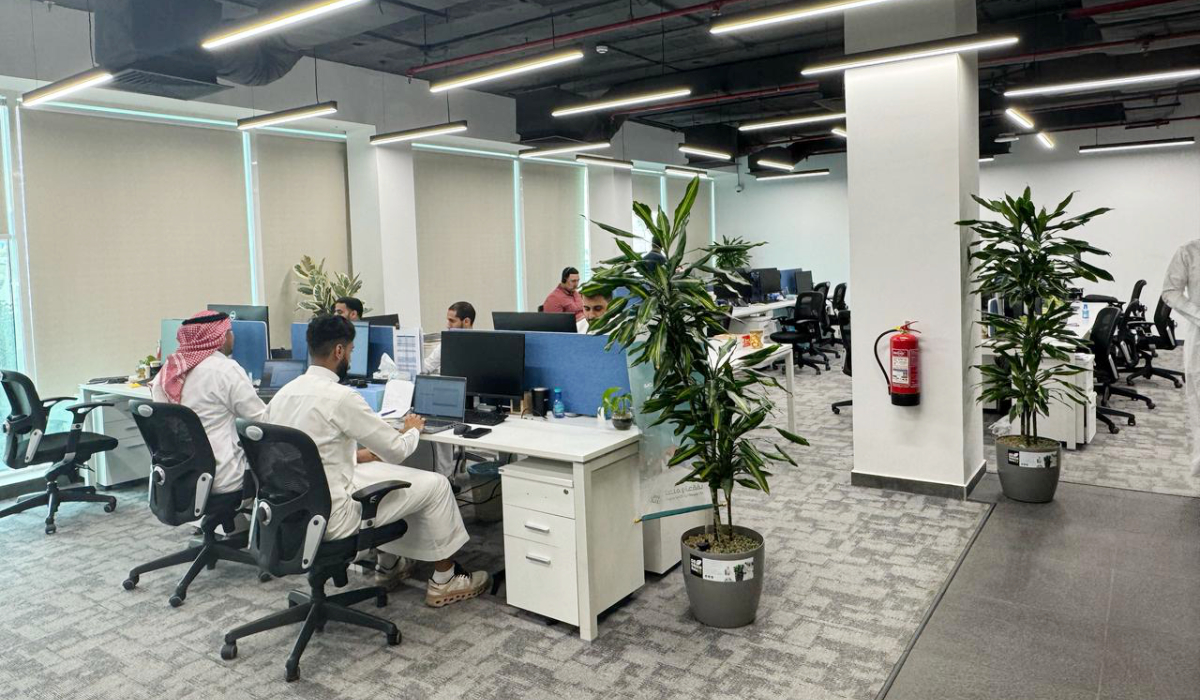
The findings reflect a broader shift in workforce development as organizations seek employees with practical, job-ready skills.
Kais Zribi, Coursera’s general manager for the Middle East and Africa, said the shift toward a skills-based workforce is critical to achieving Saudi Arabia’s Vision 2030 objectives and that the findings point to the accelerating pace of transformation.
The report also found that 82 percent of Saudi students are more likely to enroll in programs offering generative AI micro-credentials, compared with 62 percent globally.

According to employer responses, 92 percent said entry-level hires with micro-credentials perform better during their first year, compared with 63 percent globally.
Meanwhile, 72 percent expect training cost savings of more than 20 percent for this group, while 98 percent said they would offer higher starting salaries to graduates holding such credentials.
Additional findings suggest Saudi students are 5.3 times more likely to pursue micro-credentials when they carry formal academic accreditation, with participation reaching 80 percent compared with 15 percent for non-accredited programs.
The report also found that 85 percent of Saudi graduates holding micro-credentials secured employment aligned with their field of study within 12 months of graduation.
Among higher education leaders, 48 percent said institutions that fail to integrate micro-credentials into their programs face moderate to significant strategic risk.
Ahmed Al-Osaili, CEO of Axelerated Solutions Co., underscored that the company’s evaluation framework is firmly anchored in skills-based assessment. He said that the rapid pace of advancement in artificial intelligence has already surpassed the rate at which academic curricula are being updated.
Their recruitment decisions, he added, are driven more by the approaches candidates employ to deliver effective outcomes than by academic credentials alone.
Strong confidence is placed within the company on specialized professional certifications, which are regarded as a clear signal of a candidate’s commitment to continuous learning and alignment with evolving standards.
While such credentials are viewed as reinforcing a candidate’s knowledge base, professionalism and discipline, they are positioned as an initial benchmark whose real value is realized only when paired with the ability to apply knowledge and solve complex problems in real-world environments.
As an example, Al-Osaili said the Saudi Organization for Chartered and Professional Accountants certification has become a requirement for certain financial management positions within the company, alongside the ability to use AI tools to improve productivity and work quality.
He also said the company has observed differences between vocationally trained professionals and academically trained graduates. According to Al-Osaili, vocational-track professionals often demonstrate agility, speed and practical problem-solving skills, while university graduates tend to excel in structured thinking and long-term planning.
He said this distinction has encouraged the company to adopt a hybrid talent model focused on output quality rather than how skills were acquired. Within this framework, hiring and promotion decisions are increasingly based on performance and results.
Dr. Raed Al-Hamdani, general manager of Positive Interaction for Training and Consulting, said that his company has been closely tracking rapid developments in generative AI, a shift that led to the establishment of a Canada-based branch serving as a direct gateway to global best practices and innovation, with the objective of channeling advanced knowledge into Saudi Arabia.
Al-Hamdani added that training methodologies have been redesigned to focus on applied skills and workplace readiness rather than the accumulation of credentials.
He said that program evaluation is based on content quality and practical impact rather than certification titles alone.
The company uses ISO 10015 as a reference for training management and the Kirkpatrick Model to measure training effectiveness and organizational impact.
Al-Hamdani said the company has formed partnerships with French artificial intelligence firms and Polish companies specializing in augmented and virtual reality technologies to support the transfer of expertise and applications to trainees in Saudi Arabia.
He described online learning platforms as complementary to professional training centers, saying the former provide broad-based knowledge while training centers focus on customization, practical application, mentoring and alignment with local labor market requirements and priority sectors under Saudi Vision 2030.
Al-Hamdani said he expects continued growth in Saudi Arabia across several AI-related fields, including AI model development, prompt engineering, enterprise AI applications, AI governance, advanced data analytics and AI security.
He added that the center has developed specialized programs that combine technical foundations with practical applications across both the public and private sectors.