- Countries’ foreign ministers say resumption of talks under framework agreed in June could lead to ‘final and lasting agreement’ that brings regional stability
- Their meeting in El-Alamein takes place on sidelines of 7th session of the Egyptian-Qatari Joint Higher Committee
CAIRO: Egypt and Qatar have urged the US and Iran to return to the negotiating framework agreed in June so that they might reach a “final and lasting agreement” that brings regional stability.
The Egyptian foreign minister, Badr Abdelatty, and his Qatari counterpart, Sheikh Mohammed bin Abdulrahman Al-Thani, stressed the need to resume negotiations, build on the framework agreement, and prioritize a diplomatic solution to the conflict, Egypt’s Foreign Ministry said on Thursday.
Their appeal came three days after a 60-day period for negotiations between Iran and the US to reach a final deal, set out in the June agreement, expired without any substantial results.
During a meeting in El-Alamein, the ministers said a return to the June framework could pave the way toward a sustainable agreement that addresses the concerns of all sides.
They also stressed the need to safeguard freedom of navigation in the Strait of Hormuz and avoid any actions that might disrupt international shipping and trade. Iranian attacks on vessels have effectively blocked the strategic waterway, heightening concerns about energy security and global supply chains.
Qatar, which has played a mediation role in the negotiations between the US and Iran, has been making efforts alongside other regional mediators to bring Washington and Tehran back to the negotiating table, despite the present deadlock.
The talks between the ministers took place during a visit to Egypt by Sheikh Mohammed, accompanied by a high-level Qatari delegation, for the seventh session of the Egyptian-Qatari Joint Higher Committee and meetings with senior Egyptian officials.
The Egyptian president, Abdel Fattah El-Sisi, also met Sheikh Mohammed on Thursday, accompanied by other Egyptian officials including Prime Minister Mostafa Madbouly, Finance Minister Ahmed Kouchouk, General Intelligence Service chief Hassan Rashad, and Abdelatty.
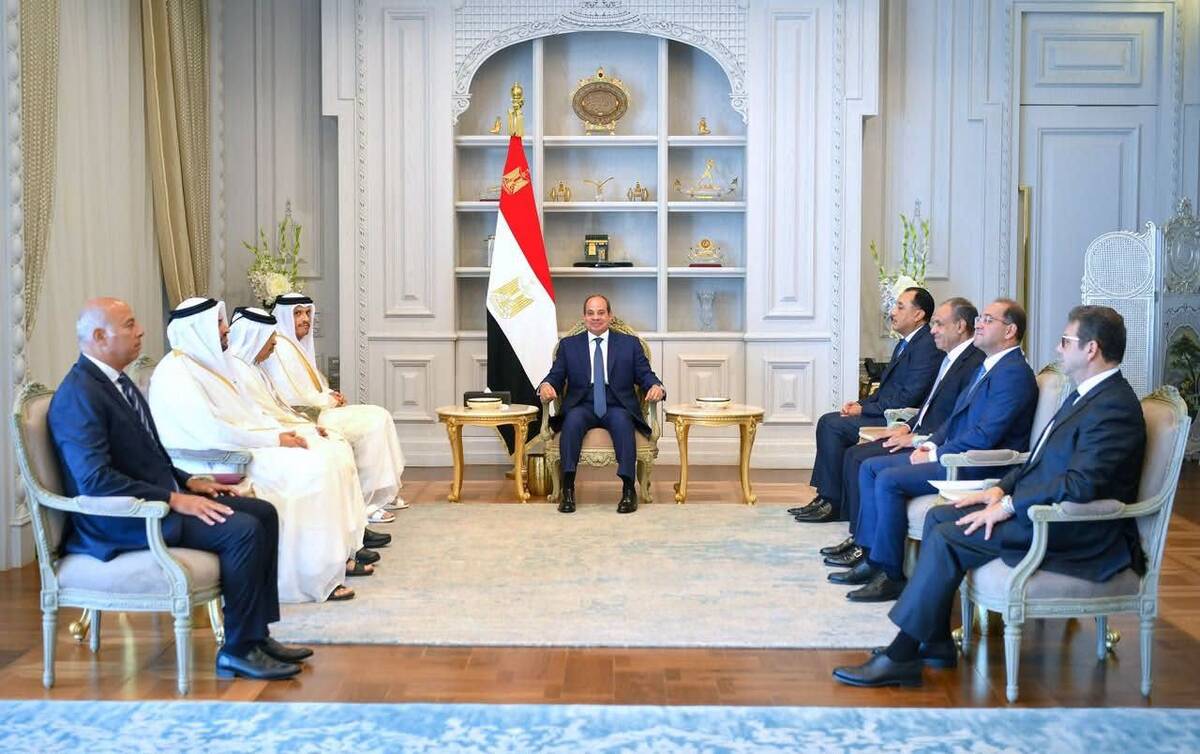
El-Sisi called for efforts to contain the regional escalation and warned of its implications for stability, as well as international trade and the economy. He reiterated Egypt’s support for Qatar and other Arab states amid recurring Iranian attacks against them, and its rejection of any attempt to undermine their sovereignty or stability.
The Egyptian president also welcomed the expansion of ties between Cairo and Doha, and said Egypt sought further Qatari investment in a range of sectors.
Several agreements were signed at the conclusion of the joint committee meeting, which was co-chaired by Abdelatty and Sheikh Mohammed and included ministers and senior officials from both countries.
The deals included a grant to establish a Sheikh Tamim bin Hamad Al-Thani Hospital in Egypt’s Sohag governorate. Egypt’s Central Auditing Organization and Qatar’s State Audit Bureau signed an agreement covering cooperation and exchanges of expertise in auditing and oversight.
The countries also agreed to provide administrative assistance to each other in customs matters, with the aim of increasing cooperation between their customs authorities and facilitating the exchange of information and expertise.
Sheikh Mohammed met separately with Madbouly to discuss trade, investment, energy and industrial cooperation. Both countries agreed on the importance of ensuring the Joint Higher Committee meets annually, and that agreements reached during its seventh session translate into concrete projects.