- French exports to Saudi Arabia are rising as bilateral trade expands beyond energy into aerospace, technology, pharmaceuticals and industrial expertise
- Vision 2030 projects and growing investment links are creating new opportunities as the Kingdom develops into an international economic and logistics hub
PARIS: The economic relationship between France and Saudi Arabia appears to have reached a new stage, after long being characterized by a trade balance favorable to the Kingdom.
It now presents a different picture, particularly since 2025, when France exported nearly $4.5 billion worth of goods to Saudi Arabia, compared with around $3.7 billion in imports.
For Dominique Brunin, director of the Franco-Arab Chamber of Commerce, who spoke to Arab News in French, this reversal is indicative of a deeper transformation in the two economies.
“The balance has once again become favorable to France,” he said, highlighting the steady growth in French exports in recent years.

At the same time, French imports from Saudi Arabia have fallen sharply. They still stood at around $7 billion in 2022.
This shift is first and foremost explained by the nature of trade between the two countries; French imports from the Kingdom remain largely made up of oil and petroleum products.
France, however, has gradually diversified its energy sources, while fluctuations in oil prices, which remained relatively low in 2025, reduced the value of imports.
But for Brunin, the shift should above all be seen as a reflection of the transformation underway in Saudi Arabia, which is seeking to reduce its dependence on oil revenues and diversify its economy under its Vision 2030 strategy.
By contrast, Saudi demand for French products is particularly diverse. Aerospace and aerospace components account for a significant share, alongside industrial equipment, pharmaceuticals, technology, perfumes and cosmetics.
Franco-Saudi trade is therefore no longer based solely on a handful of traditional sectors, Brunin said. It is accompanying the transformation of the Kingdom’s economy and market, which is attracting an increasing number of French companies.
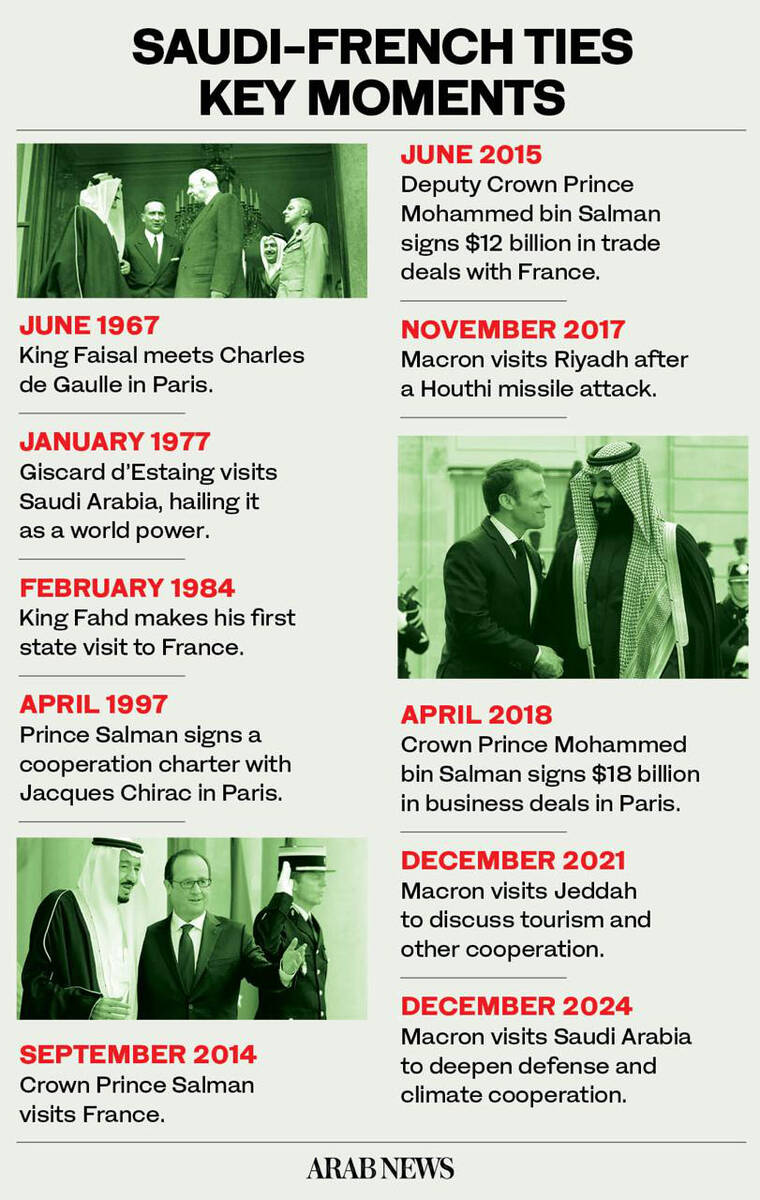
This transformation is also reflected in the growing presence of French companies in Saudi Arabia. “It is an important market, it is a stable market,” Brunin said, while also highlighting its regional dimension and its potential as a gateway to other international markets.
The Kingdom’s appeal lies as much in its size as in the huge projects accompanying its economic transformation, spanning digital technology, healthcare, tourism, infrastructure and the environment — sectors in which French companies have expertise that can help to address Saudi Arabia’s emerging priorities.
According to the director of the Franco-Arab Chamber of Commerce, France’s primary advantage lies in this technological expertise. He cited Veolia in particular, which is involved in treating waste generated by petrochemical activities and in water distribution.
For him, Saudi companies recognize “this technological value, this technological advantage” offered by French companies.
France also has another asset, perhaps a less visible one; its international experience. French companies have, he said, “a long-standing tradition of operating abroad” and know how to work with governments and local partners within a partnership framework.
This dimension is particularly important in Saudi Arabia today, as French companies are no longer coming merely to sell a technology or deliver a project. They are also expected to contribute to the development of the local economy, notably through employee training and by increasing the local value generated by their activities.
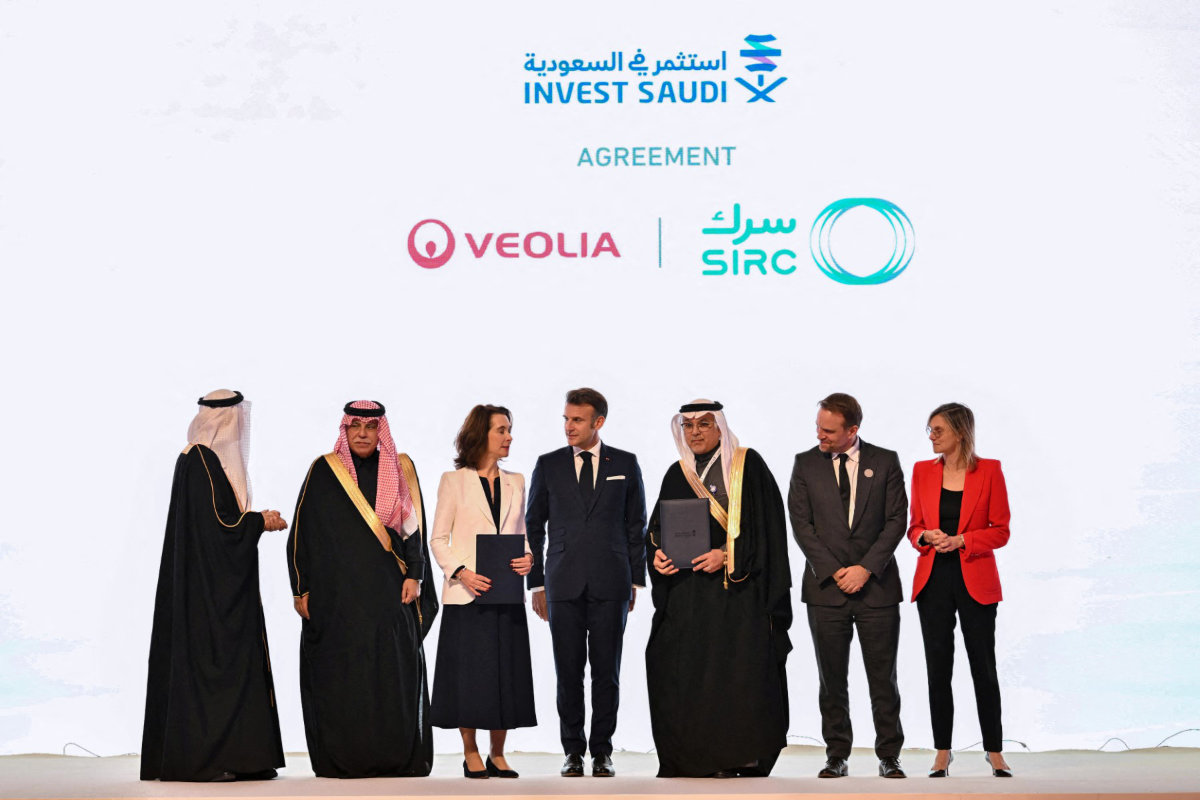
“French companies are capable of both demonstrating innovation and building partnerships,” Brunin said, noting that this approach applies not only to major corporations but also to French small and medium-sized enterprises and mid-sized companies capable of offering innovative solutions while developing a genuine local presence.
There remains, however, one area where the relationship appears less balanced; Saudi investment in France.
There are indeed Saudi investments in real estate, financial markets and the capital of certain French companies. But Brunin acknowledges that the amounts are difficult to assess and that Saudi investments appear less visible than those from Qatar or the UAE.
This discretion does not necessarily indicate a lack of interest, he added. Investments can be made without significant public communication. “These are investments that are made relatively discreetly,” he said.
Against this backdrop, the recent opening of an office in Paris by the Saudi authority responsible for investment represents an important signal and, according to Brunin, reflects a desire to bring the two economies closer together and boost not only French investment in Saudi Arabia but also Saudi investment in France.

This commercial momentum is also benefiting from a particularly favorable political environment, especially as France has chosen to position Saudi Arabia among its strategic partners, supporting major projects such as AlUla, backing the Saudi bid to host the World Expo and developing close political coordination on major regional issues.
For Brunin, this state-to-state relationship represents a genuine lever for French companies. “It adds to, it gives even more weight” to French companies already operating or seeking to establish themselves in the Kingdom.
And this relationship is expected to work in both directions, as Saudi Arabia also sees France as a strategic partner, particularly because of the size of its market, its international influence and its expertise across numerous sectors.
Riyadh, Brunin said, aims to become an economic platform connecting several regions of the world. He cited the India-Middle East-Europe Economic Corridor, which is intended to facilitate the movement of goods, energy and data.
The project, in his view, illustrates Saudi Arabia’s new ambition; to become not merely an energy power, but an international economic and logistics hub.