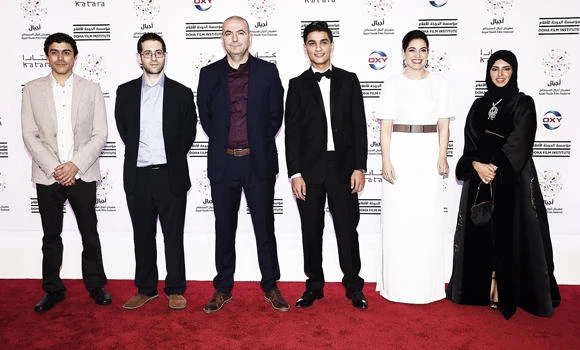
DOHA: Putting the spotlight on young Arab talent and highlighting its commitment to promoting the next generation of filmmakers, the third Ajyal Youth Film Festival, presented by the Doha Film Institute, marked a colorful start at Katara. Until Dec. 5, the festival will host the screening of 80 films from 36 countries including a showcase of 17 films that are ‘Made in Qatar.’
The third Ajyal Youth Film Festival flagged off with the Middle East and North Africa premiere of ‘The Idol’, directed by Academy Award-nominated Hany Abu-Assad, bringing the inspiring life story of ‘Arab Idol’ champion Mohammed Assaf to the big screen.
The opening red carpet gala welcomed Hany Abu-Assad, Mohammed Assaf, the film’s producers Ali Jafaar and Amira Diab, cinematographer Ehab Assal and a range of acclaimed filmmakers and local and regional celebrities.
The Ajyal Film Competition’s 520 young jurors also participated in the opening ceremony at the Katara Opera House. Over the week, they will watch and analyze a dynamic program of films under three competitive sections — Mohaq, Hilal, and Bader — followed by discussions and events including panels, workshops and Q&A sessions with filmmakers.
At the opening ceremony, Dr. Hamad Bin Abdulaziz Al Kuwari, Minister of Culture, Arts and Heritage, said: “Ajyal Youth Film Festival is an initiative that brings great value to our community. It was created to bring people of different generations together through cinema and the first two editions have made a positive impact on the lives of many people.”
Fatma Al-Remaihi, Festival Director and CEO of the Doha Film Institute, added: “This year, we pay tribute to the 120-year history of cinema. While the changes over the years have been vast and groundbreaking, here we are — still coming together in a dark room with a big screen for the perfect cinematic experience.”
Hany Abu-Assad said: “The most difficult obstacle in making the film was to adapt reality into drama that would resonate with audiences. Even though Palestinians in Gaza are living in a very difficult situation and there is destruction all over the Arab region, which is traumatizing and shocking, they still go to work, school and they live everyday life with love and humanity which transcends every ugliness and darkness.”
Mohammed Assaf said: “Seeing my story personally was amazing — more importantly the story carried many aspects — not just about my life but about the difficulties and plight of Palestinians in Gaza. It’s a story of hope and is inspirational for young people not just in Palestine but for Arab youth.”
Ajyal festival pays tribute to 120 years of cinema