ISTANBUL: Featuring heartthrob heroes, emancipated heroines and picturesque scenery, Turkish television drama series have taken the world by storm, gaining faithful audiences in dozens of countries across Europe, the Middle East and even the Americas.
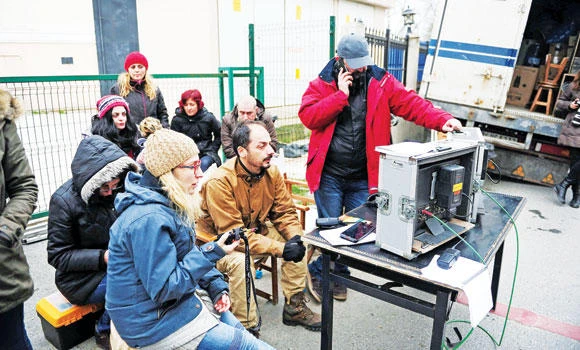
But life on the sets of the dramas — with episodes that can last up to three hours in series of up to 50 parts — is not all glitz and glamor.
It is fraught with grueling work, with crews routinely clocking 15 to 18-hour days at the expense of their families, their health, and even their lives.
“The worst day I ever worked on a show was 27 hours” young Turkish actress Elif Nur Kerkuk told AFP. “It was like going back to slavery.”
Kerkuk recalled how last year after 24 hours of shooting in central Turkey, the whole crew was piled on a bus and taken to Istanbul for another day of filming, with neither time to sleep nor prepare.
“I asked myself, is this it?... Is this going to be my life?” she asked. “But I stay in because I love it.”
A number of fatal accidents have prompted unions and actors to organize an industry-wide movement to put pressure on production companies and government to improve standards. Selin Erden, a 26-year-old video assistant for the hit teen drama “Arka Siradakiler” (Those at the Back Row), died tragically when the set’s sleep-deprived truck driver hit her during a cigarette break.
In September last year, Engin Kucuktopuz, a set worker for “Kacak Gelinler” (Runaway Brides), died of a heart attack after working 45 hours in three days.
“Everything that your mother ever told you not to do when you were growing up, in our industry you crumple it up and throw it out the window,” said Tilbe Saran, actress and secretary general of Turkish Actors’ Union.
The union has been keeping a list of dangerous situations since the 1980s that have arisen from eager producers pushing the boundaries of safety: runaway trains, helicopter crashes, out-of-control explosions.
“Only in third-world countries do people work like this. But this is the ‘Turkish way’ of working: No supervision, no safety measures, no respect for life,” Saran said. In January, the labor ministry classified drama sets as “dangerous” workplaces, following street protests from the community, including some of Turkey’s most famous actors and actresses.
The decision means that the sets will now be subject to inspections at regular intervals determined by the level of risk and will be required to employ safety experts and doctors.
But all set workers are employed as freelancers, meaning they lack insurance and production companies are not culpable when an accident or a death occurs on the set.
According to a 2014 report by consultancy firm Deloitte titled “World’s Most Colorful Screen, TV Series Sector in Turkey,” Turkish dramas reach up to 400 million viewers in 75 countries.
Life no fairy tale on Turkey’s famed soap opera sets