- Local enthusiast tells Arab News of importance of astronomy
- Saudi Arabia is actively expanding astrotourism in the country
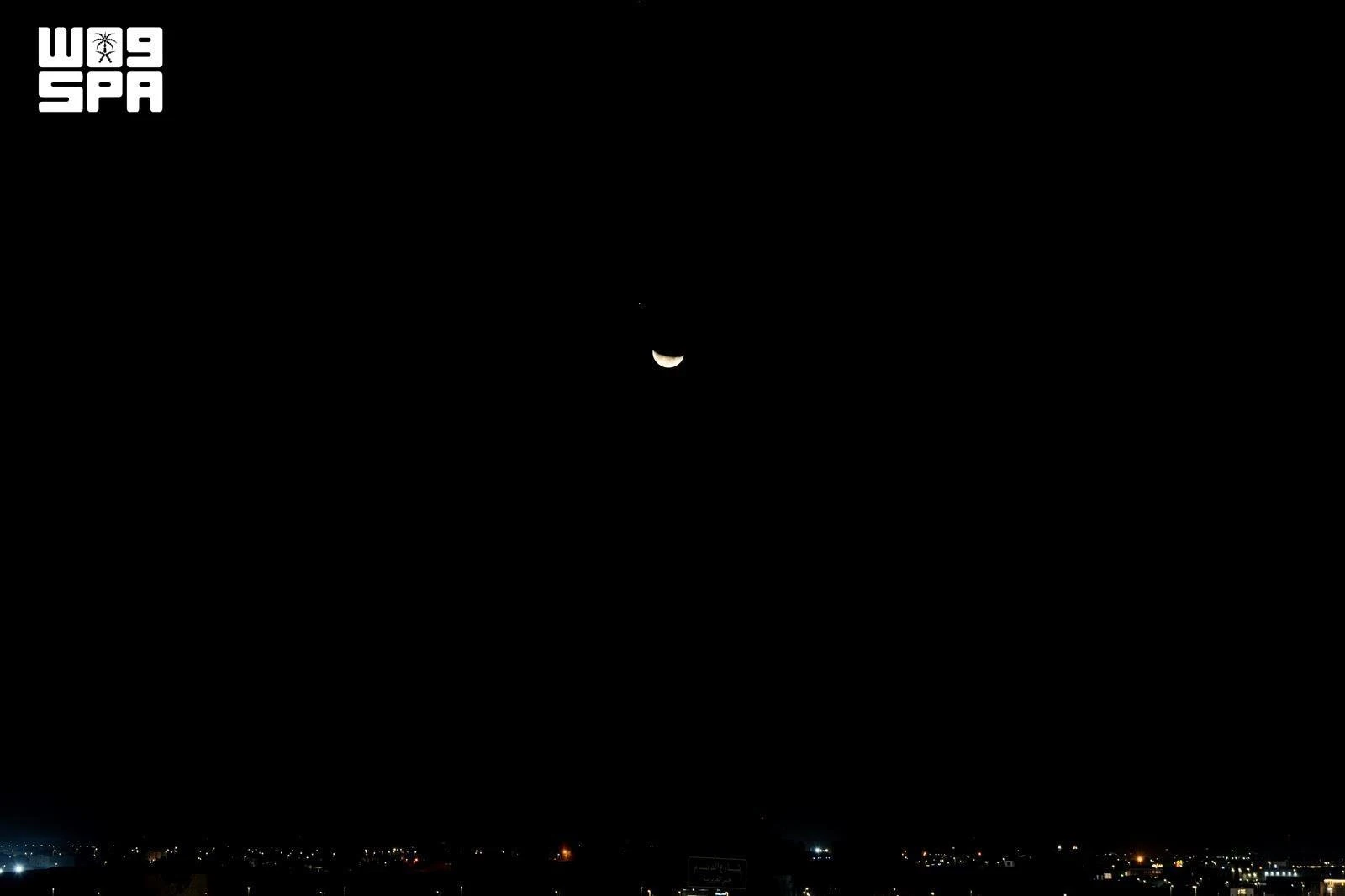
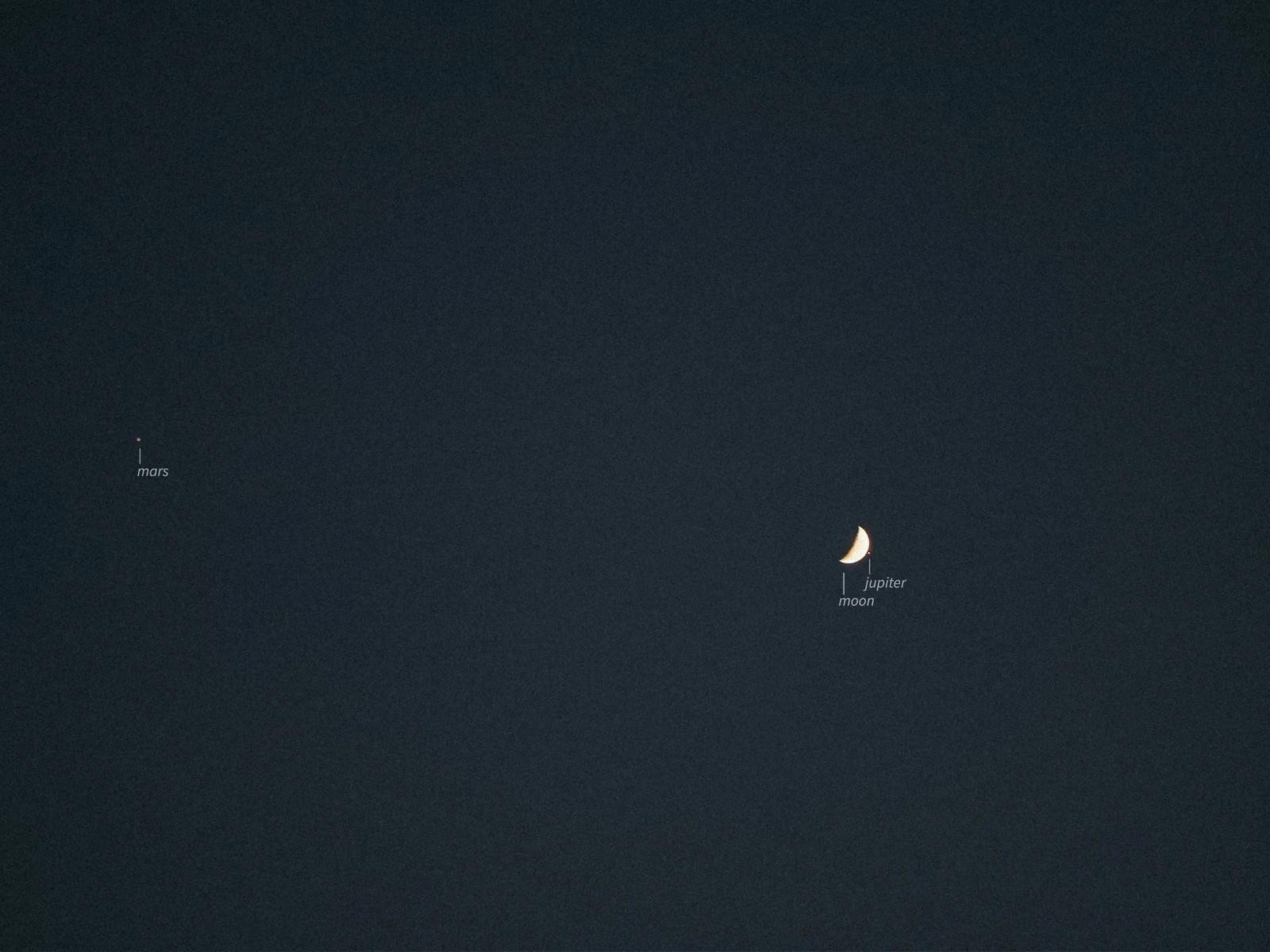
RIYADH: Saudi Arabia experienced the moon and Jupiter in a stunning stellar embrace at dawn on Tuesday in the sky over the city of Arar in the Northern Borders region.
The two celestial bodies appeared close to one another, creating a stunning scene for astronomy enthusiasts and skywatchers, the Saudi Press Agency reported.
The region’s clear skies and minimal light pollution provided an ideal opportunity for observation with both the naked eye and astronomical telescopes.
Adnan Khalifah, a member of the Space and Astronomy Club, explained that the open desert landscapes of the Northern Borders region offer ideal locations for astronomical observation.
He said that a conjunction is defined as the apparent proximity of two celestial bodies in the sky as seen from Earth.
It does not indicate actual closeness in space, but rather an apparent alignment along the line of sight.
The phenomenon offers an ideal opportunity for amateur astronomers and astrophotographers to observe the moon and Jupiter together with the naked eye, while small telescopes and binoculars provide an even clearer view, he said.
Khalifah emphasized that such events contribute to spreading astronomical literacy and fostering interest in space sciences.
Amjad Nasser, an amateur astronomer in Riyadh, told Arab News the phenomenon offers an ideal opportunity for non-professionals.
“They also encourage students, young people, and astronomy enthusiasts to engage in stargazing, learn about the movements of celestial bodies and follow various celestial events throughout the year.”
The phenomenon was visible from many parts of the world.
Saudi Arabia is actively expanding astrotourism in the region as well as in AlUla. And launching seasonal nature and heritage initiatives that highlight its clear, low-light-pollution desert skies under Saudi Vision 2030.
AlUla is recognized as a premier regional stargazing hub. DarkSky International has certified some sites including AlUla Manara as International Dark Sky Places.
Set beneath some of the clearest and darkest skies on Earth, AlUla in June this year unveiled the design of AlUla Manara, a landmark destination for astronomy, scientific discovery and astrotourism.
Located within the world’s third-largest Dark Sky Park and situated between Gharameel Nature Reserve and Harrat Uwayrid Reserve, AlUla Manara will connect the area’s rich celestial heritage with the future of scientific exploration, creating a destination for discovery, learning and inspiration.
It has been designed by Heatherwick Studio, the globally renowned architecture and design practice behind landmark projects that includes Little Island in New York, Azabudai Hills in Tokyo and Coal Drops Yard in London.
AlUla Manara’s distinctive form draws inspiration from spiraling geometries observed throughout the universe, from galaxies and planetary rings to collections of stars and gas, alongside similar patterns found in plants, fossils and shells.
The design has been approved by the Royal Commission for AlUla as part of the Kingdom’s wider ambitions to strengthen its position in astronomy, scientific research, innovation and sustainable destination development under Vision 2030.